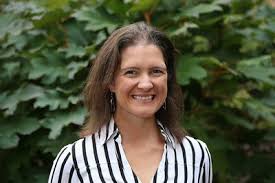
“Archimedes’ Cattle Problem” at noon on Thursday 10/24 in Olin 268


Student Colloquium talk by Professor Krishnan (Ravi) Shankar, University of Oklahoma

Title:  Archimedes’ Cattle Problem

Abstract:  Back in antiquity Archimedes devised a mathematical problem in the form of 22 elegiac couplets and delivered them to Eratosthenes of Cyrene (as a challenge of sorts). The problem is in three parts of increasing difficulty and the solution is rather astonishing, both for its complexity and for the problem’s ability to anticipate mathematics that didn’t come about for 2000 years (Pell’s equation). We will explore the problem and its solution (which was only completely solved in 1889 by Amthor) and ask ourselves the age old question: “What did Archimedes know?”


Mathematics Alumni Career Panel at noon on Thursday 10/3 in Olin 268

Hear advice and perspectives from Bucknell alumni who will examine career paths that utilize the mathematics degree while discussing their work and available opportunities. The conversation will include a question and answer period and an opportunity to meet (and network with!) the alumni panelists. Pizza and calzones will be provided. This event is sponsored by the Mathematics Department and the Center for Career Advancement.

Panelists:

  • Allison Gibson ‘13, Consultant, Boston Consulting Group; MBA Graduate 2019, Kellogg School of Management, Northwestern University
  • Rachel Guen ‘19, Associate Analyst, Moody’s Investors Service
  • Zach Moon, ASA ‘16, Actuarial Advisor, Cigna
  • Jin On ’12, Manager, Data Science & Provider Analytics, Evariant
  • Laura Papili ‘17, Forecast Analyst, Nielsen BASES

Moderated by Professor Linda Smolka, Mathematics

“Understanding Statistical Significance” at noon on Thursday 9/19 in Olin 268

Student Colloquium talk by Professor Kari Lock Morgan, Penn State University

Title: Understanding Statistical Significance

Abstract:  You may or may not have heard of results being “statistically significant,” and you may or may not know that results qualify as statistically significant if the p-value falls below a given threshold.  Regardless of whether these phrases currently hold any meaning for you, the goal of this talk will be to shed light on the actual meaning of a p-value and statistical significance (beyond just “p < 0.05”).  This will be accomplished by covering a modern and computationally intensive way of computing a p-value that will be illustrated both by hands-on and online activities (so bring a laptop or tablet if you want to play along!).  This simulation-based approach will be both accessible to those who have never taken any statistics, and valuable to those who have taken statistics but want a deeper understanding or a more modern approach.

“Interacting with the Shadow of Data” at noon on Thursday 9/5 in Olin 268

Student Colloquium talk by Professor J.T. Fry, Bucknell University

Title: Interacting with the Shadow of Data

Abstract:  In our first statistics class, we learn how to build a scatterplot to visualize two variables at once. But what happens when we have many variables? Projection methods such as Principal Component Analysis (PCA) can create 2D pictures of higher-dimensional data, much like how the sun projects our 3D body into a 2D shadow. However, exploring these high-dimensional datasets can be complicated. In this talk, we present a visual analytics model that allows the user to combine their personal knowledge with a projection method to find novel ways of exploring the data. 

“Problems and Pipelines: A story from the frontline of data science” at noon on Thursday 4/25 in Olin 268


Student Colloquium talk by Professor Patrick McDonald, New College of Florida

Title: Problems and Pipelines: A story from the frontline of data science

Abstract: Suppose you were to suddenly obtain access to a remarkably rich data source, say, a trove of health records. What would you do? In this talk I will sketch how a group at New College handled such a situation. In so doing I will provide you with a glimpse of what it is like to work on a large-scale data science project, paying special attention to the vast array of required skill sets, social constraints and behavior patterns.

“The Dynamics of Continued Fractions” at noon on Thursday 4/11 in Olin 268

Student Colloquium talk by Professor Daniel Visscher, Ithaca College

Title: The Dynamics of Continued Fractions

Abstract: While only rational numbers have a fraction representation, all real numbers have a continued fraction representation. Continued fractions illuminate interesting structure in real numbers, for example, by giving a way to express how close a real number is to being rational. In this talk, we investigate continued fractions from the point of view of a dynamicist, framing the topic in terms of iterating a function and asking questions about how orbits distribute. Multiple flavors of π will be present, and the golden ratio will make approximately 1.618 appearances.

“When is the best time to stop?” at noon on Monday 3/25 in Olin 268

Student Colloquium talk by Professor Ryan Hynd, University of Pennsylvania

Title: When is the best time to stop?

Abstract:Suppose that you are observing a sequence of events, and need to decide when to stop. Your goal could be to maximize an expected gain or give yourself a good chance to make the best choice possible.  We will discuss several instances of this type of problem and talk about ways to use math to solve them.

“Mathematics of Outbreaks: Exploring Infectious Disease Transmission and Control with Mathematical Models” at noon on Thursday 3/21 in Olin 268

Student Colloquium talk by Professor Michael A. Robert, University of the Sciences

Title: Mathematics of Outbreaks: Exploring Infectious Disease Transmission and Control with Mathematical Models

Abstract: Mathematical models have long been used to study the spread of infectious diseases. From smallpox to influenza to Zika virus, mathematical models help us understand how infectious diseases spread and how we can potentially control their spread. Models are also powerful tools for making predictions about how infectious diseases may emerge and spread in the future. In this talk, I will introduce mathematical models developed to study infectious diseases, and I will discuss my recent work in using mathematical models to study the spread and control of dengue fever and Zika virus, two diseases transmitted by mosquitoes. Dengue fever is found throughout tropical regions of the world and impacts millions of people each year. In recent years, dengue has begun to spread into more temperate areas of the world. Zika virus first emerged in 2015 and spread rapidly throughout the world, infecting millions of people. The recent rapid spread of both viruses is the result of a number of factors including an increasingly connected world and a rise in global surface temperatures caused by climate change. I will discuss how I utilize mathematical models to understand how these two factors play a role in transmission of dengue and Zika. I will specifically discuss how human movement and temperature variation impact the potential for the spread of dengue and Zika in certain U.S. cities and how the potential for emergence of the viruses may change if global surface temperatures continue to rise. I will also briefly discuss how models are being used to plan control strategies for infectious diseases, including strategies involving the release of genetically modified mosquitoes to help control mosquito-borne diseases.