Bucknell students have had some terrific performances in recent years. Last year, Bucknell ranked 68 out of 487 schools, and third in the Mathematical Association of America section that covers Eastern Pennsylvania and Delaware (EPaDel) behind Penn and Haverford. Skyler Le (’27, Mathematics major) had a score of 32, with a rank of 369 out of 4329 participants.
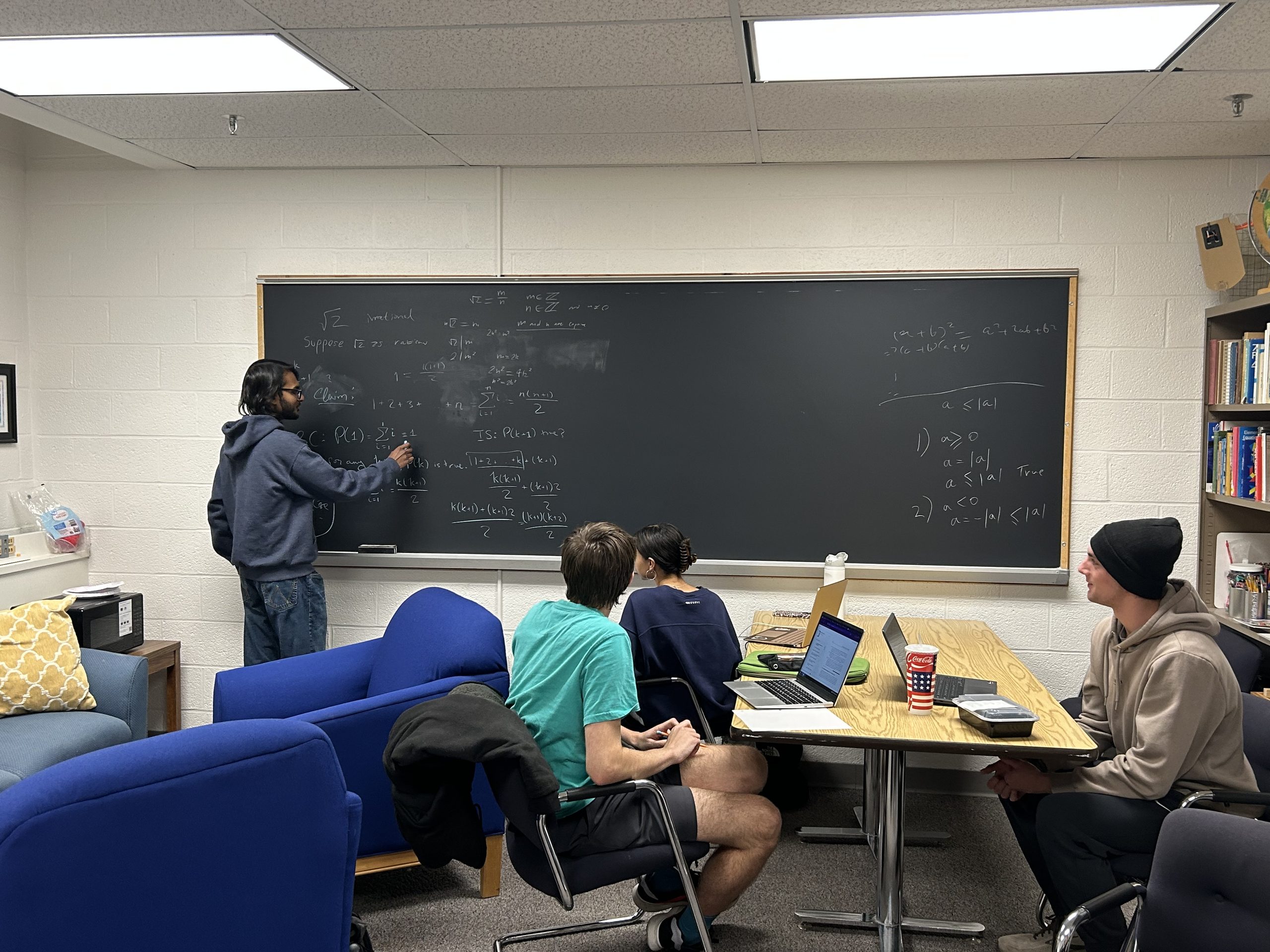
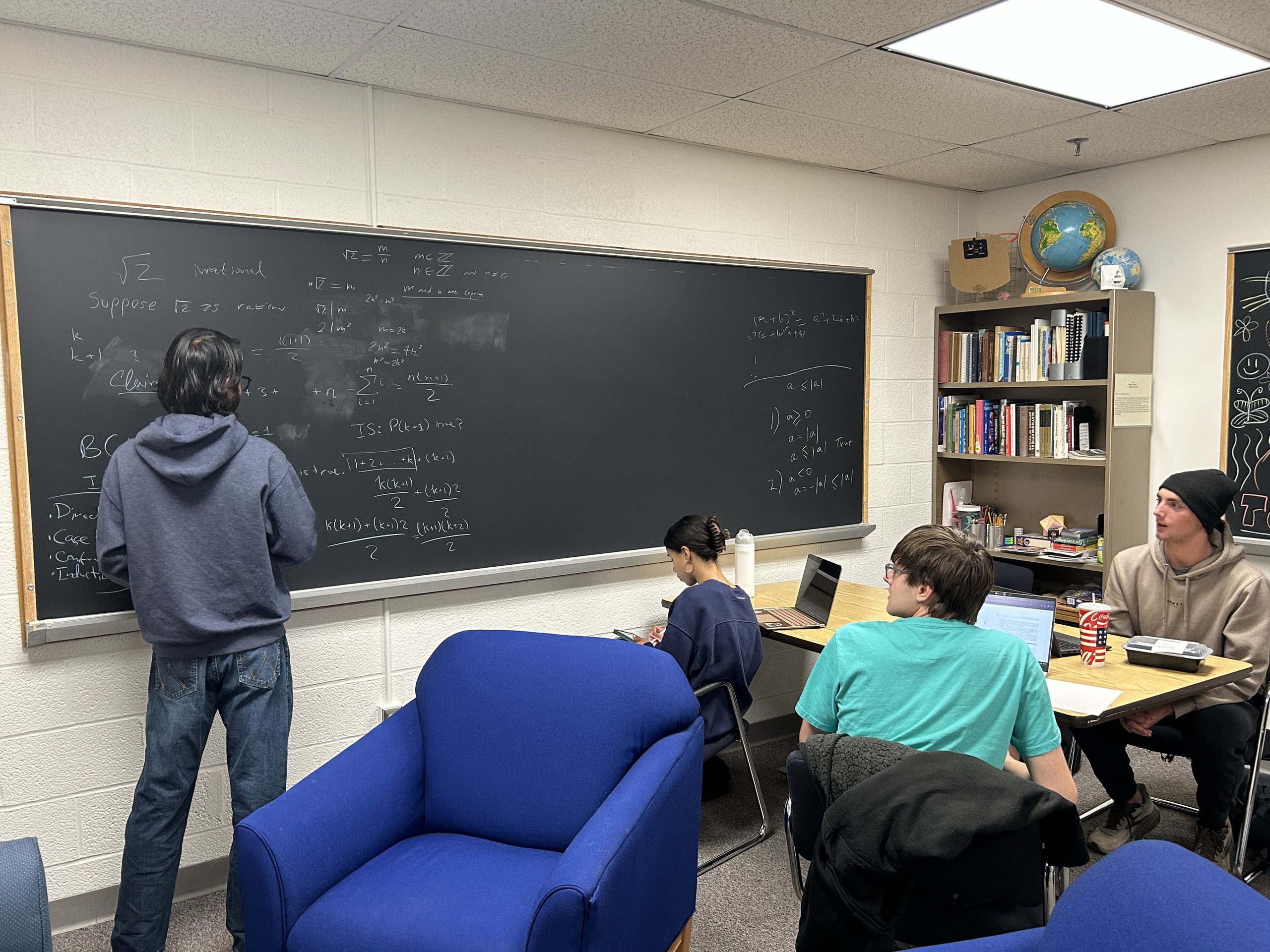
In preparation for this year’s event, taking place on Saturday, December 5th, there are also student-led practice sessions every Tuesday in the Olin Math Lounge, led by Meshkat Alam (’28, Physics and Mathematics major).
Follow bucknell.math.stat on Instagram!
Want to try a problem of your own? Here’s an example to think about.
A grasshopper starts at the origin in the coordinate plane and makes a sequence of hops. Each hop has length 5, and after each hop the grasshopper is at a point whose coordinates are both integers; thus, there are 12 possible locations for the grasshopper after the first hop. What is the smallest number of hops needed for the grasshopper to reach the point (2021, 2021)?
Our department has a strong record of past performance. Shout out to past Mathematics and Statistics Department Competitions Committee chairs for keeping track of the history.
Last year (academic year 2025-2026) we had 12 participants. The Putnam for the academic year 2024-2025 was notoriously difficult. The median score was 2, with the average score at 8 (out of 120). We had 5 students participate. Skyler Le still went on to earn a score of 22 and was ranked among the top 500 participants out of approximately 4,000. In the academic year 2023-2024 we had 8 students participate. Skyler (42 pts) and Anh Tran ’24 (41 pts) were both ranked between 101 and 200 out of the 3,857 total students who took the exam. Bucknell’s team placed 3rd in the EPaDel MAA section. All of the students scored points, and 6 of the 8 students had scores in the double digits.
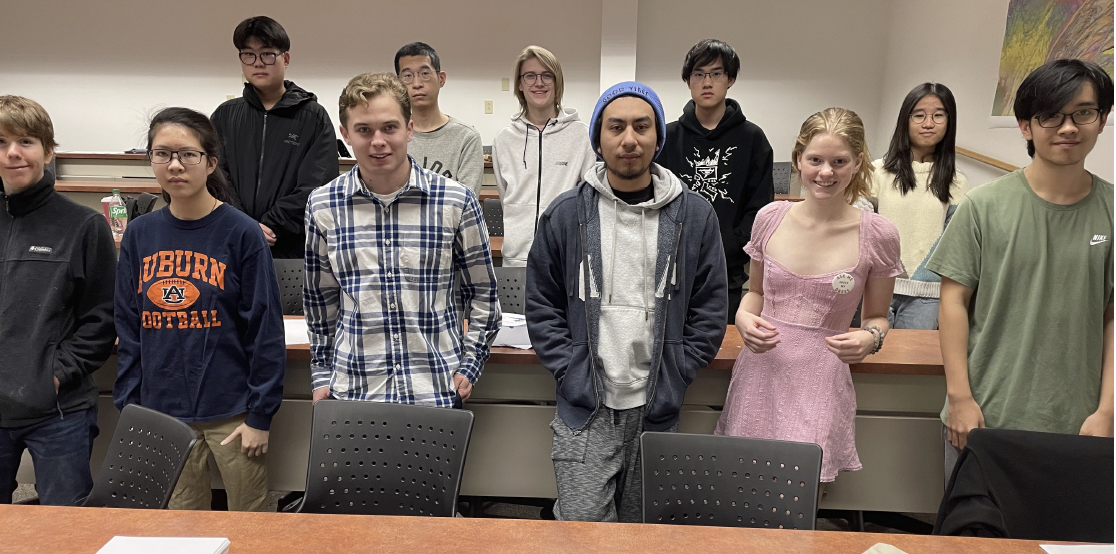
Above is the Academic Year 2022-23 Putnam Participants: Back row (left to right): Changkun Guan ’24, Yang Hong ’23, Jonathan Seitz ’26, Kerong Wang ’24, MinhPhuong Cao ’26. Front row: Mikey Ferguson ’25, Vy Tran ’25, Cole Kratz ’26, Michael Perez Palapa ’23, Susan Deering ’26, Anh Tran ’24. Missing from photo: Clara Chaplin ’25, Jiasong Zhu ’24.
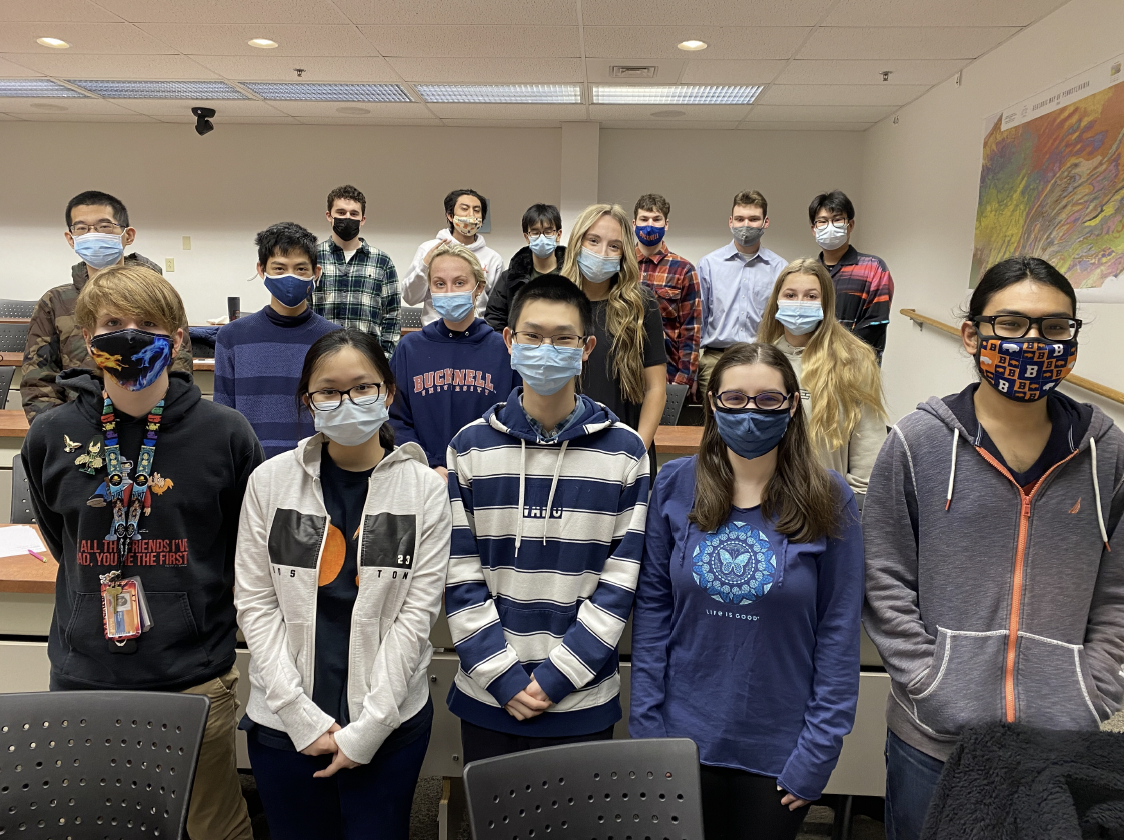
Above is the Academic Year 2021-22 Putnam Participants: Back row (left to right): Alejandro Vargas-Altamirano ’25, Michael Perez Palapa ’23, Anh Tran ’24, Eric Jaeger ’25, Danny Nolan ’25, Changkun Guan ’24. Middle row: Yang Hong ’23, Nghia Le ’24, Lily Fauntleroy ’23, Erin Fitch ’25, Clara Chaplin ’25. Front row: Mikey Ferguson ’25, Anh Kieu ’22, Tianzhu (Peter) Liu ’22, Clare Bassano ’23, Swarup Dhar ’22. Missing from photo: Peter Warhold ’23
Students who like challenging math problems are encouraged to participate. No advanced mathematical knowledge is required; creative problem-solving is the goal. Participation is free and on-campus. Students who are interested should contact Prof. Langford for more details!
Are you an alum who participated in the Putnam? We’d love to hear about what that experience was like for you, so reach out on LinkedIn! Want a chance to be featured in a future blog post? Respond to our question of the week here, and your answer may be chosen for a future post.
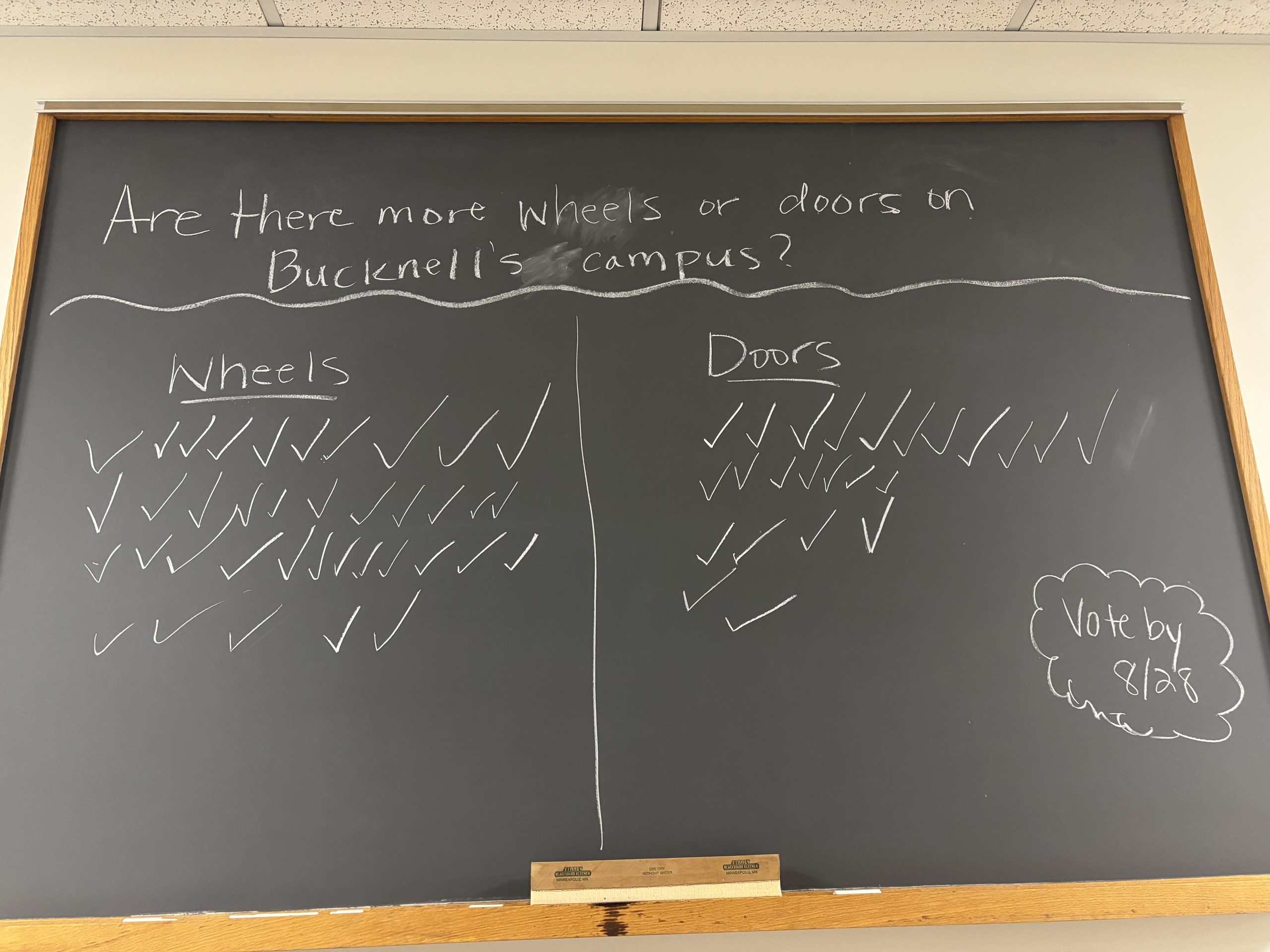
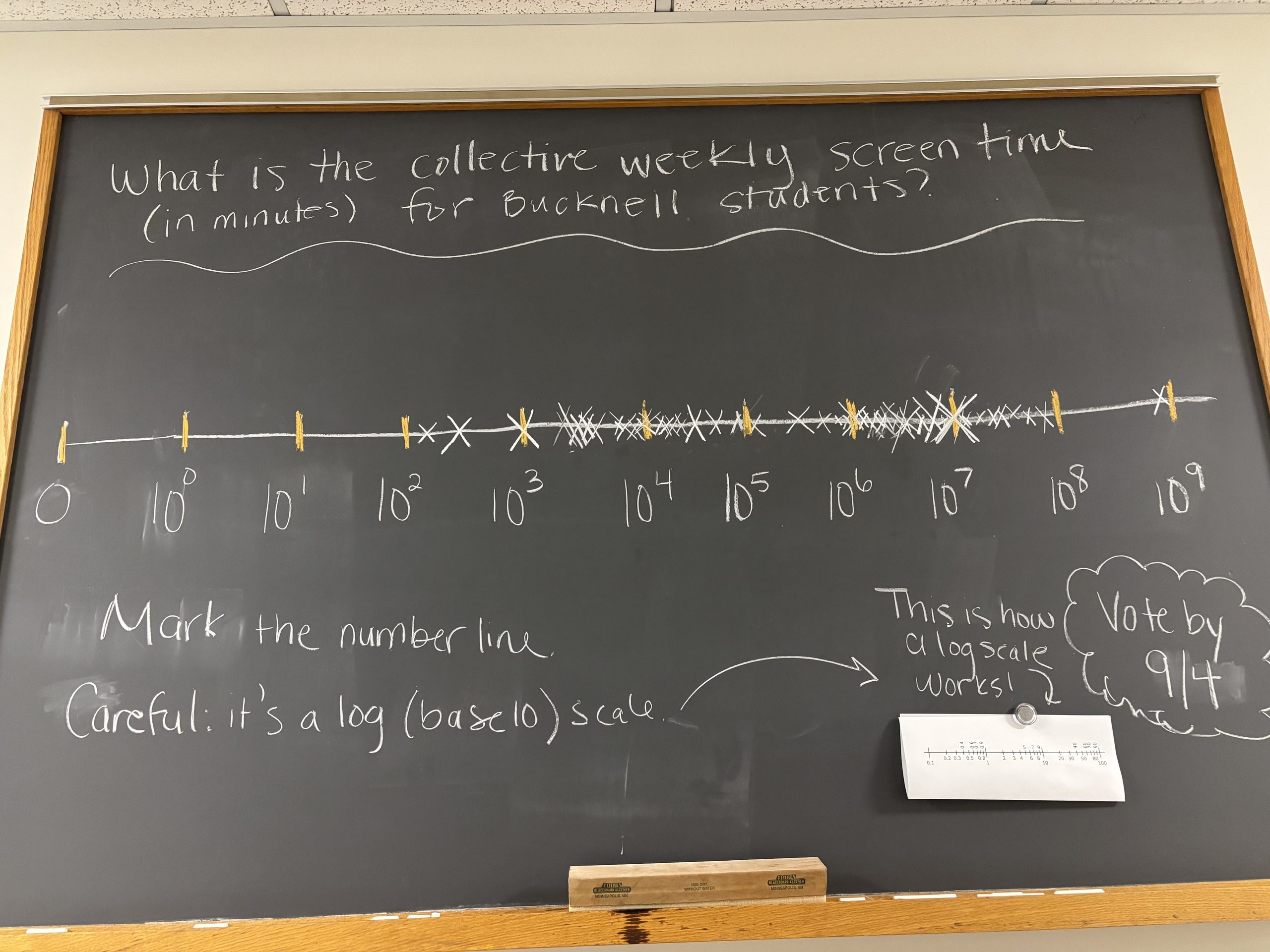
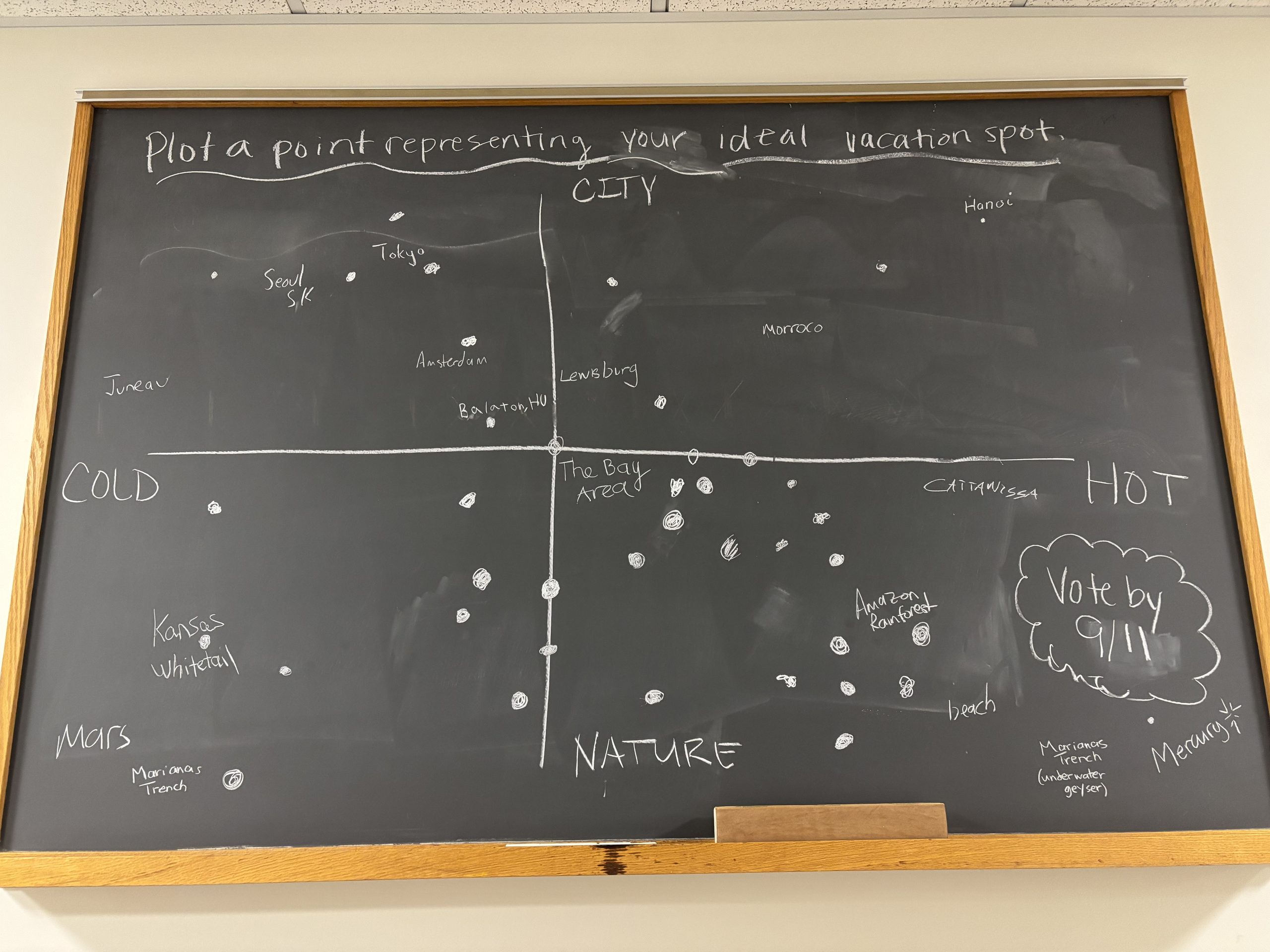
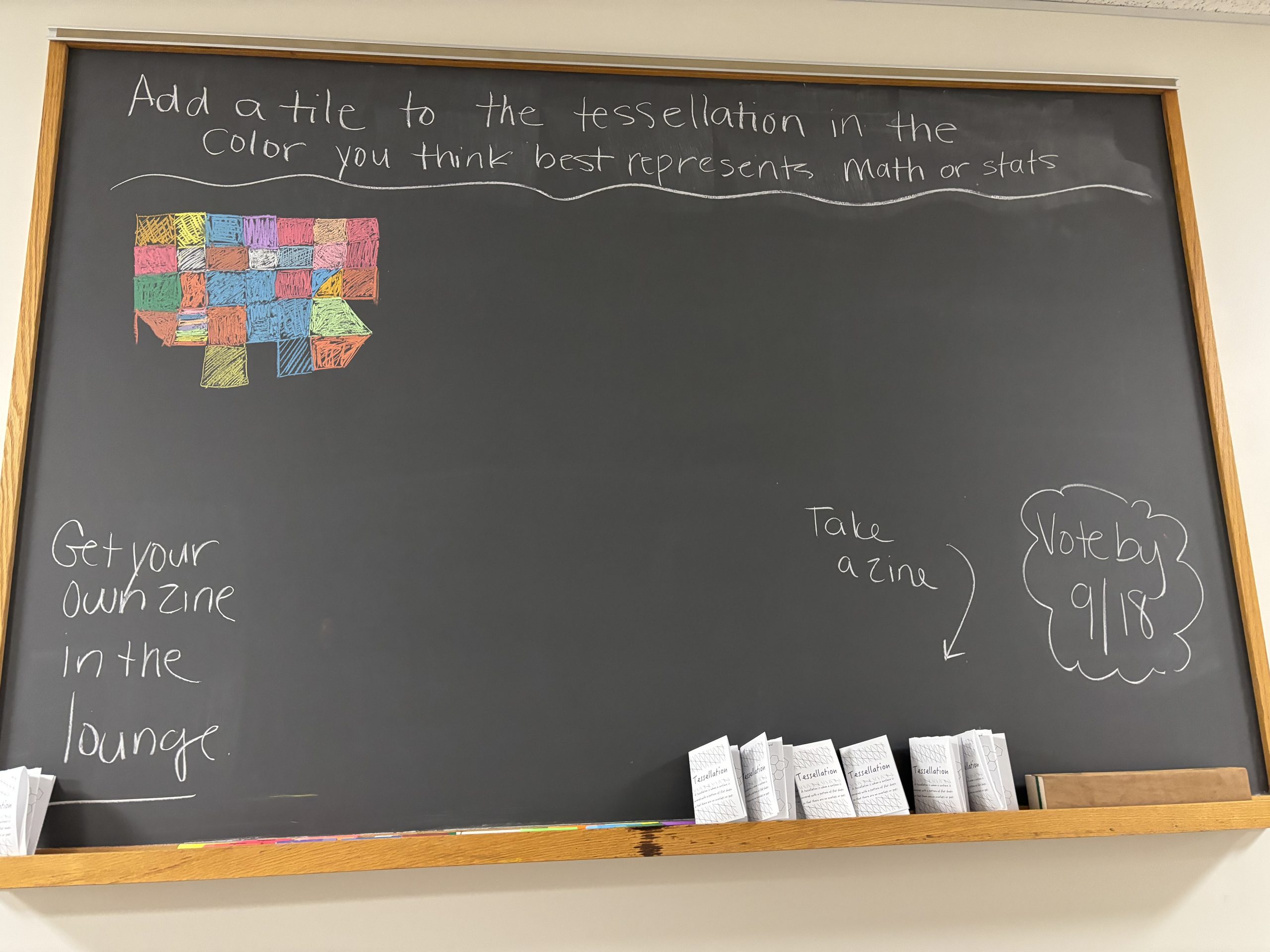
This semester, students, faculty, and staff have contributed to weekly chalkboard discussions that have taken a variety of forms.
We started off with a controversial one. Are there more wheels or doors on Bucknell’s campus? What counts as a door? A wheel? That’s all part of the fun!
Looks like wheels won!
Then we practiced our log scales by guess-timating the collective weekly screen time for Bucknell students.
Follow bucknell.math.stat on Instagram!
By week 3 we were all already thinking about Fall Break and dreaming about our perfect vacation spots. The Hot/Nature quadrant is most popular!
We broke out the special colored chalk to determine what color best represents math or stats while also creating a tessellation. Print and fold your own tessellation zine!
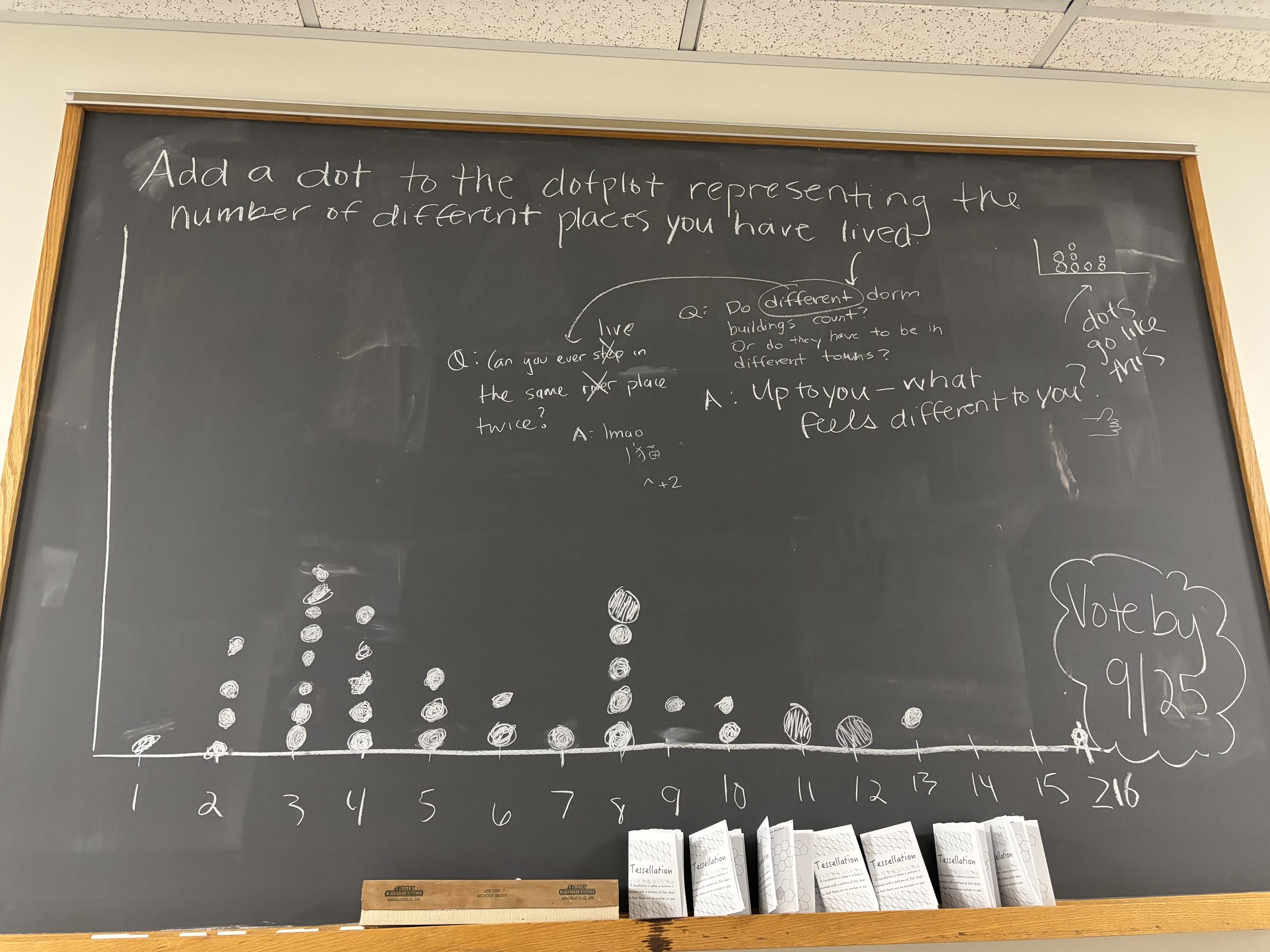
Some good meta-discussion appeared when we were counting the number of different places we have each lived.
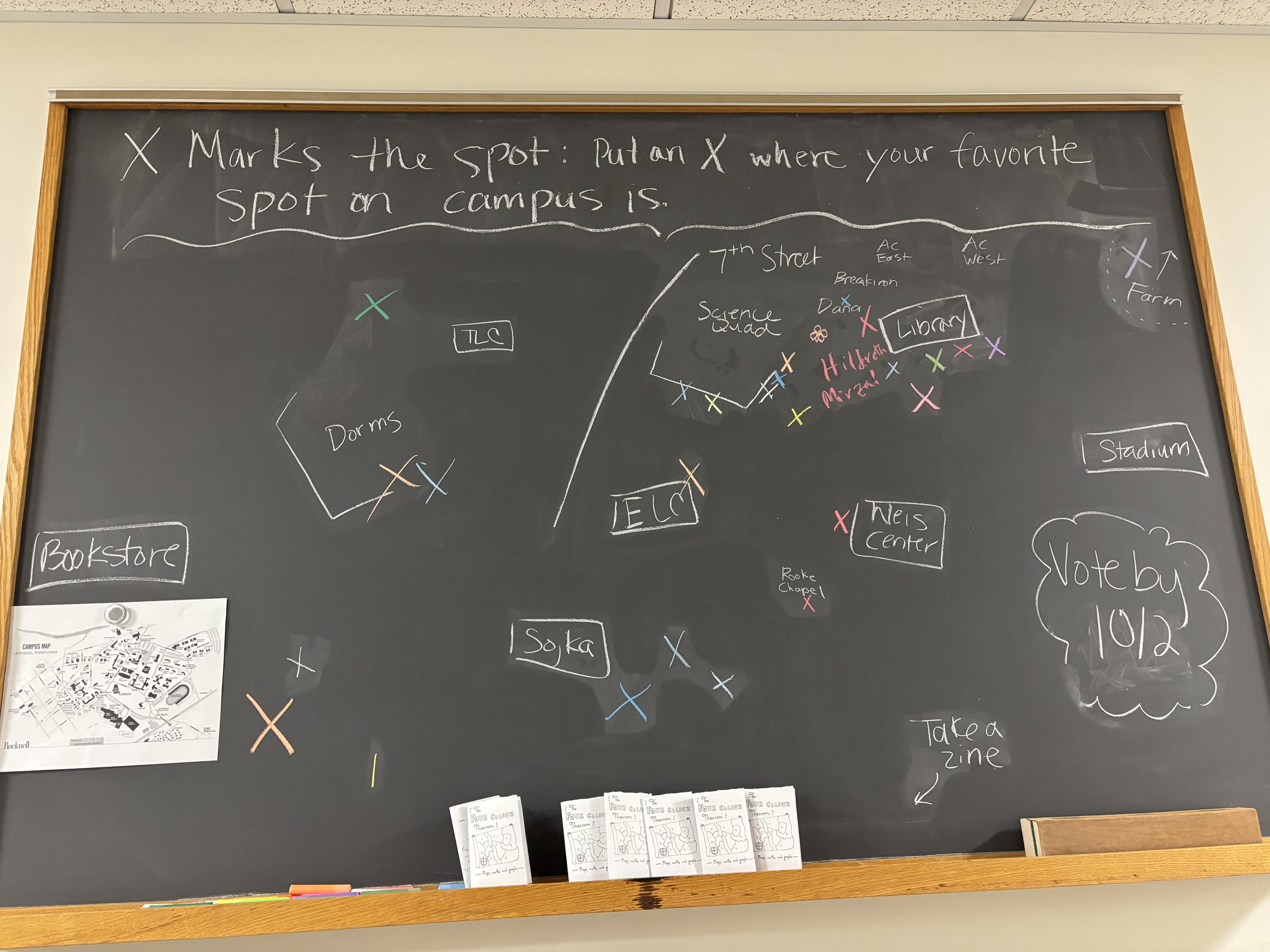
We put our spatial reasoning to the test by trying to map our favorite spots on campus. Again, we felt this one deserved the special colored chalk. Print and fold your own four color theorem zine.
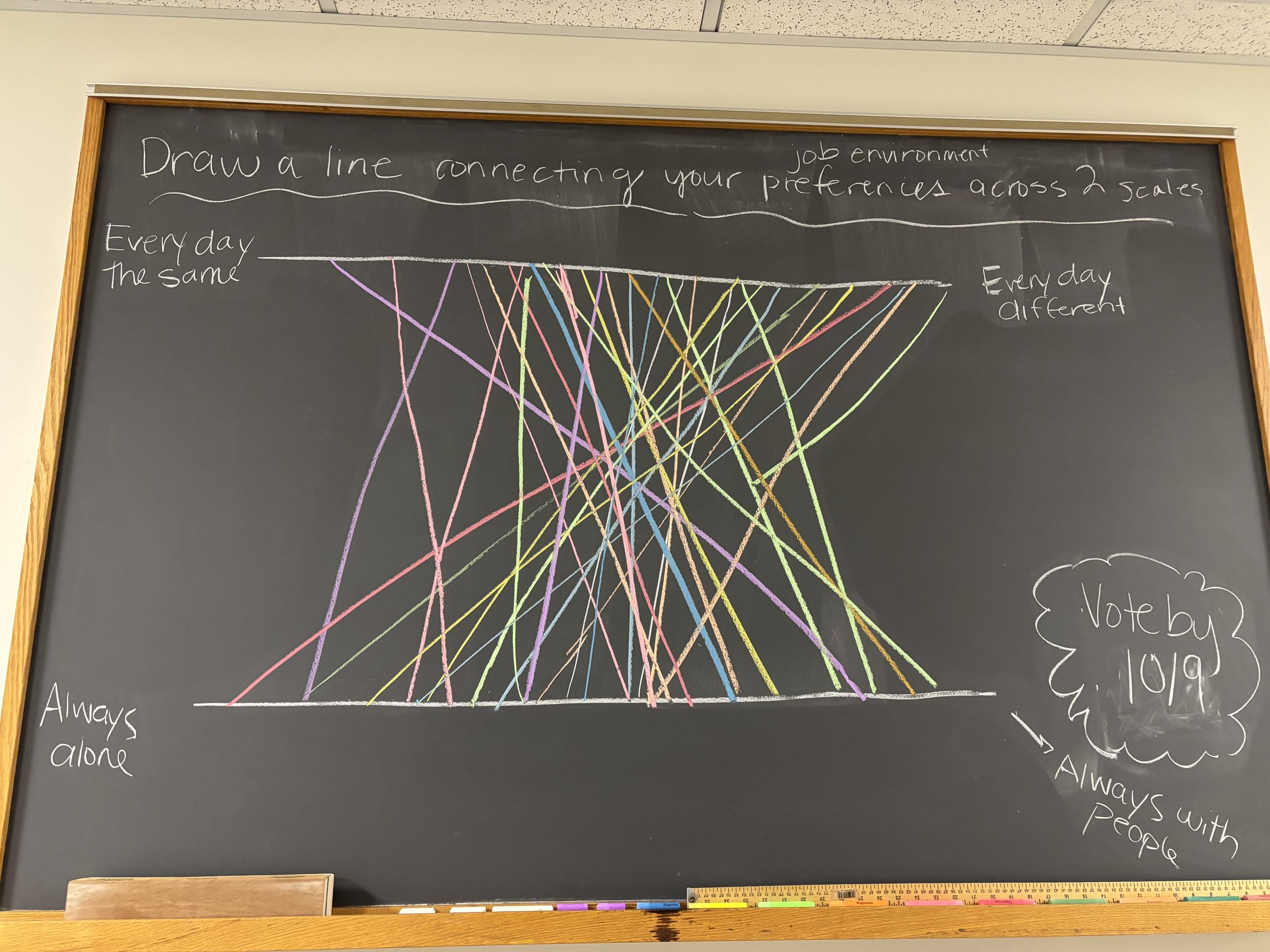
Ahead of Fall Break we considered what makes an ideal job environment in terms of how much variation there is in the day-to-day work and how much time we spend alone v. with other people. We have people with preferences all across the two spectrums. And yes, the colored chalk helps really paint the picture. 😀
Stay tuned for more chalkboard discussions after a much needed Fall Break!
Want a chance to be featured in a future blog post? Respond to our question of the week here, and your answer may be chosen for a future post.
The Mathematical Economics (MECO) major lets students interested in both mathematics and economics have the best of both worlds. They get to pick a track (theoretical, computational, or statistical) to tailor their courses toward their interests.
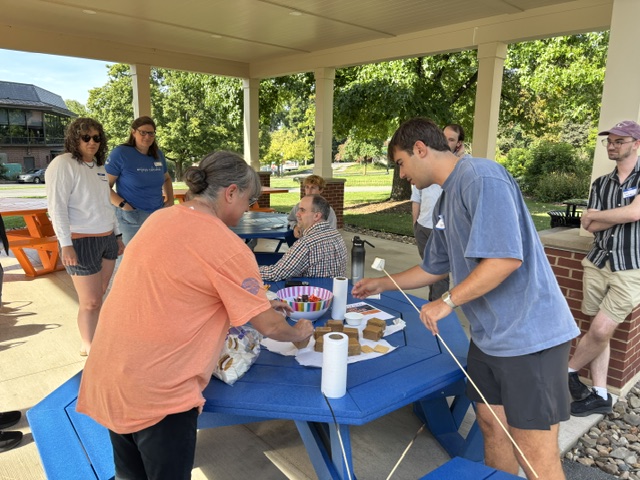
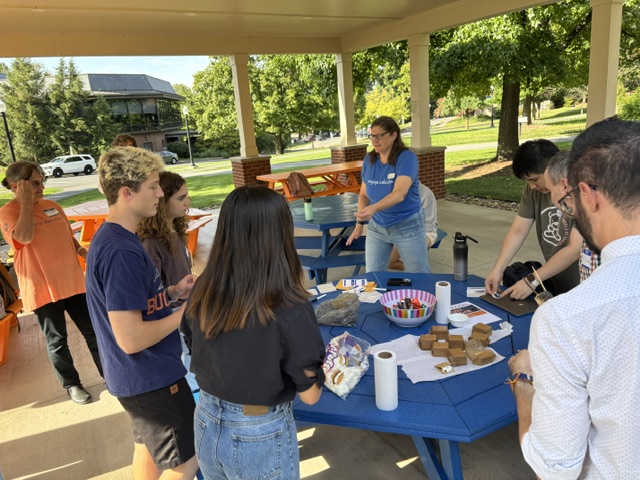
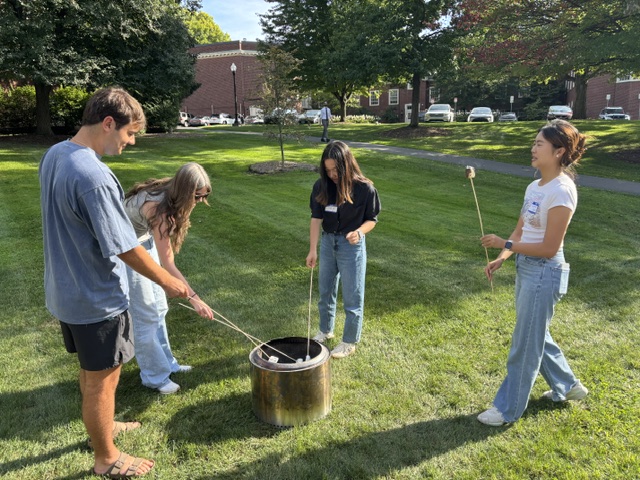
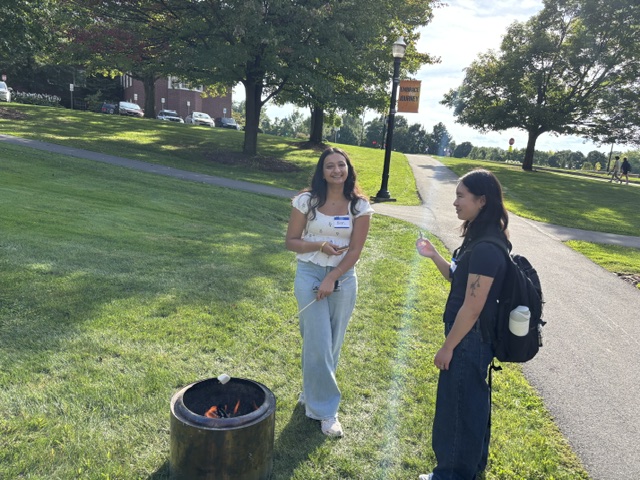
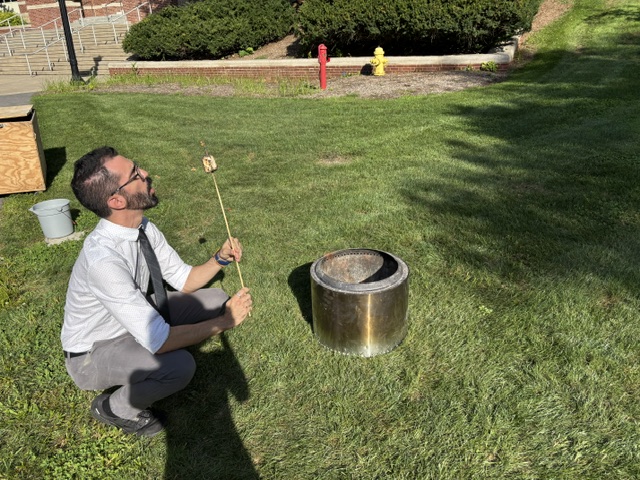
MECO majors across multiple class years joined faculty members in Mathematics and Statistics and Economics to roast some marshmallows, make some s’mores, and form connections across class years.
Follow bucknell.math.stat on Instagram!
Prof. Boomer (MECO Director) and John craft a s’moreStudents gather around to make s’mores
We heard from some recent Bucknell alums about what they are using their mathematics and statistics degrees for in the real world.
Follow bucknell.math.stat on Instagram!
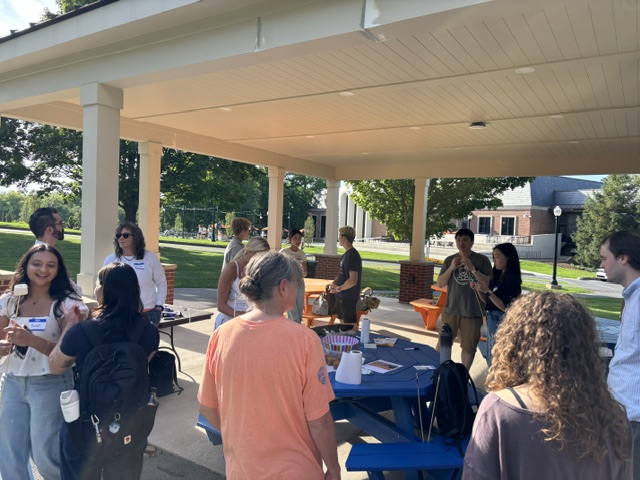
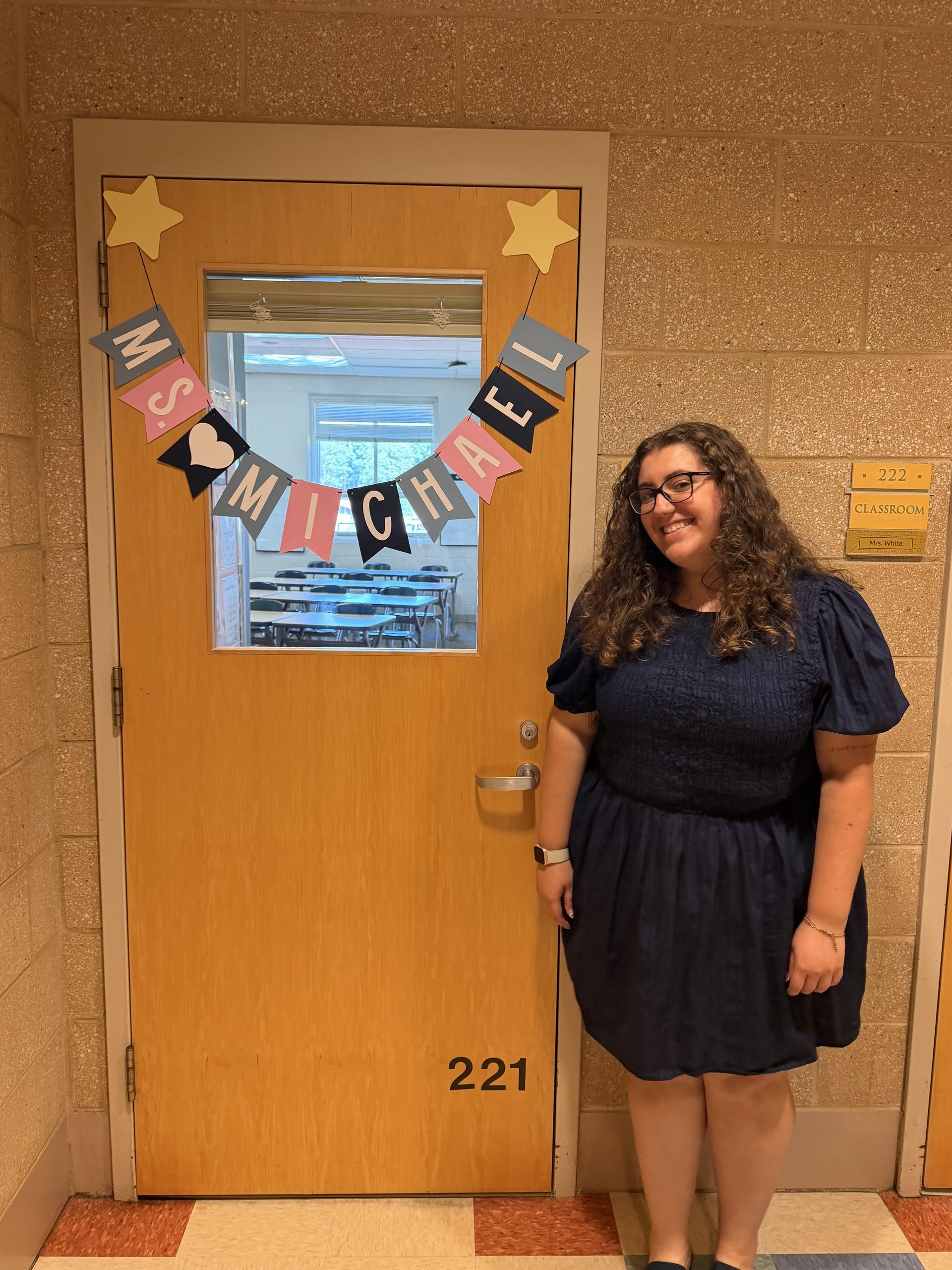
Ellie Michael (Mathematics Major, Teaching Certification, ’26)
Ellie shared a photo from her high-school mathematics classroom.
Clara Chaplin (Mathematics and Computer Science Majors, ’25)
After graduating from Bucknell in 2025, I spent the last year as a Software Engineer at Dell Technologies in Austin, TX, working on backend development and automated testing for PowerStore, a large enterprise storage platform. I’m now excited to be starting a new opportunity as a Software Engineer at Arch, a fintech company in New York City focused on building infrastructure for private market investment management. I’m looking forward to growing my engineering career in NYC!
Eve Johansson (Applied Mathematics Major, ’26)
Since graduating from Bucknell, I moved to New York City and began working at Goldman Sachs in Counterparty Credit Risk. My role involves evaluating the risk that different hedge funds pose to the firm and working with my colleagues to determine how we can mitigate that exposure. Because every fund has a different strategy and risk profile, each one presents a new puzzle to solve. I’ve really enjoyed applying the analytical and problem-solving skills I developed through the Math Department, and I’m grateful for how well my time at Bucknell prepared me for the role.
We aren’t the only ones back to school here at Bucknell. We heard back from some recent Bucknell math and stat alums about their Masters and PhD programs. Stay tuned next week to hear from some recent alums about their new jobs.
Nicky Punt (Mathematical Economics Major, ’26)
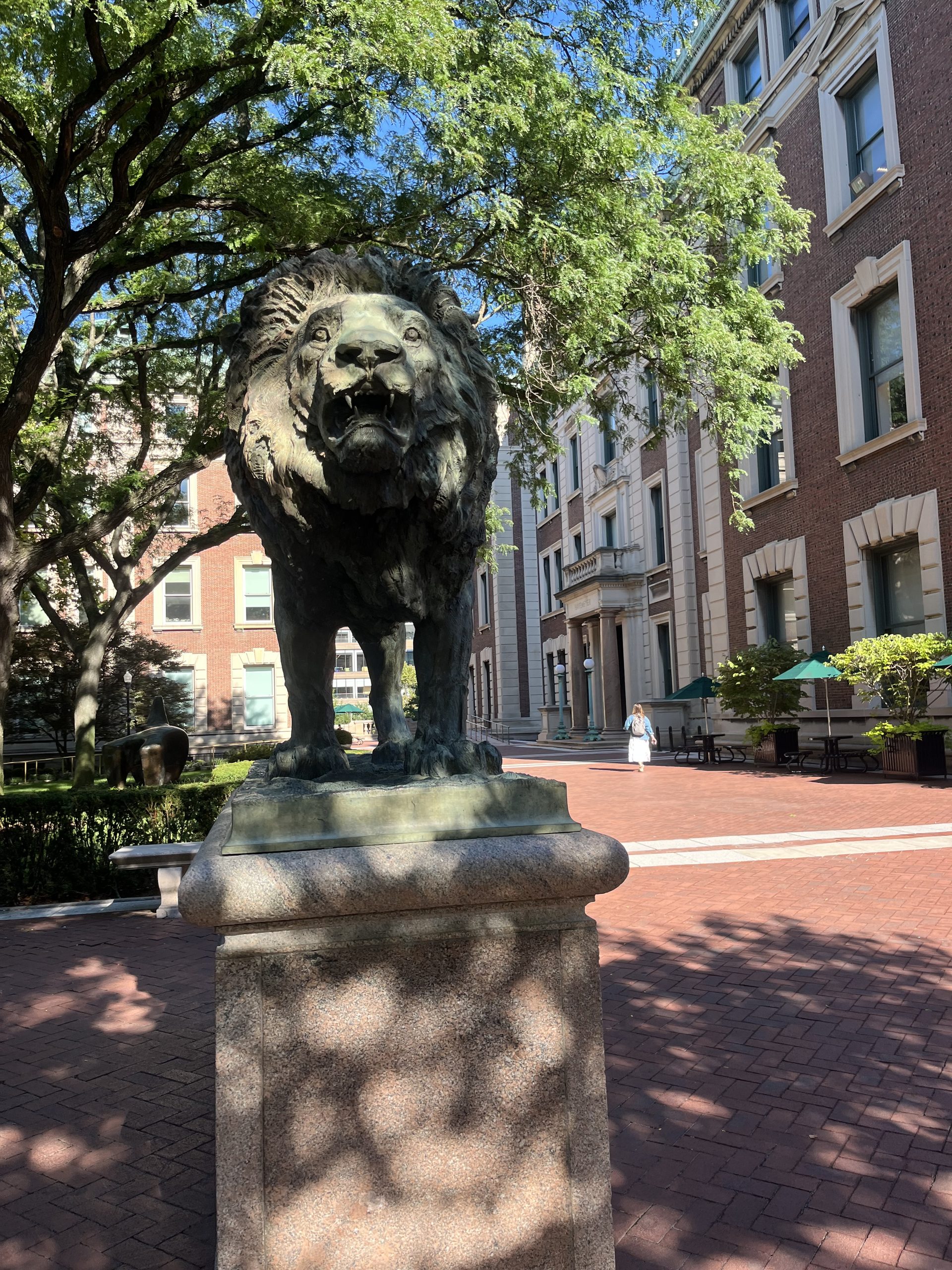
I recently started my Masters in Business Analytics at Columbia University. The program is a partnership between Columbia Engineering and Columbia Business School. Even though it immediately was a very intense program, I LOVE IT.
Columbia, especially graduate school, is known to have a lot of international students. I made friends from all over the world. Some of my best friends come from France, Germany, and Asia. Besides that, the curriculum and faculty are amazing. The curriculum is built around the development in technology, and specifically artificial intelligence. It is a privilege to learn about the latest developments and how we can apply those skills. Besides that, they allow us to do a capstone with actual companies and real-life problems. Bucknell gave me a wonderful background in mathematics and statistics, which I will now be able to apply to the real world.
Additionally, the campus is wonderful. Located in the heart of NYC, there are many great restaurants, parks, and activities. Last week, I went to the US Open and got to see my favorite tennis players, which was very exciting as a big tennis fan. What makes the Columbia campus so special is that you have the real college campus feeling when you step through the gates. You are in a calm, beautiful campus in the midst of New York City chaos! This is definitely very different from Lewisburg, but I am glad I get to experience both.
I will always be grateful for my experiences at Bucknell and how they prepared me for graduate school and beyond that. Sometimes I do miss Lewisburg, but I will be back for alumni weekend to reconnect with friends and reminisce on four great years!
Follow bucknell.math.stat on Instagram!
Austin Carroll (Statistics Major, ’26)
Hi, my name is Austin ’26. I graduated Bucknell with a BS in Statistics. This fall, I began my first semester at the University of Rochester School of Medicine and Dentistry(URSMD) as a PhD student in statistics. A small program with an emphasis on the health sciences, URSMD’s stats program aligned precisely with my post-grad aspirations. I couldn’t be more indebted to Bucknell’s math department for opening up this opportunity. Sans the mathematical and computational training I received in Lewisburg, I’m 95% confident (haha) that I wouldn’t be at URSMD. Regardless of your postgrad plans, I encourage you to be critical of your ambitions, and never let them detract from what matters.
Cole Kratz (Mathematics Major, ’26)
Hi everyone! My name is Cole, and I am a first-year PhD student in Mathematics at Penn State University after graduating from Bucknell in the spring. I really like all my classes so far, and they have certainly been challenging (but not impossible). Penn State also gives its graduate students lots of opportunities to be instructors for undergraduate courses, and I am excited to teach as soon as next semester!
Outside of math, State College is in a beautiful area with plenty of things to do. In addition to the amazing scenery, Penn State is known for its football and ice cream, both of which are things I enjoy. I’m excited to keep learning math and to start learning about potential research areas as I progress towards my PhD!
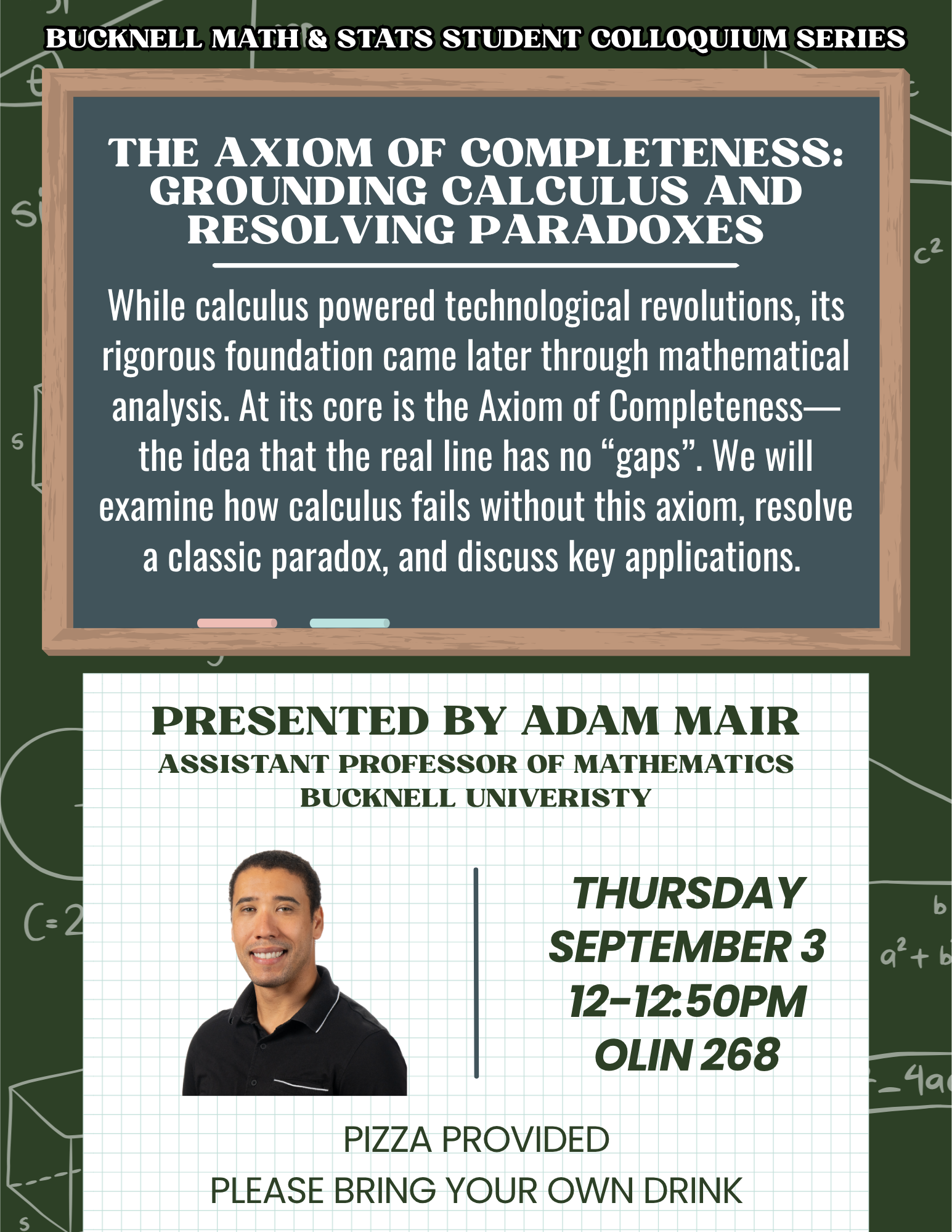
Colloquium Title: The Axiom of Completeness: Grounding Calculus and Resolving Paradoxes
Abstract: While calculus powered technological revolutions, its rigorous foundation came later through mathematical analysis. At its core is the Axiom of Completeness—the idea that the real line has no “gaps”. We will examine how calculus fails without this axiom, resolve a classic paradox, and discuss key applications.
I have wanted to be a professor since being an undergraduate at Cal Poly – San Luis Obispo. I attended graduate school at The University of Alabama and, afterwards, was fortunate to be hired at Bucknell.
Shout out a teacher or mentor that helped you along the way.
Professor Kabe Moen (Univ of Alabama) was my advisor and has been instrumental in my success as a teacher and a scholar.
What first got you into the particular topic you will talk about in your talk?
Professor Hamilton (Cal Poly – SLO) and her amazing Analysis class is where I became passionate about Calculus.
If students want to learn more about the topic in your talk, what resources do you recommend checking out?
Understanding Analysis by Stephen Abbott is a great undergraduate level analysis textbook that covers completeness well.
Where and when do you get your best work done? What does your working environment have to look/feel like to be productive?
I have three kids so precisely zero work gets done at home! I work most effectively in my office before lunch. It’s all downhill form there! I prefer a calm and quiet environment.
What general advice do you have for students?
College is a great opportunity to learn how to commit. Many classes you take will not be easy, and may not even be what you’re passionate about. Buy into the concept of working hard the whole semester. The gratification of success that comes later is amazing!
What do you like to do for fun?
I love running and watching sports! Roll Tide Roll!
Follow bucknell.math.stat on Instagram!
Want a chance to be featured in a future blog post? Respond to our question of the week here, and your answer may be chosen for a future post.
Math 208: Mathematical Explorations is a half credit class for intended Math/Statistics/Applied Math/Mathematical Economics majors. In this class, students:
Investigate a wide-range of math ideas beyond intro calculus and statistics
Build community and work closely with the other first-year majors
Get involved with the math & stat department
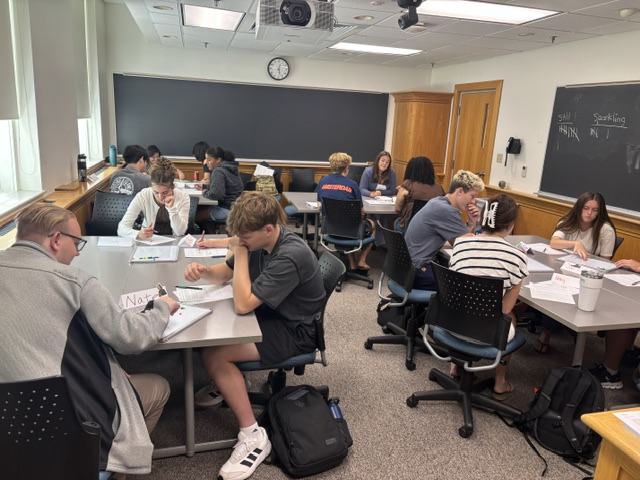
This semester, Prof. Kelly Bickel is teaching the class. Most class days involve hands-on activities where students explore math-related ideas in groups. On Wednesday August 26th, the topic of class was Mathematical Games- games whose rules are governed by mathematical principles. If you have such a game, some natural questions are:
If it’s a one-player game, when is it winnable?
If it’s a two-player game, what’s the best strategy for each player?
Does either player have a winning strategy?
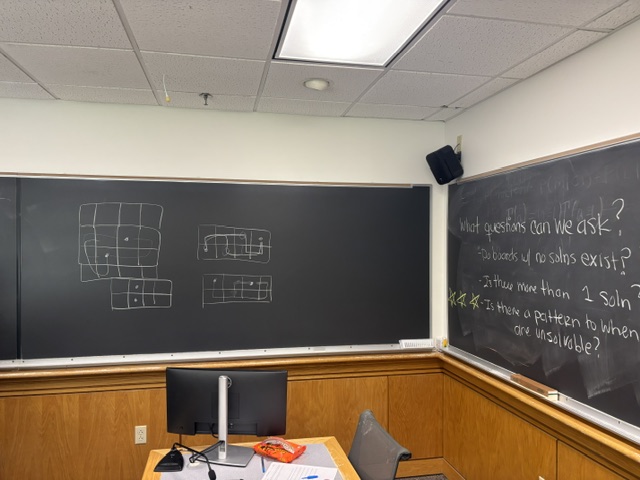
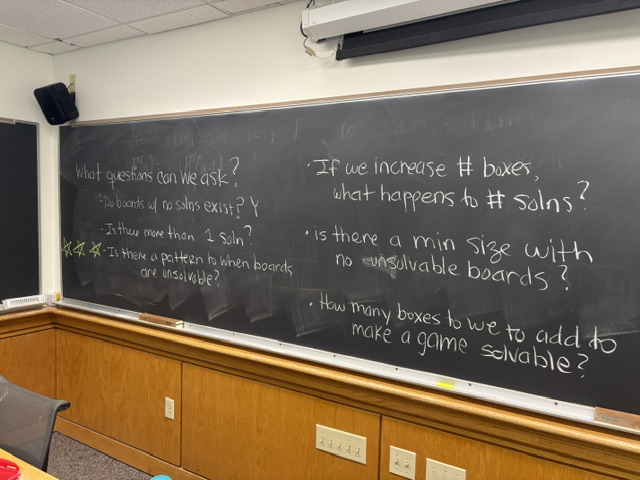
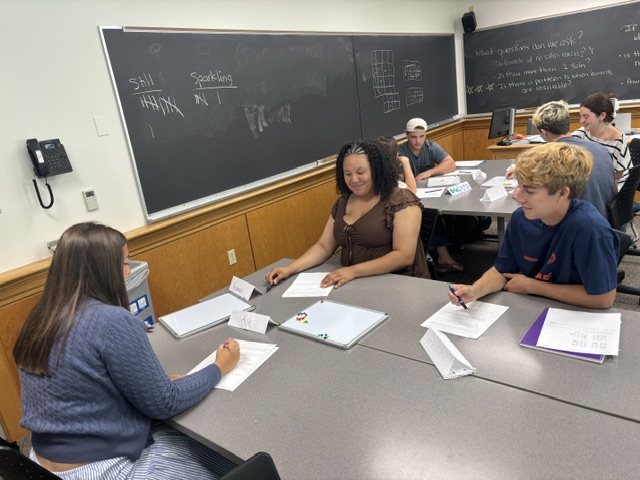
During class, students played some mathematical games and tried to answer those questions. First they looked at grids of different sizes with two dots marking two grid cells. Is there a path between the two dots that goes through each grid cell exactly once? Once students played a few boards, they were then asked to come up with more general questions about these grid games. One question in particular was popular: is there a pattern to when boards are unsolvable?
Questions students had about the grid game.
Follow bucknell.math.stat on Instagram!
Whole class at both work and play!We see some data collection in the background. This is a primarily still water-drinking group.
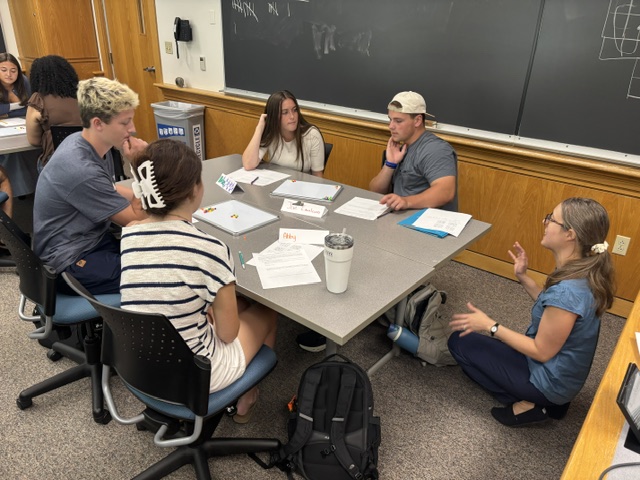
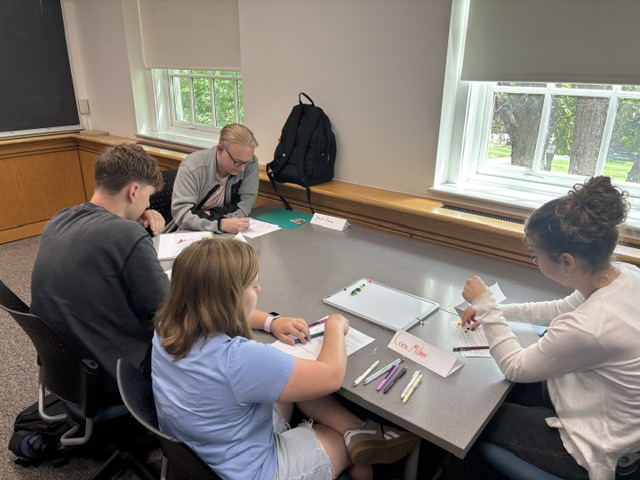
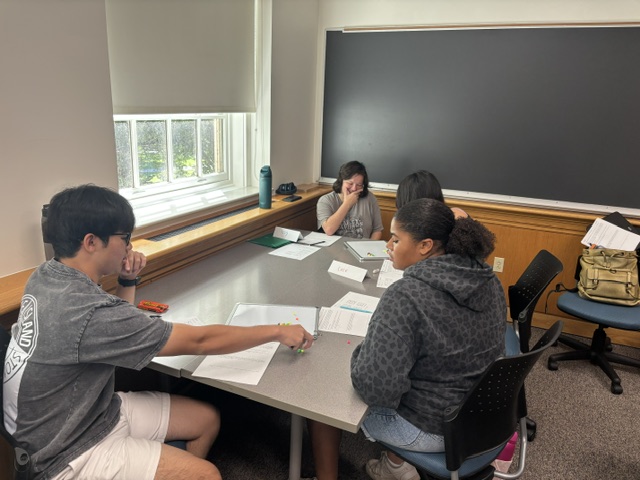
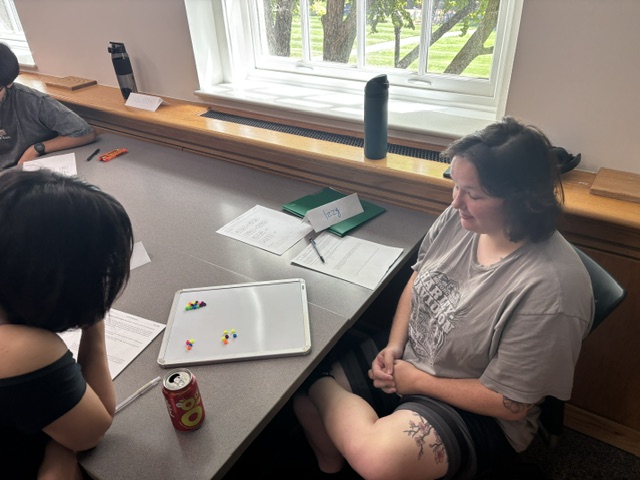
Next up, was a two-player game. Groups split into pairs to play a game and try to determine a way to win.
The group in the top middle photo is made up of Finley Wardrip (Mathematical Economics major, ’30), Joe Cavalcanti (Mathematical Economics major, ’30), Abigail Angler (Applied Mathematics Major, ’30) and Rose Wayland (Mathematics Major, ’30)
The group in the top right photo is made up of Zach Timms (Mathematics major, ’30), Cora Milner (Applied Mathematics Major, ’30), Emily Koplin (Mathematical Economics major, ’30), and Nathan Small (Statistics Major and Data Science Co-Major, ’30).
The group in the bottom left photo is made up of Izzy Van Dyke (Mathematics major, ’30), Cece Sonthonnax (Applied Mathematics Major, ’30), Nguyen Nguyen (Mathematical Economics major, ’30) and Ariah Vona (Mathematics Major + seeking teacher certification, ’30)
The group in the bottom right is made up of Ava Abrahamson (Mathematical Economics Major, ’30), Yosmairi Arias (Mathematics Major + seeking teacher certification, ’30), and Peter Caputa (Mathematical Economics major, ’30).
Want to experience this game yourself? Grab a friend and put 10 beads/pennies/pick your object on a table. During each turn, a player can take between 1 and 4 beads. How do you win? Take the last bead. Can you come up with a winning strategy? What if you start with 11 beads? 24 beads? N beads?
Want a chance to be featured in a future blog post? Respond to our question of the week here, and your answer may be chosen for a future post.
Thinking about studying abroad? Sam Berry (Applied Mathematics major, ’27), Skyler Le (Mathematics major, ’27), and Dante Mancino (Mathematics major, ’27) spent last fall semester, and Celine Chang (Applied Mathematics major, ’27) spent last spring semester learning math in Budapest, Hungary. They had a blast; see for yourself…
They saw the sights, tasted the food, heard the music!
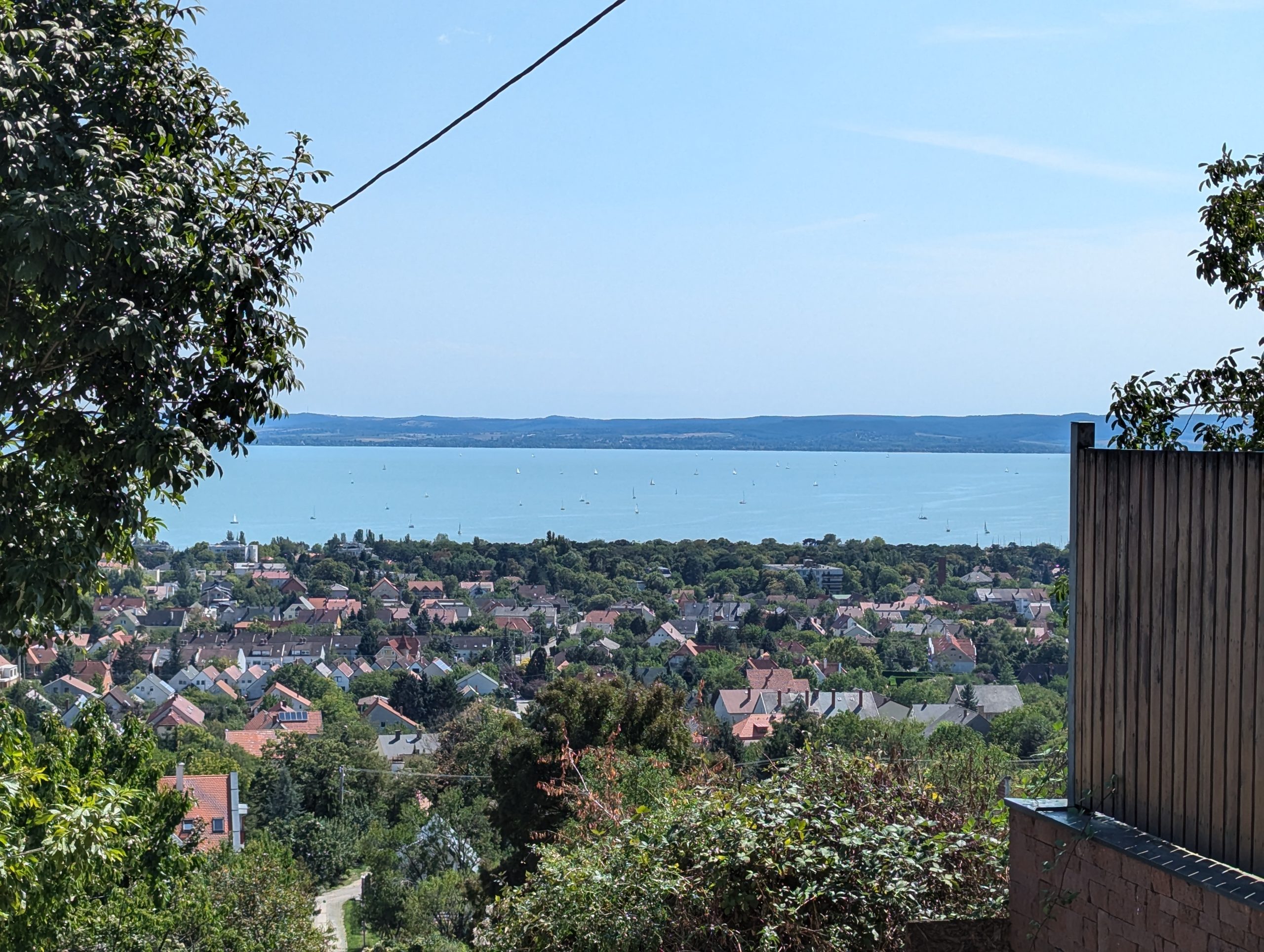
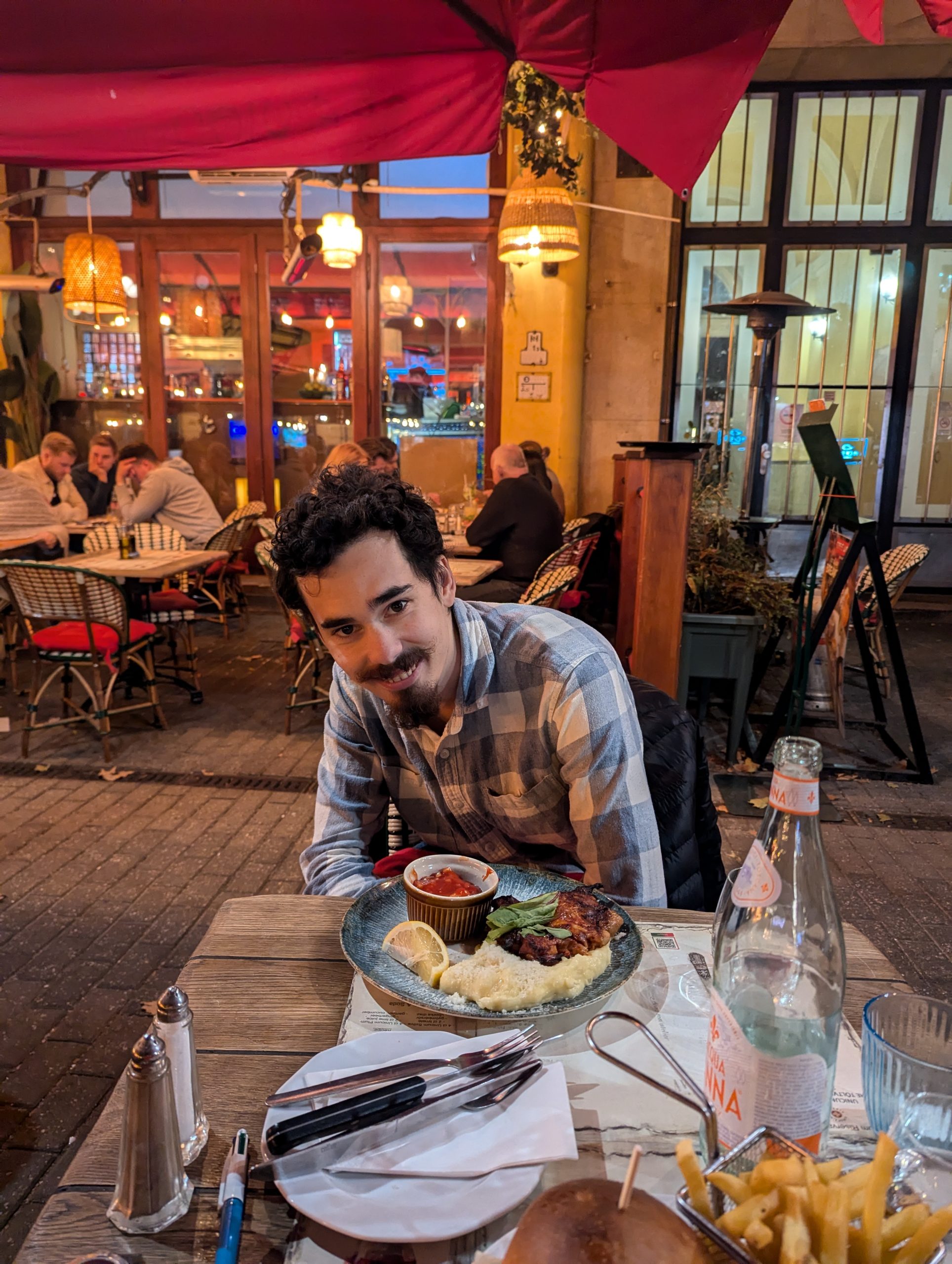
Overlooking Lake Balaton, the largest lake in HungarySam trying the national dish, GoulashCeline seeing Swan Lake in the Hungarian State Opera
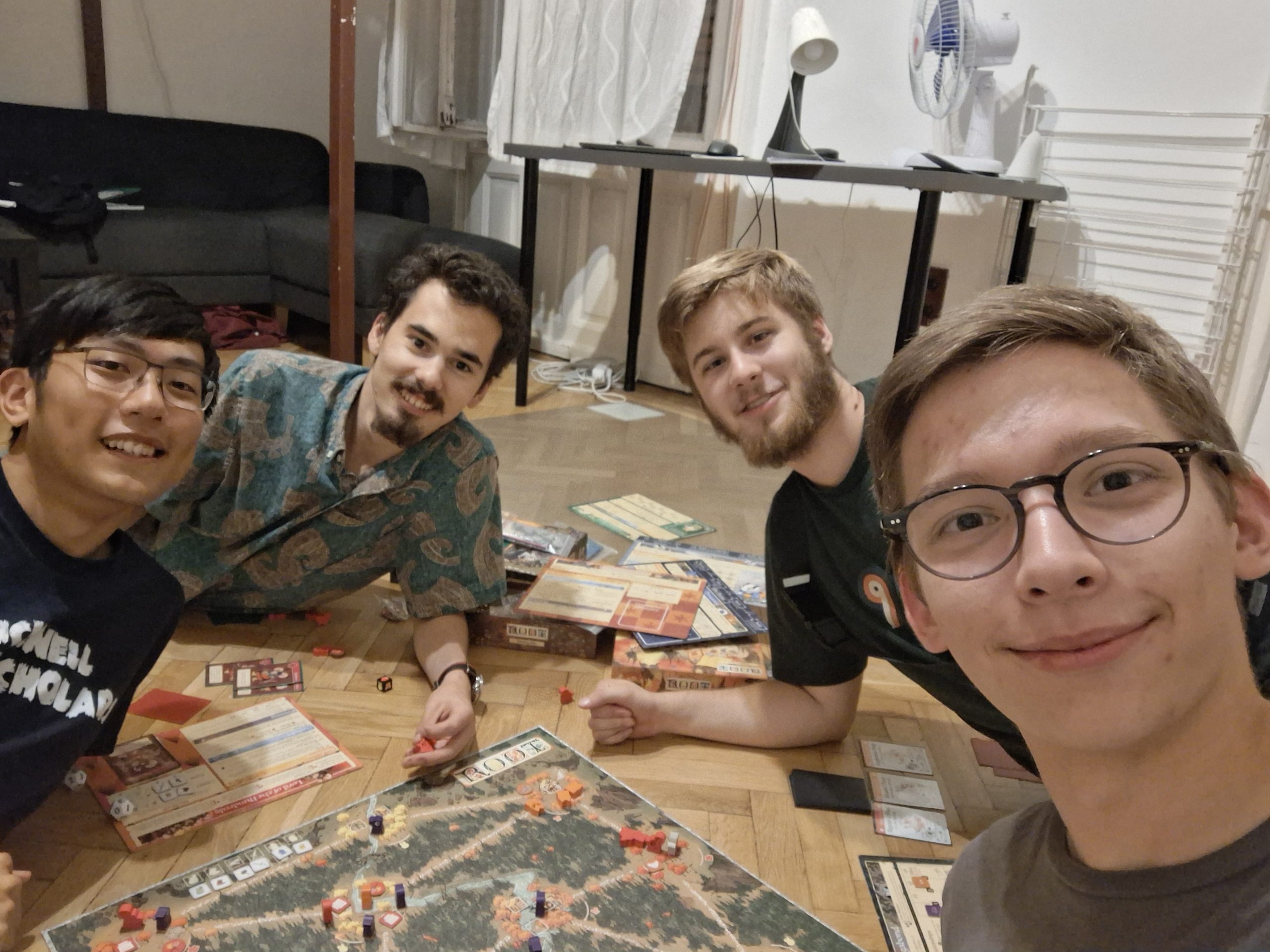
Skyler and Sam play board games with new friends.Celine and some new friends.
Follow bucknell.math.stat on Instagram!
They learned some cool math! Check out this lecture hall where students gathered together for info sessions, colloquia, and research presentations.
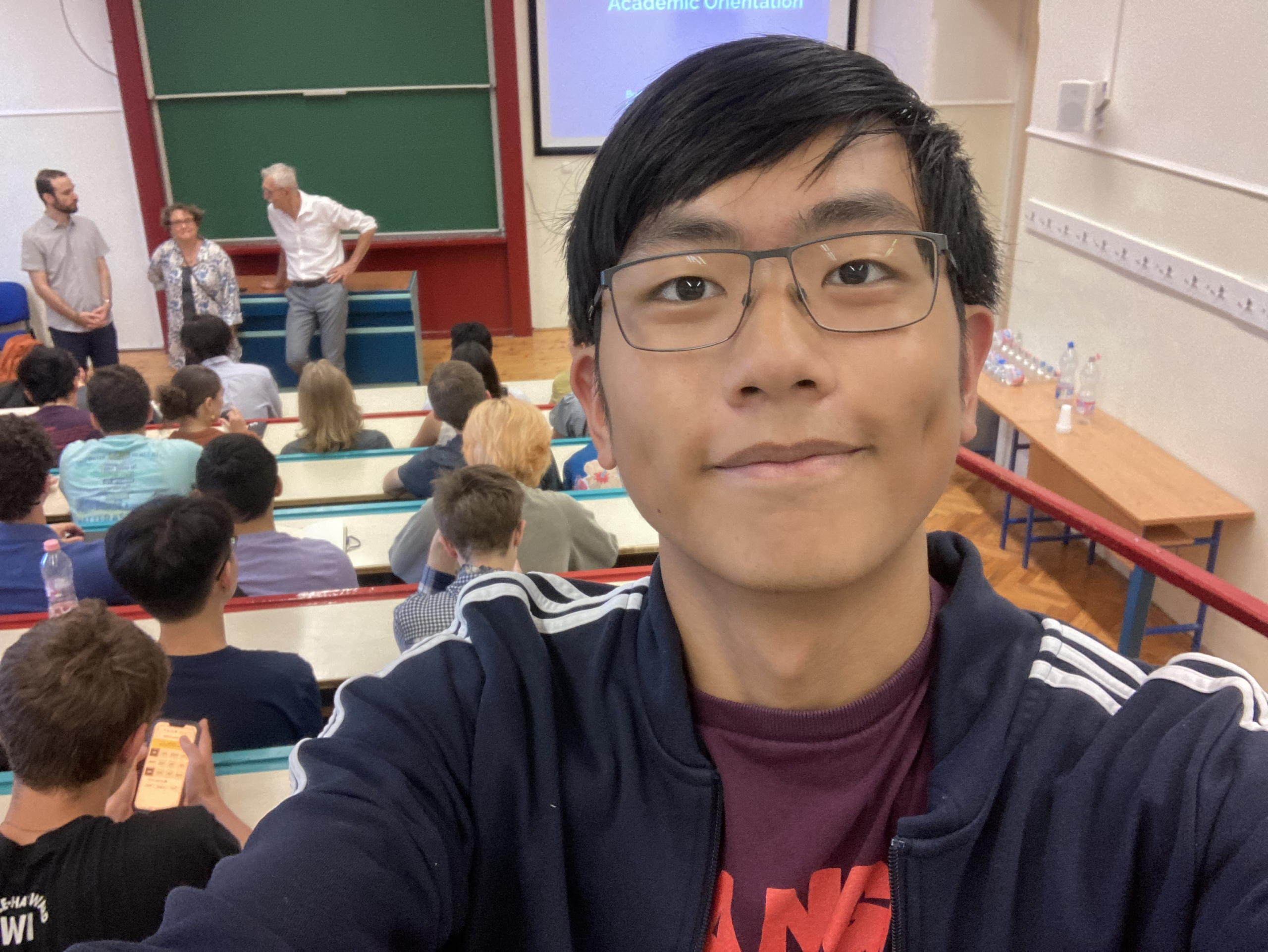
Dante and Skyler after just landing in BudapestSkyler during orientation on the first day of class
They experienced new traditions!
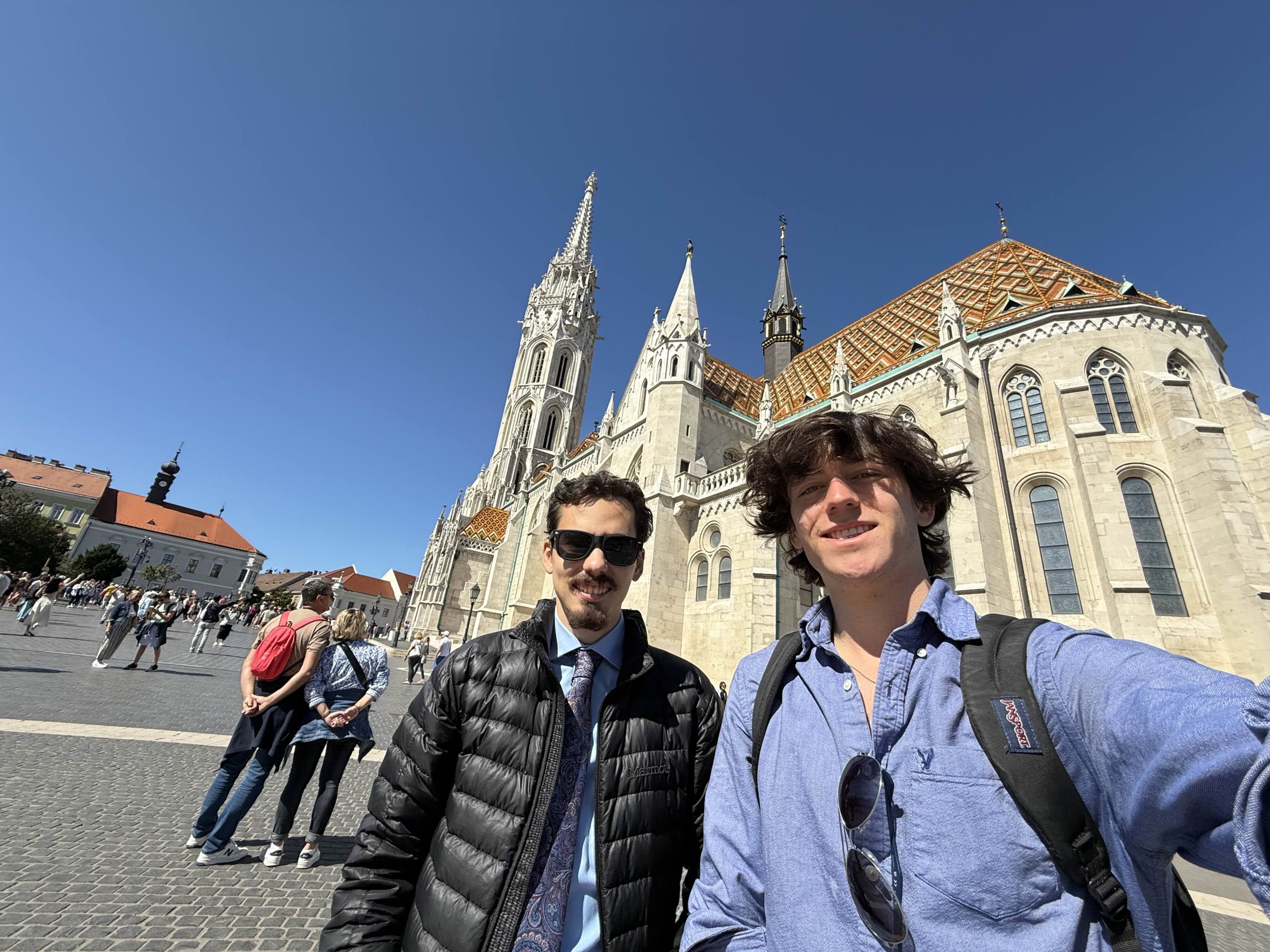
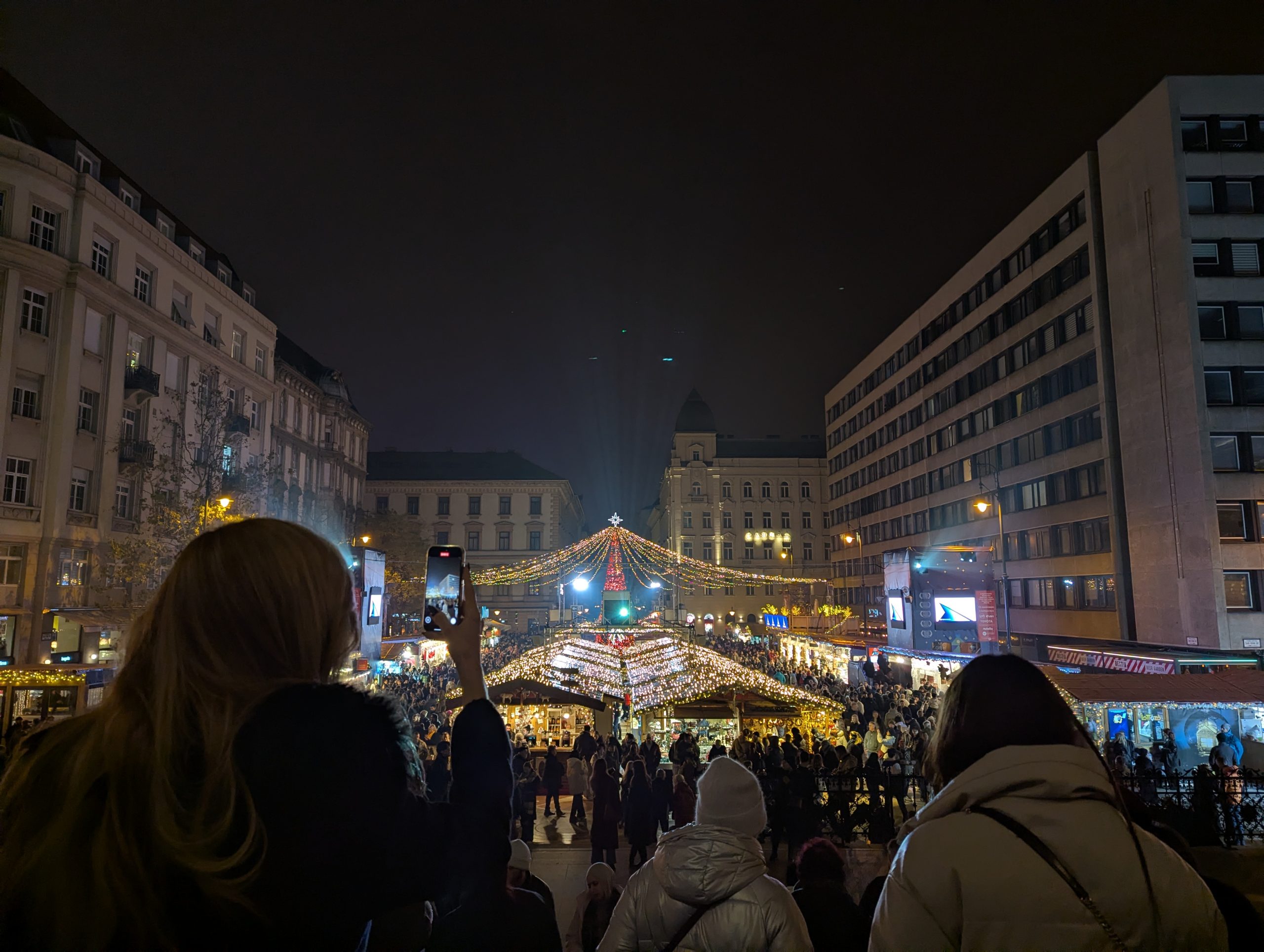
Hungarian National Founding Day celebrationSam and a classmate outside of Matthias Churchsteps of Saint Stephen’s Basilica overlooking the Budapest Christmas Fair
If all of these photos make you excited about studying abroad, but you aren’t quite sure about this particular program, learn more from the Bucknell Global Education team here.
Want a chance to be featured in a future blog post? Respond to our question of the week here, and your answer may be chosen for a future post.
Welcome back! We hope your summers were restful, and you feel recharged for another fun semester ahead.
This year we’re going to have more action on this blog, so stay tuned weekly for the latest update on what is going on in the Mathematics and Statistics Department. Want a chance to be featured in a future post? Respond to our question of the week here, and your answer may be chosen for a future post.
Follow bucknell.math.stat on Instagram!
But before we kick off the Fall 2026 semester, let’s throwback to Fall 2025 and Spring 2026.
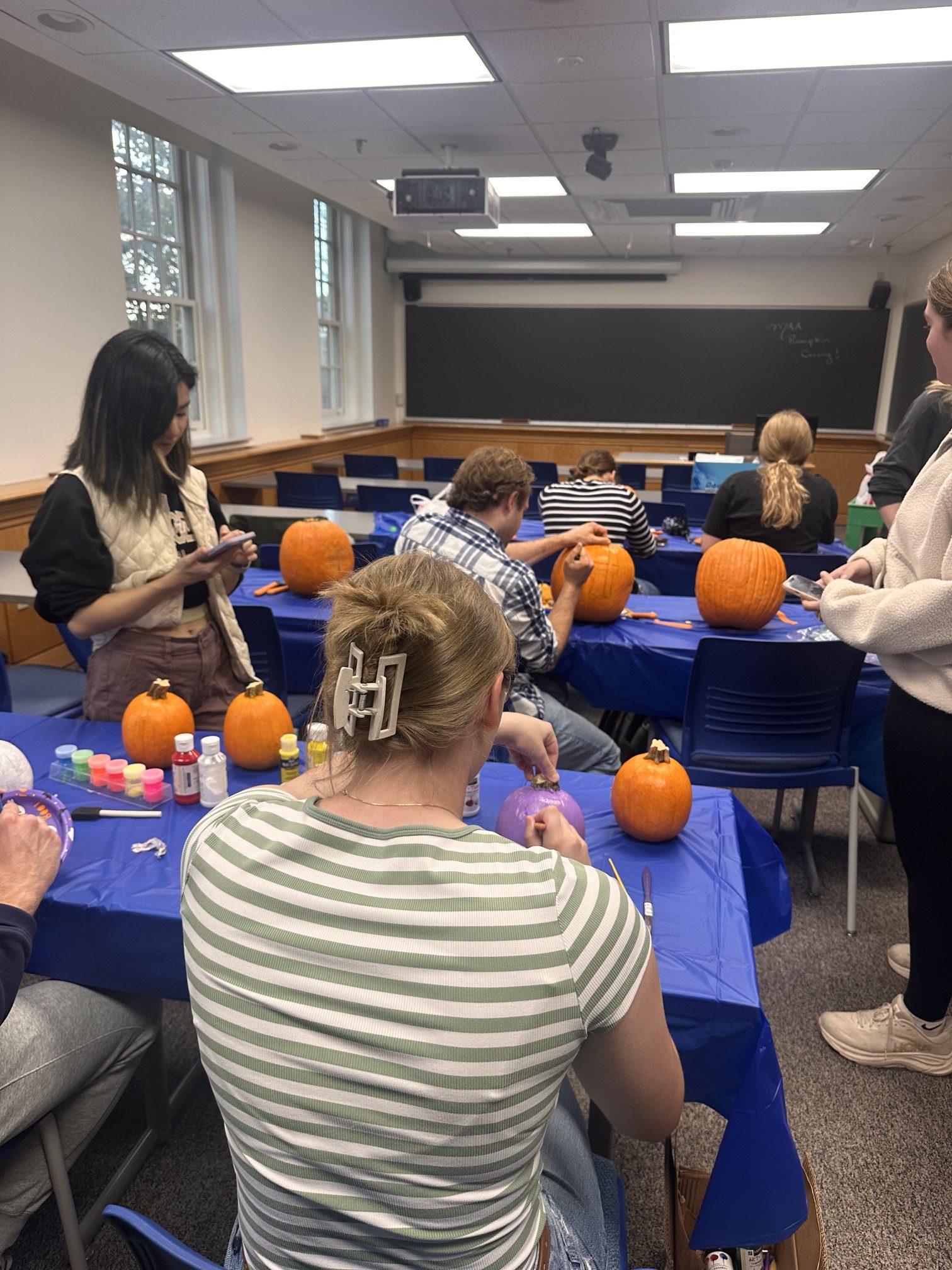
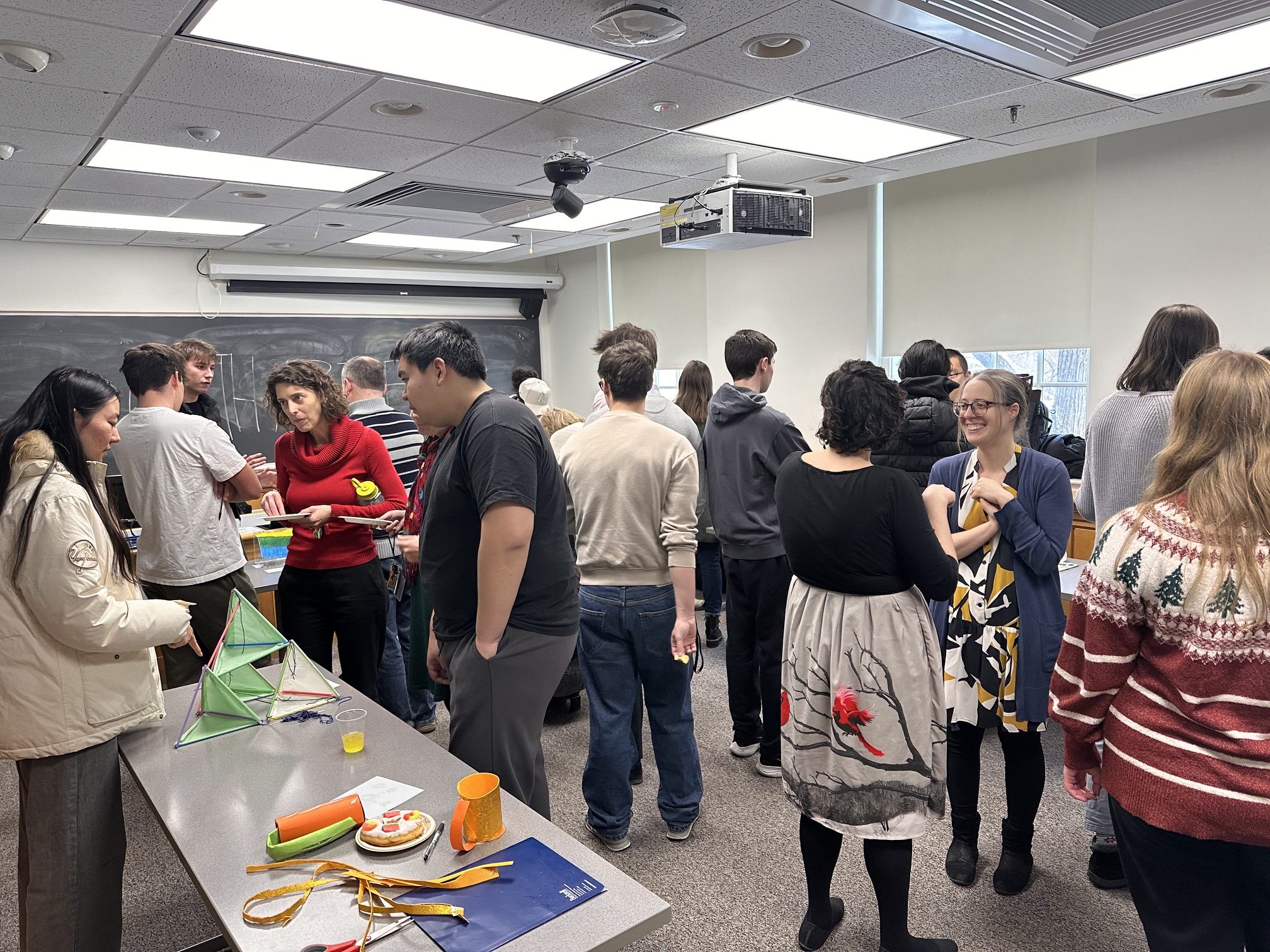
Before we know it, there will be a chill in the air, and we’ll be sipping on fall-themed, cozy drinks. Last fall the MAA students hosted a pumpkin painting and carving night and Prof. Bickel’s MATH 208 hosted a math-art show.
Keep an eye out for future MAA nights!See what MATH 208 students come up with this semester!
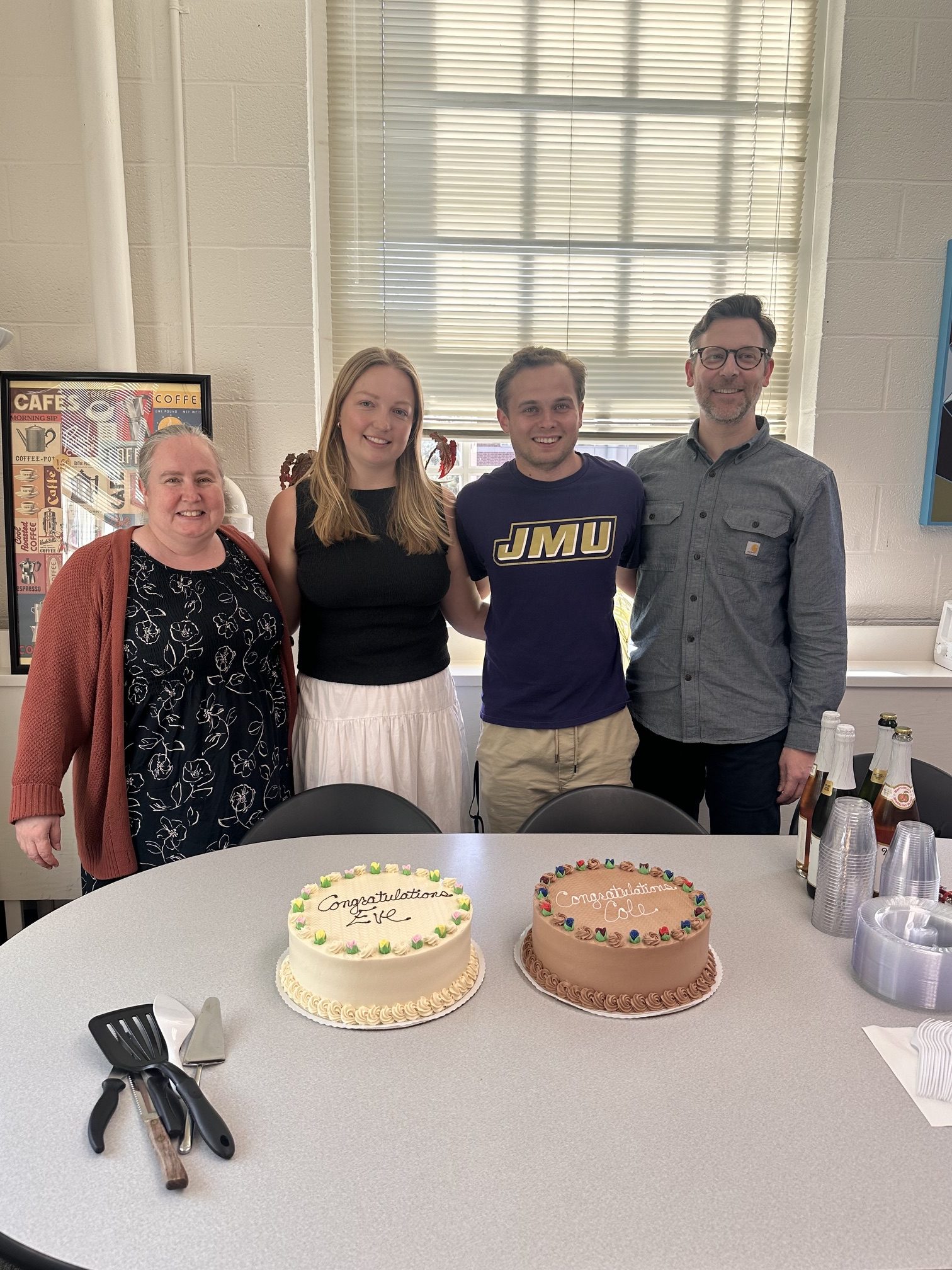
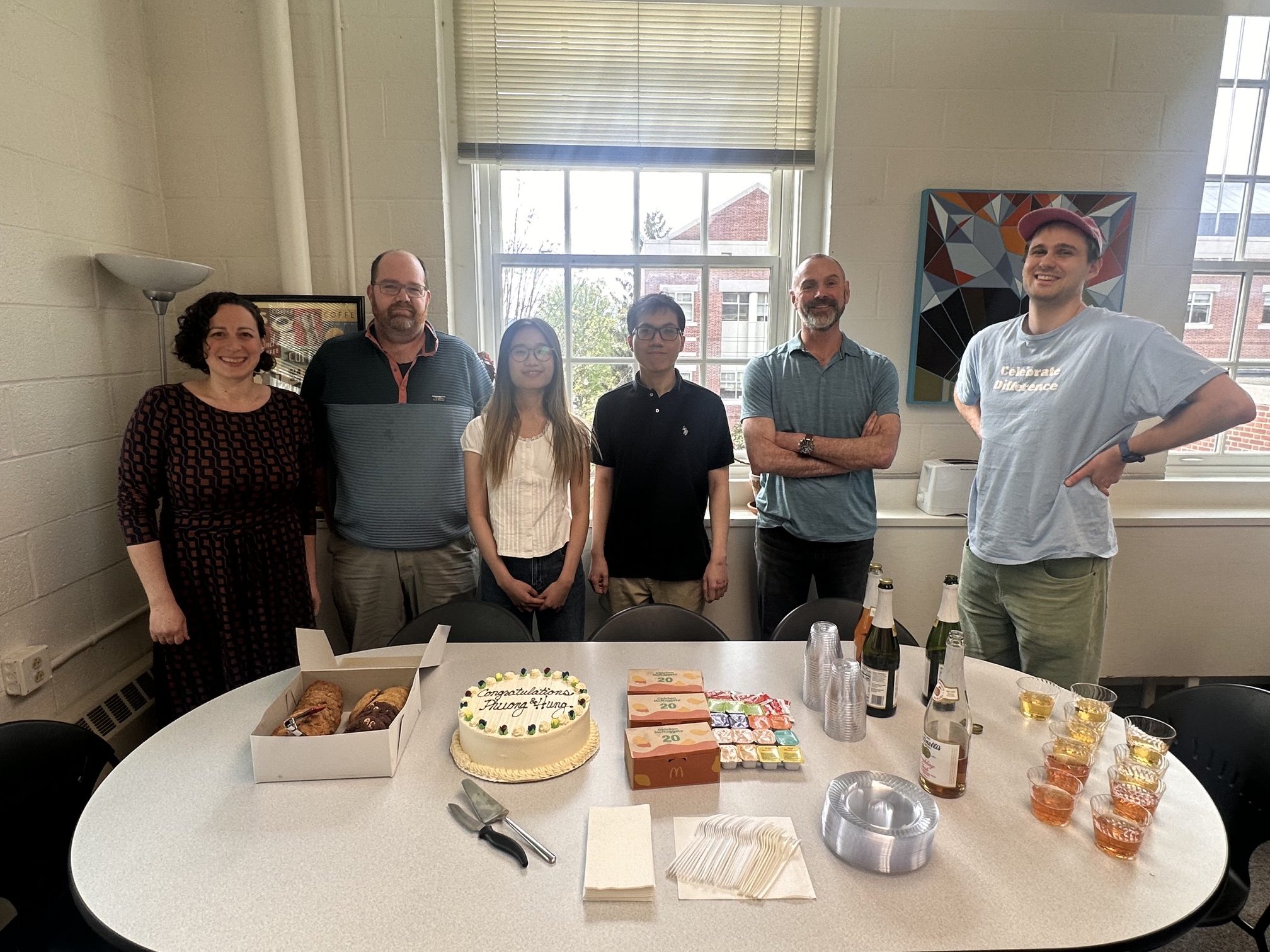
In the spring we had four students complete honors theses!
Congrats to Eve Johansson (advised by Prof. Hamlet) and Cole Kratz (advised by Prof. Langford)Congrats to Phuong Cao (advised by Prof. Berg and Prof. Ryan) and Hung Pham (advised by Prof. Brooksbank and Prof. Schmid)
Faculty and staff hit milestones last year too!
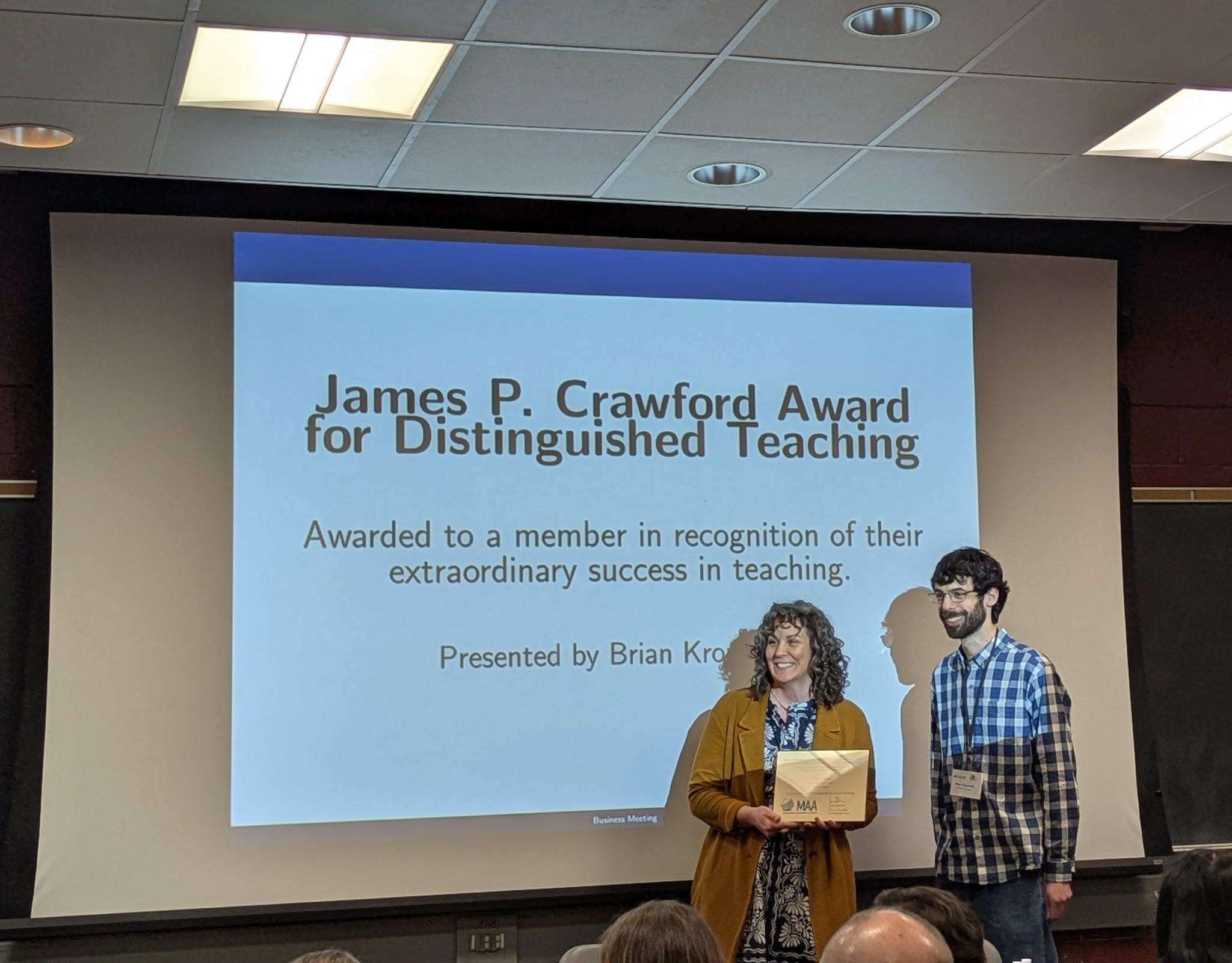
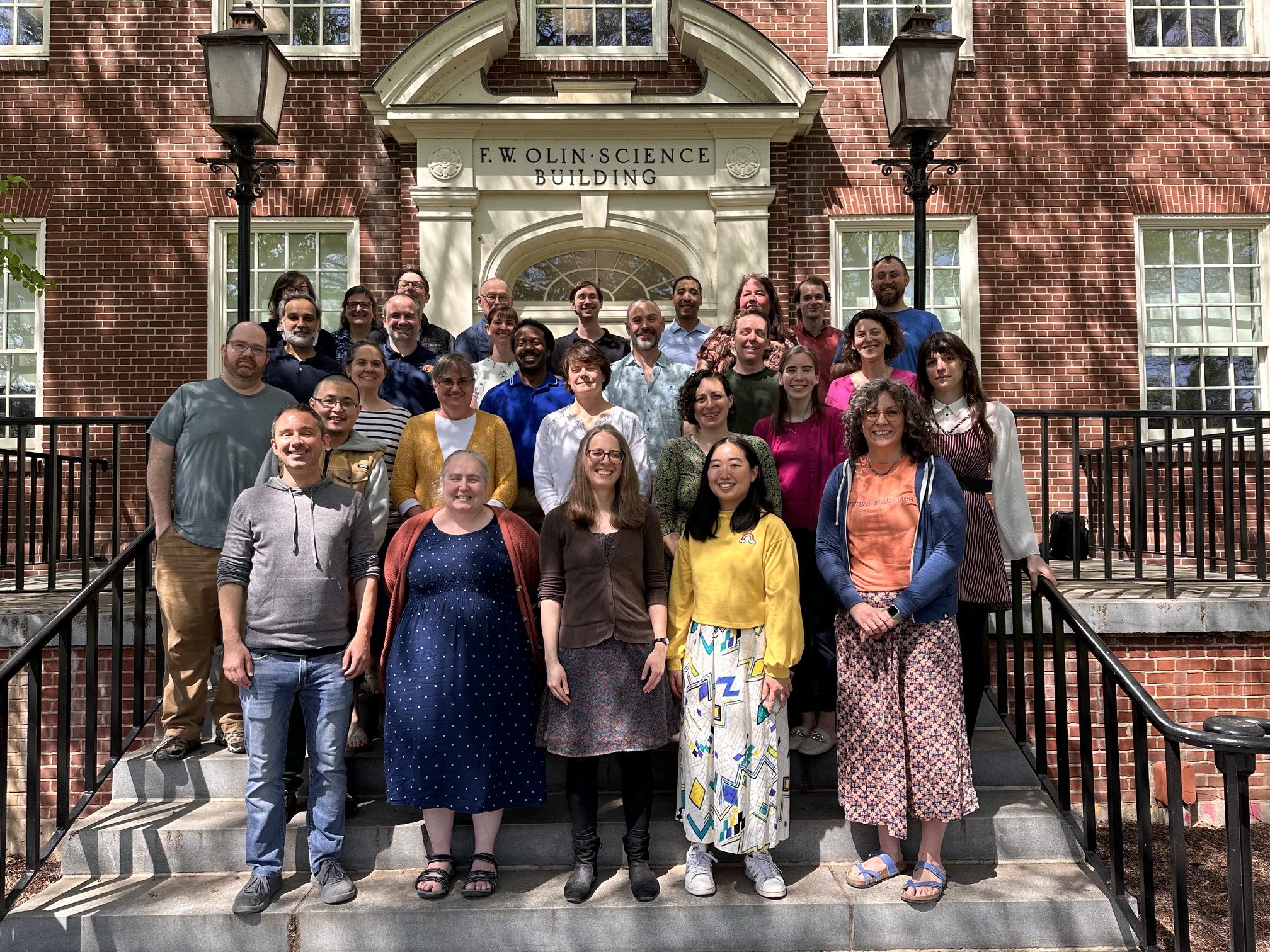
Congrats to Prof. Flynt for her well-deserved teaching award!Best wishes for Bonnie in her well-deserved retirement!
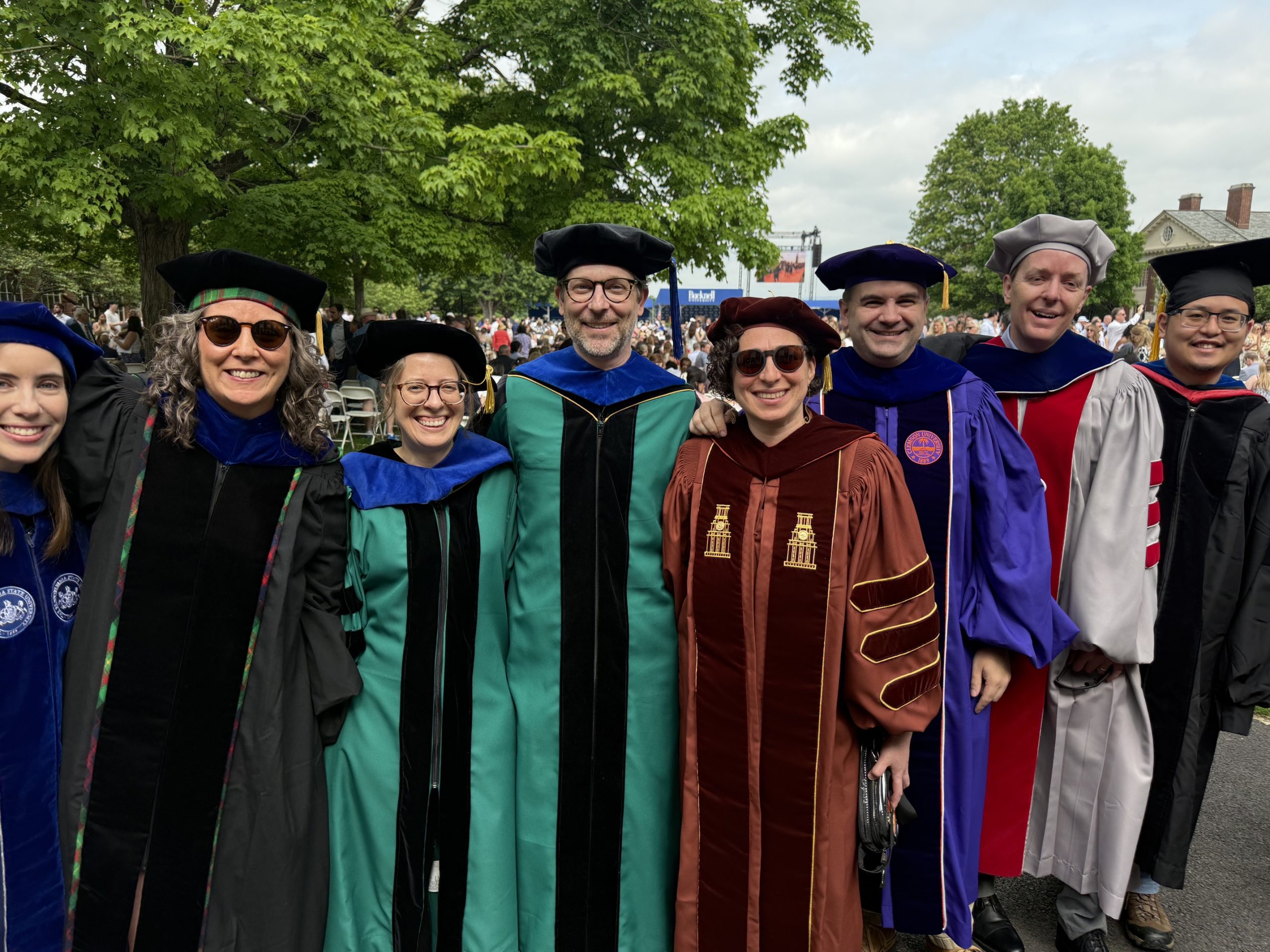
Thanks for being a part of our community!It’ll be graduation time before you know it…
Save the date for our first student colloquium with our very own Prof. Mair, and check out the new chalkboard by the student lounge in Olin to vote on a very important question… 😀
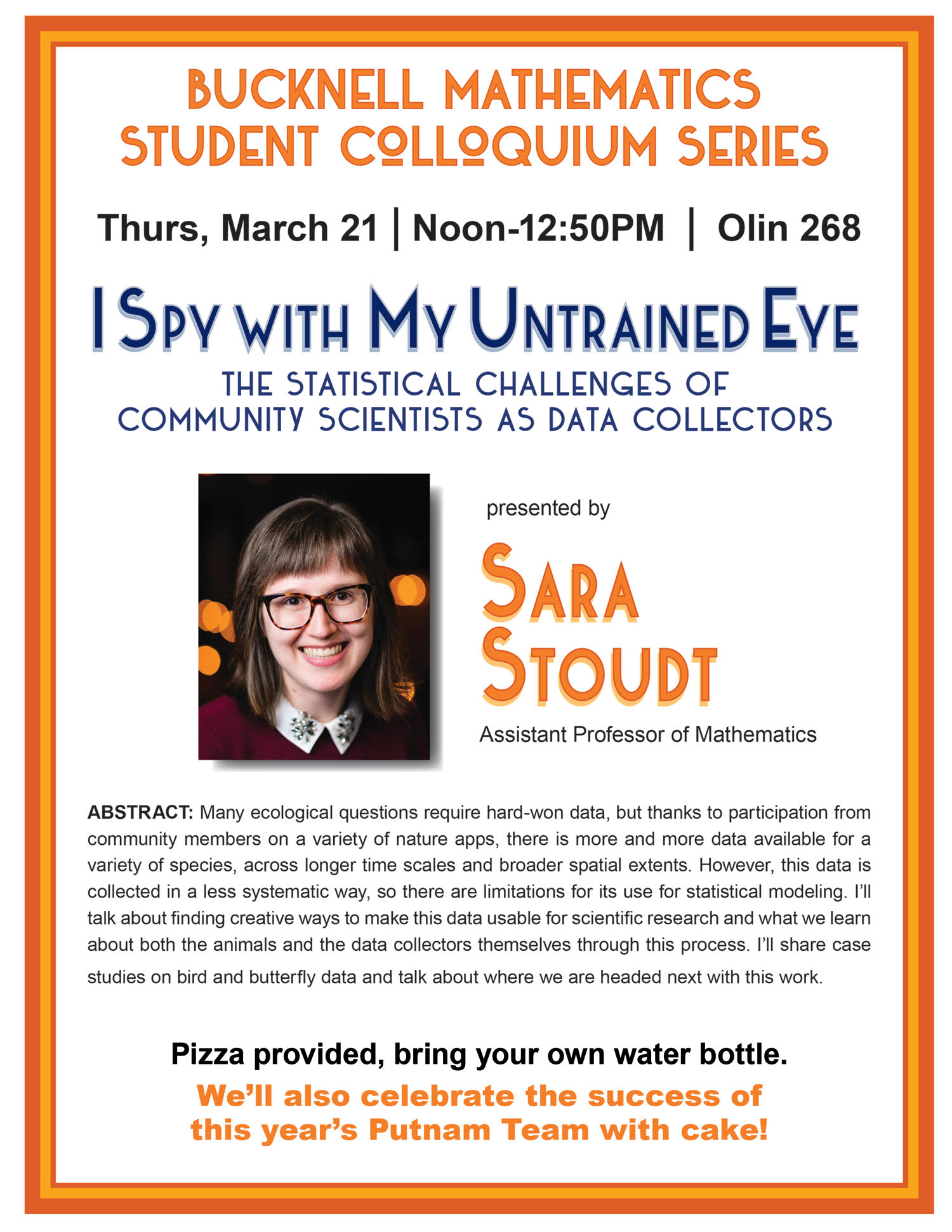
I Spy with my Untrained Eye Presented by Sara Stoudt, Assistant Professor of Statistics, Bucknell University
ABSTRACT: Many ecological questions require hard-won data, but thanks to participation from community members on a variety of nature apps, there is more and more data available for a variety of species, across longer time scales and broader spatial extents. However, this data is collected in a less systematic way, so there are limitations for its use for statistical modeling. I’ll talk about finding creative ways to make this data usable for scientific research and what we learn about both the animals and the data collectors themselves through this process. I’ll share case studies on bird and butterfly data and talk about where we are headed next with this work.