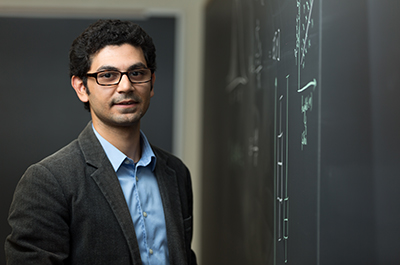
Student talk: Meghan Harward at noon on March 8

Getting Started in Analytics

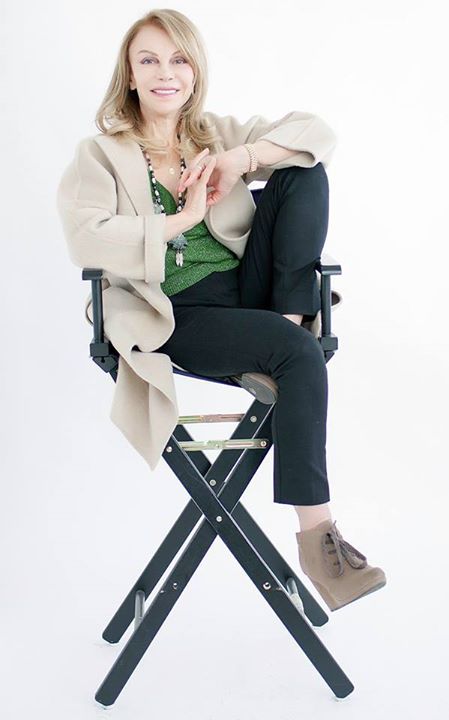
Meghan Kent Harward, Analytical Consultant, Advanced Analytics Lab, SAS Institute Inc.

Thursday, March 8, 12:00 p.m. Room 268 in the Olin Science Building.

Abstract: We hear buzz words like “big data” and “the internet of things” more and more in our media, but do we really know what analytics is? In this talk we will explore paths to jobs in data science, what it means to be an analyst, and some keys to success in the field.

Student talk: Torrey Gallagher, noon on February 22 in Olin 268

Iterates, invariance, and chaos

Thursday, January 25, 12:00 p.m. Room 268 in the Olin Science Building.

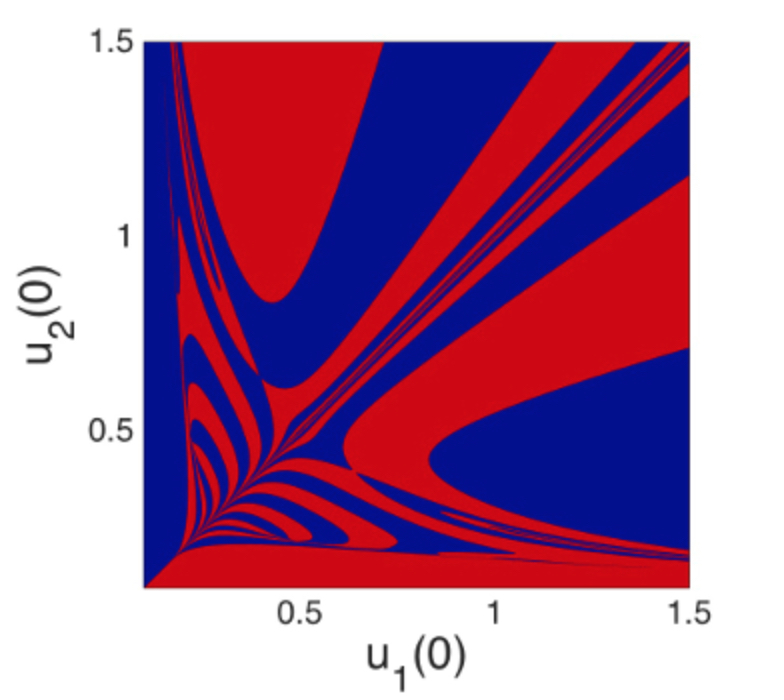
Abstract: We will consider what happens when we repeatedly compose a given function with itself, focusing particularly on where this repeated composition (known as iteration) sends individual inputs.  Various phenomena will be discussed, including the notions of invariance and what some might call chaos.


Student talk: Glenn Young from Penn State, at noon on February 8

Evolutionary game theory: the mathematics of cooperation

Thursday, February 8, 12:00 p.m. Room 268 in the Olin Science Building.

Why do we (or any living organisms) cooperate? Cooperation, the act of expending one’s own energy or resources for the good of the group, is a necessary part of life, but is also exploitable by so-called “defectors” who choose not to help out yet still reap the benefits that cooperation yields. In fact, under fairly general assumptions, every rational individual will (theoretically) choose to defect, thereby extinguishing cooperation and dooming society. Of course, cooperation has not been extinguished and is in fact quite common in the natural world. This observation brings us back to the question posed at the beginning of this abstract. In this talk, I will discuss a mathematical framework through which cooperation is often studied called evolutionary game theory, and present several classic and recent results from the field.

Student talk: Owais Gilani, noon on January 25 in Olin 268

Spatial interpolation of atmospheric pollutants using Kriging

Thursday, January 25, 12:00 p.m. Room 268 in the Olin Science Building.

Abstract: Have you ever wondered how meteorologists produce prediction maps of temperature and rainfall volume across large geographic regions? They surely can’t monitor temperature and rainfall in every neighborhood across the country, yet there is a prediction available for any location. This challenge of estimating a spatial process at unsampled locations based on known (sampled) values of the process at neighboring sites is called spatial interpolation, and has a number of applications in geosciences and elsewhere: atmospheric scientists estimate concentrations of pollutants across cities or states using concentrations monitored at select sites; oceanic scientists graph salinity across water basins using water tested in certain areas; and mining engineers determine the volume of oil, gas, or other minerals underground in a region based on samples collected at a few sites. In this talk, I will present a popular statistical approach used for spatial interpolation, called Kriging. Unlike deterministic interpolation techniques, such as Inverse Distance Weighting, Kriging provides both unbiased estimates at unsampled locations, and a measure of the uncertainty associated with the estimates. I will demonstrate an application of Kriging by estimating the concentration of nitrogen dioxide, an atmospheric pollutant, over the state of Connecticut using concentrations monitored at a few locations within the state.

Student Talk: Dr. Amanda Traud, November 16 at noon in Olin 268

From Academia to Data Science, One Woman’s Journey

Getting into data science seems to be a unique path for each data scientist.  This talk will chronicle the path Dr. Mandi Traud took from graduate school in North Carolina to Data Science Lead at Tuple Health and President of Data Community DC.  She will talk about her data science projects all along the way and how she moved from academia to working for a company and volunteering in the data science community.


Alumni Career Panel Thursday November 2

Panelists:
Trevor Adriaanse ’17 Math, Analyst, Department of Defense
Jeff Miller ’17 ECMA, Analyst, Axtria – Ingenious Insights
Jin On ’12, Math, Data Scientist, Geneia
Laura Papili ’17 Math, Actuarial Analyst at Willis Towers Watson

Hear advice and perspectives from Bucknell alumni who will examine career paths that utilize the mathematics degree while discussing their work and available opportunities. The conversation will include a question and answer period.

12:00 P.M.  Olin 268, Panel with  PIZZA/CALZONES

4:00 PM  OLIN 383
And an informal MEET and GREET with the panel (refeshments)


Student talk: Tom Cooney October 19, noon in Olin 268

Quantum Games and Quantum Computing

Thursday, October 19, 12:00 P.M. ROOM 268 in the Olin Science Building

Abstract: What’s the shortest message you can send someone? It might seem like the answer is a single bit: a 0 or a 1.

But the world is much stranger than that! We can also send quantum bits (or qubits) that can be 0 or 1 or “both” 0 and 1 at the same time.

These quantum messages have surprising power for computing and sending information. I’ll talk about how we can better understand these strange quantum messages by studying games that use quantum messages instead of classical messages.

Fibonacci at Bucknell!

Leonardo of Pisa (a.k.a Fibonacci) has a remarkable connection with Bucknell, and to celebrate this fact we are holding an interdisciplinary conference on October 14. Featured speakers include:
Mario Livio – an astrophysicist and author of popular science books,
Keith Devlin – NPR’s “Math Guy” and the author of numerous popular mathematics books,
William Goetzmann – Director of the International Center for Finance, Yale University

This event will be in the Langone Center from 10:00 a.m. until 2:30 p.m.

Lunch tickets are available in Olin 380, or by writing to math@bucknell.edu

Learn more here.

Summer Opportunities for Math Majors, October 5 at noon in Olin 268

A special panel discussion featuring:

Maddie Brown `18 – NSF REU in mathematical analysis and applications at University of Michigan – Dearborn.

Caroline Edelman `18 – REU in dynamical systems at Boston College

Nate Mattis `19 – TEU program at Brown University

Alexander Murph `18 – Nielsen Professional Summer Analytics Experience (PSAE)

Leo Orozco `18 – Summer Security Intensive, IT Lab Fellow at Carnegie Mellon University

Pizza and sodas for everyone!