PIZZA SERVED from 11:30 -11:55 in front of Hislop Family Auditorium
TALK STARTS AT 12:00 PM
“Dido’s Problem and the Isoperimetric Inequality”
Presented by
CHEE HAN TAN Department of Mathematics – Bucknell University
Thursday, February 3, 2022
12:00 P.M.HOLMES HALL – 116 Hislop Family Auditorium
Abstract: What is the shape with a given perimeter that encloses the largest area? In this talk, we will learn about the history of this problem (dating back to 814 BC) and daring attempts by many great mathematicians whose incomplete solutions led to the development of diverse areas in modern mathematics. Finally, we will reveal the answer and discuss how to solve the problem.
“When the Supreme Court declares your homework unconstitutional: Reflections on data science and society”
Presented by David Hunter, Department of Statistics – Penn State University
Thursday, January 20, 2022
12:00 P.M.HOLMES HALL – 116 Hislop Family Auditorium
Abstract: The 2003 U.S. Supreme Court case known as Gratz v. Bollinger addresses a formula for college admissions that was created by a statistics graduate student (the presenter) for a specific purpose. The method used to create this formula is considered simplistic by modern machine learning standards; yet the debate that ensued, which could not have happened if a more modern approach had been used, illustrates that science and society do not always benefit from machine learning models that achieve the best possible predictive performance. This talk discusses the history of the legal case, the admissions formula and how it was created, and the implications of the debate for how we build predictive models.
The Putnam Competition is a famous mathematics contest for undergraduates studying in the U.S. and Canada which has taken place annually since 1927. Bucknell students have had some terrific performances in recent years. This year, the competition takes place on Saturday, December 4, and everyone who likes challenging math problems is encouraged to participate. No advanced mathematical knowledge is required, just creative problem-solving. Participation is free and on-campus.
“What Did You Do Last Summer?”, Presented by Bucknell Students
NOVEMBER 4 (Thursday) 12:10 P.M. Gardner Lecture Hall – Dana 113
Moderator: Jack de la Parra
Panelists:
Anh Kieu (pronounced like Ahn), ‘22, Software Engineering Intern, Google DeepMind
Emily Desernia ‘22, JPMorgan Chase Bank
Julia Sanger ’22, Research Experience for Undergraduates (Applied Math), Georgia Institute of Technology.
Yang Hong ’23, Undergraduate Research, Bucknell University
Jamie Falla ‘22, Risk Finance, Lockton Companies
Abstract: There are many exciting summer opportunities for students in the mathematical sciences! These range from internships in financial companies to research experiences at other universities to leadership development programs. In this week’s colloquium, a panel of your peers will tell you their experiences. What did they enjoy about their experiences? When did they apply? There will also be ample time for questions and answers. These varied opportunities, as well as being terrific fun, are also immensely valuable as you begin to think about your careers after Bucknell.
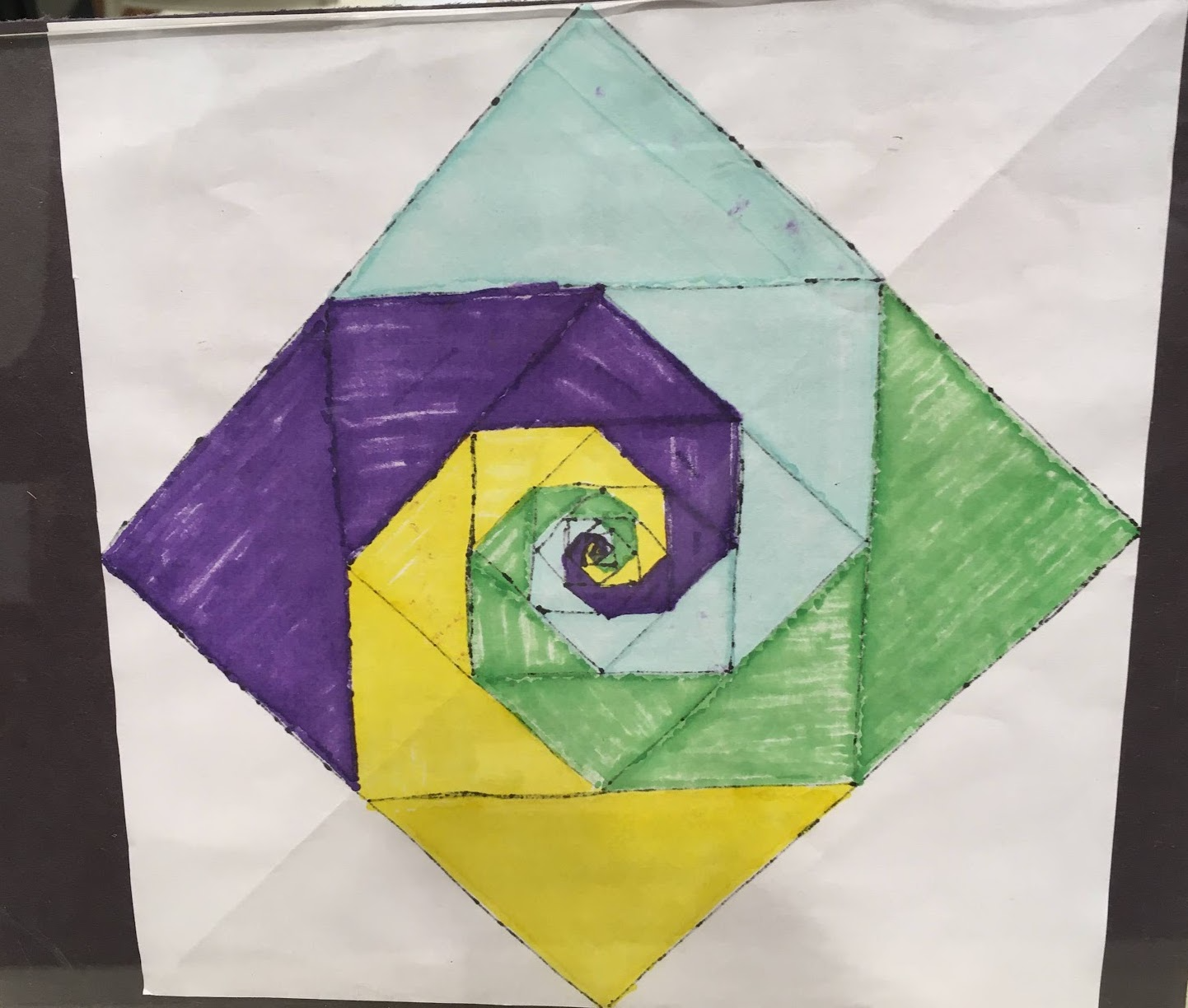
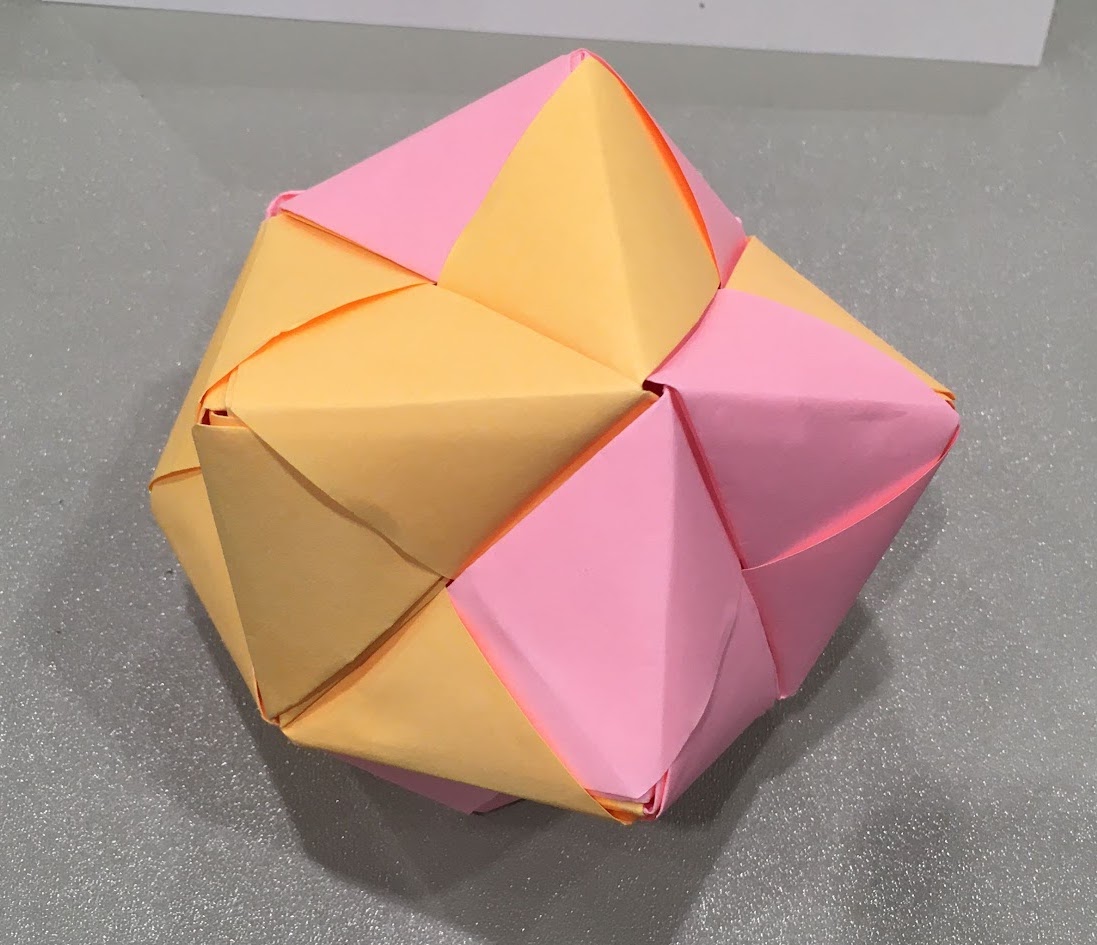
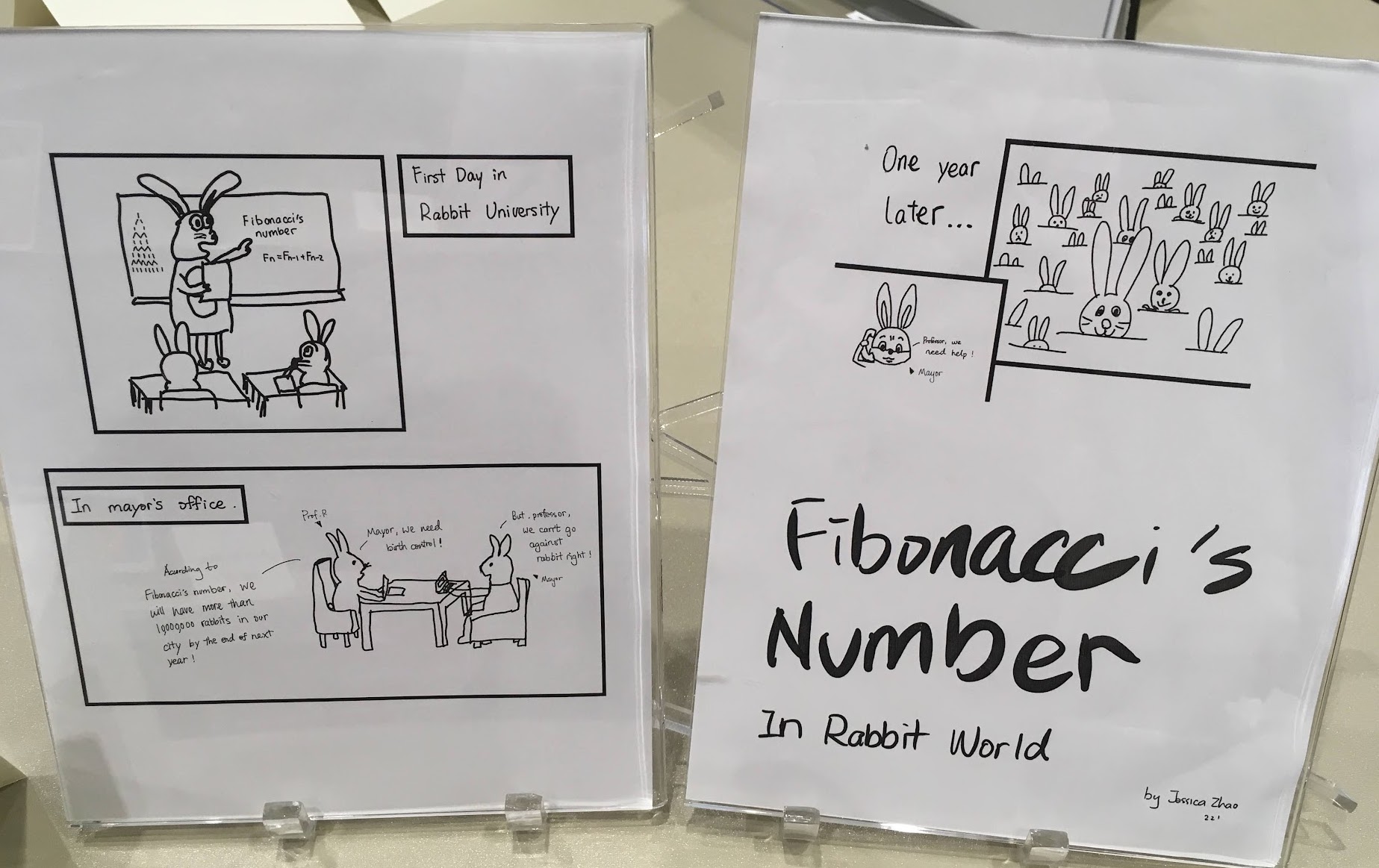
We had a wonderful and varied collection of submissions! Every attendee of the exhibit was given the chance to vote on their favorites in various categories. Every submission was picked to be the favorite of at least one person, and the voting was very close in most categories. The submissions receiving the most votes in each category are listed below.
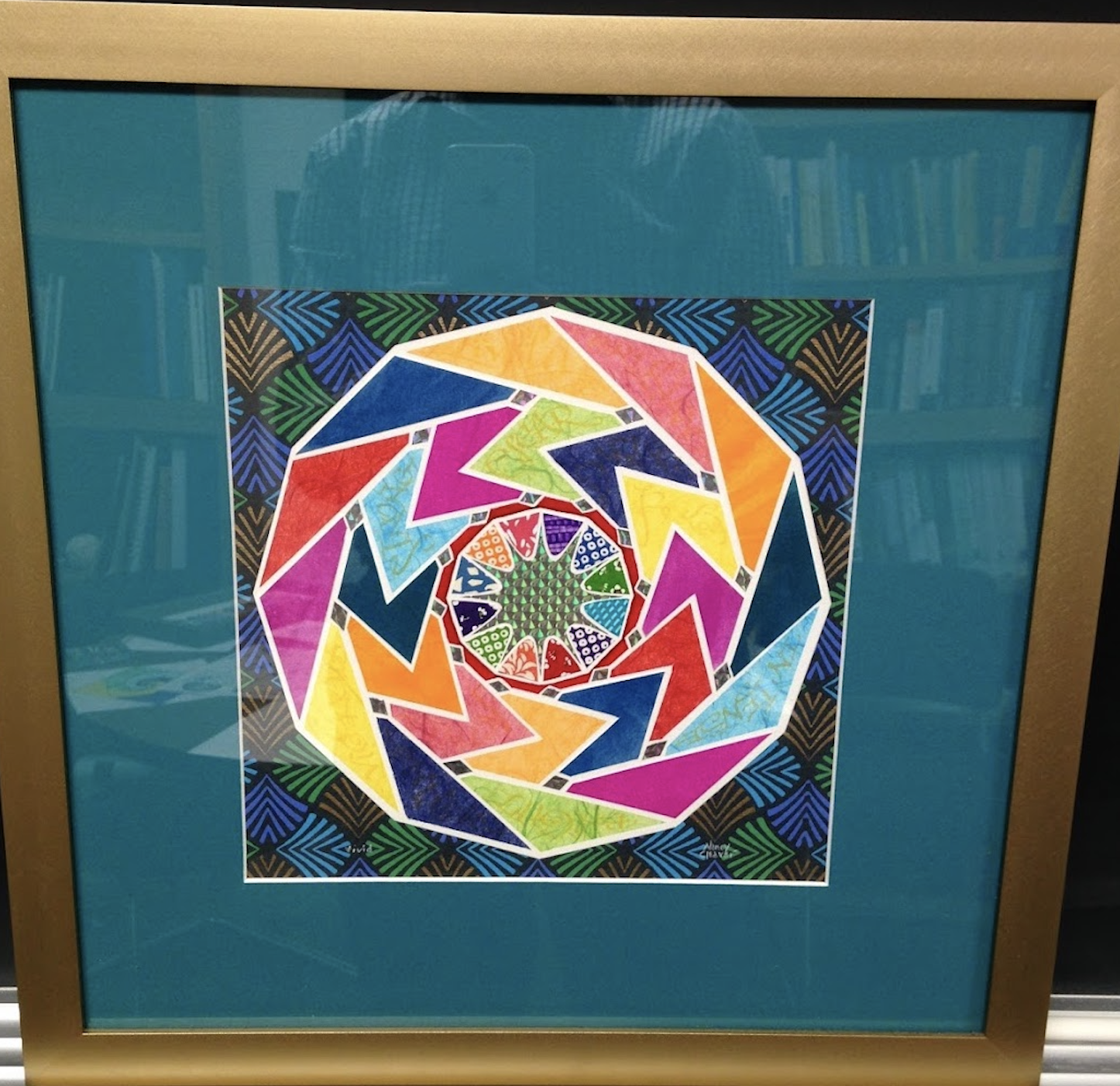
Grand Math-erpiece: Word Mandala, by Nancy Cleaver
This entry also won the Most Thought-Provoking category.
Word Mandalas are my explorations of integrating verbal and visual qualities of an idea into one expression. All the lines form letters, joining one another in sectors of the circle. In some mandalas, the letters become “grout” lines surrounding the colorful “mosaic” spaces between them. The letters organize the mandalas, then fade into the whole design. A mandala (mahn-doll’-ah) is “an integrated structure organized around a unifying center”. Every circle, spiral, or sphere is a mandala; so are atoms, cells, planets and their orbits, and many plant structures. We use mandala forms in math, music, literature, religion, and visual arts. Once you begin looking for mandalas, you see and experience them everywhere. If you would like to search for the word, relax into the image, and let the letters appear, not necessarily from left to right. You will be engaging your whole brain this way. Some are easier to find than others, and of course, you can simply enjoy the work visually.
Nancy Cleaver
Best Children’s: Adele McNamara, aged 10
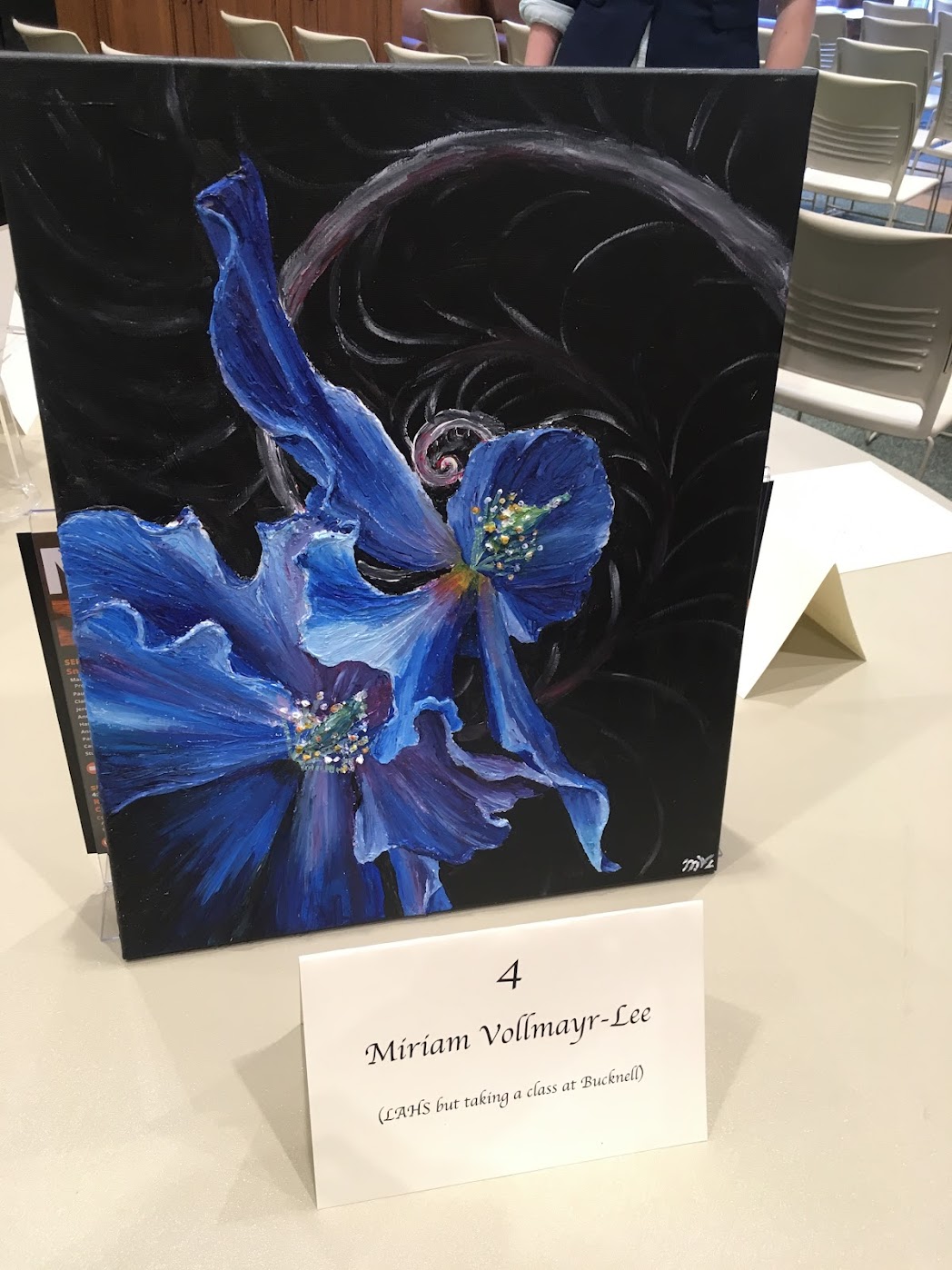
Best Bucknell Student Entry (tied): Miriam Vollmayr-Lee and Peter (Tianzhu) Liu ’22
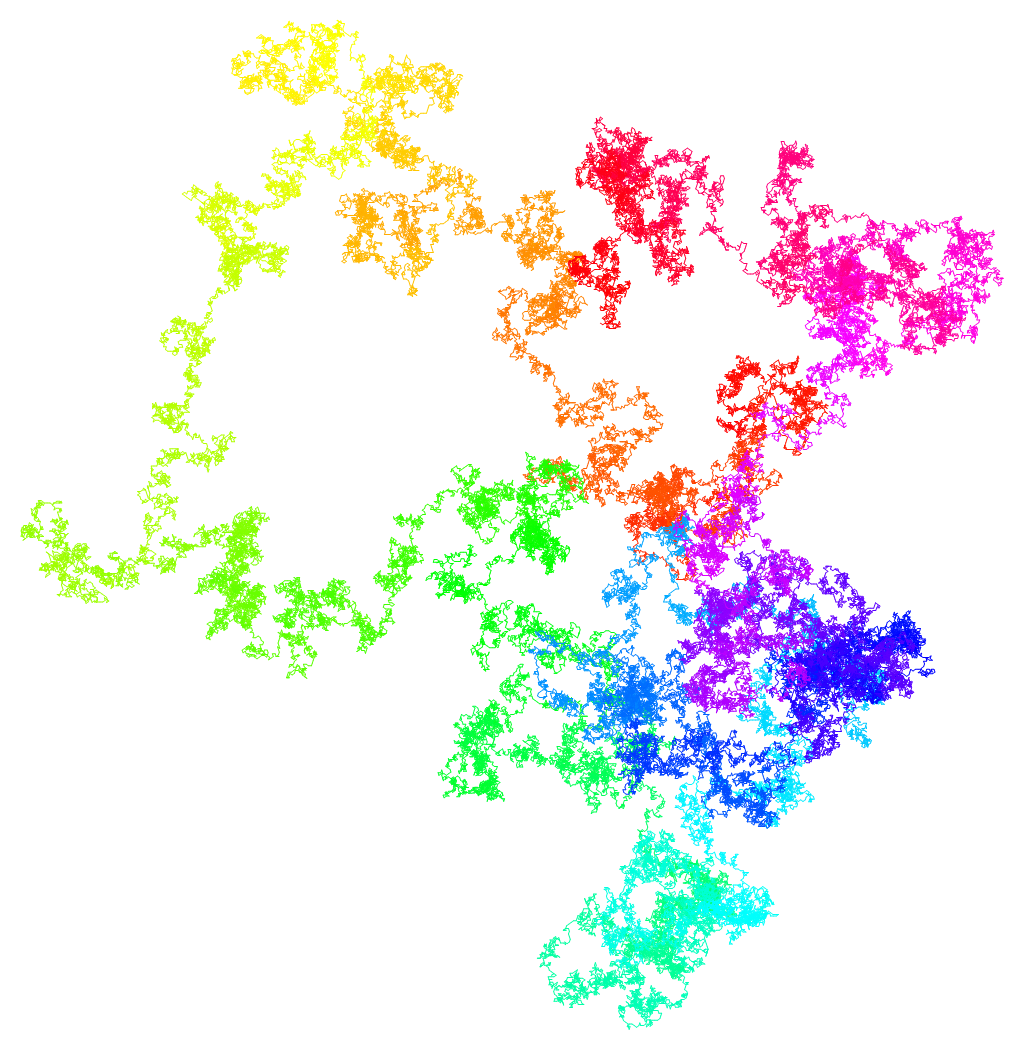
Mathematically Most Intriguing: Yang Hong ’23
Graphitization of the decimal form of π (up to 100000 digits after the decimal point).
The algorithm: each digit is transferred to a unit vector with a direction from 0π/5 to 9π/5. The color is representing the relative position (starting from red and ending at magenta in the sequence of rainbow color), and also making them artful.
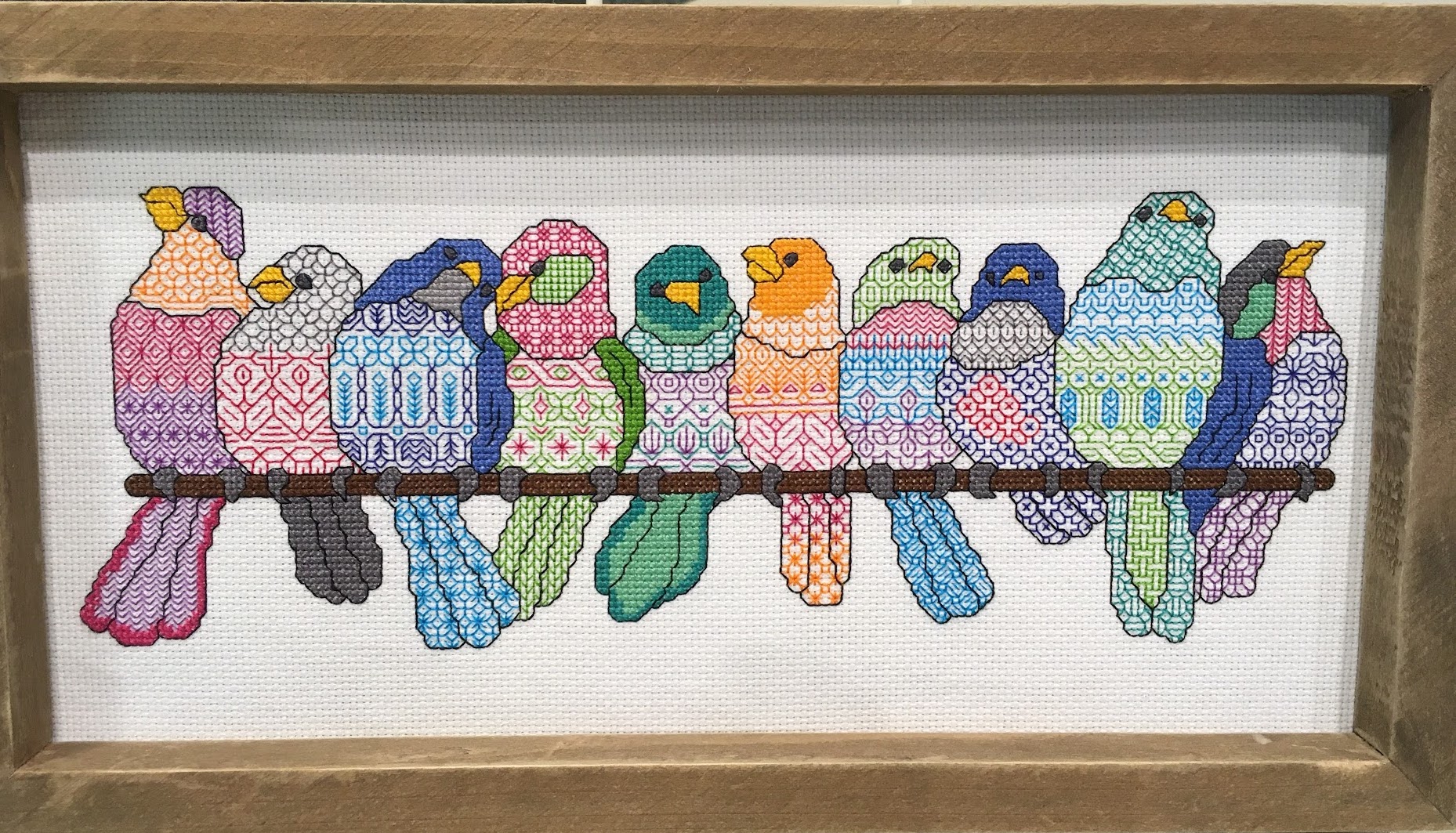
Most attractive: Erica Merriett
Blackwork Embroidery Pattern: “Just Birds” by Clare Ardali (peppermintpurple.com)
Blackwork embroidery is recognized by its geometric designs that often using repeating floral, star and lattice patterns to fill the inside of a larger shape. While traditional blackwork involves a black thread being stitched onto a white linen or cotton (which may or may not feature accent colors or tones), today the term “blackwork” is more commonly used to describe the technique rather than the use of black thread – so it still uses the delicate geometric designs, but can be stitched in any color.
Blackwork dates back to before the 16th century, and was popularized in England by Henry VII’s first wife, Catherine of Aragon, who brought blackwork clothing with her from Spain. This is why it is sometimes known as Spanish blackwork.
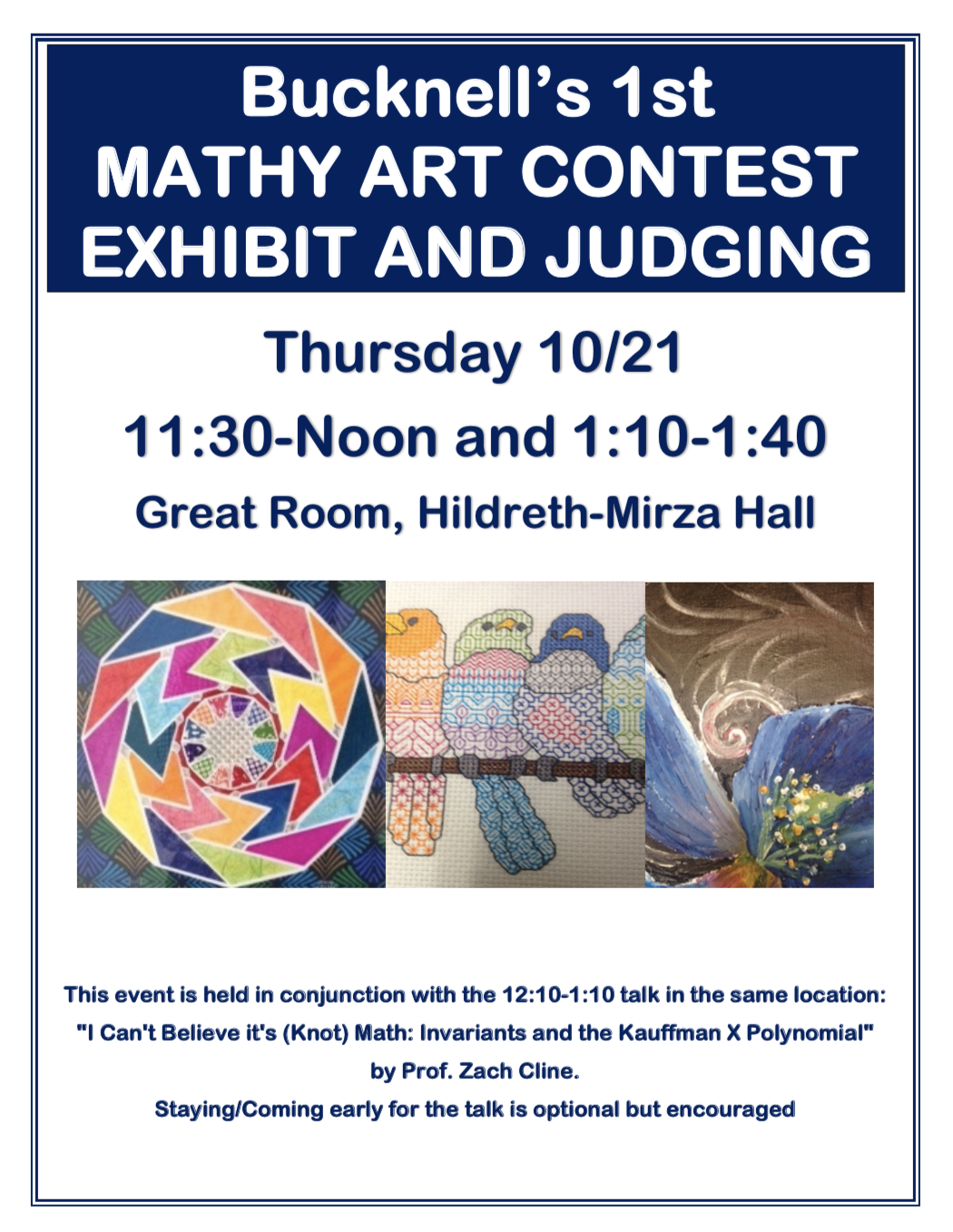
Come enjoy the entries to the Mathy Art Contest and vote on your favorite in several categories!
Thursday 10/21 at 11:30am-noon and 1:10-1:40pm. Great Room, Hildreth-Mirza Hall. All are welcome.
This event is held in conjunction with the 12:10-1:10 talk in the same location: “I Can’t Believe it’s (Knot) Math: Invariants and the Kauffman X Polynomial” by Prof. Zach Cline. Staying/Coming early for the talk is optional but encouraged
Presented by the Mathematics Department Student Colloquium Series.
Great Room, Hildreth-Mirza Hall
Pizza served starting at 11:40; the Talk starts at 12:10pm.
Title: I Can’t Believe it’s (Knot) Math: Invariants and the Kauffman X Polynomial
Presenter: Zach Cline, Department of Mathematics, Bucknell University
Abstract: Once studied by mathematicians for their presumed connections to atoms, knots are now studied in their own right, and their study has revealed deep connections to other fields, like hyperbolic geometry and quantum field theory. They have also been used more pragmatically to study knotting phenomena in DNA. In this talk, we will define a few basic notions from knot theory, introduce the concept of invariants, which is the primary source of connections to other fields, and derive a particular invariant known as the Kauffman X Polynomial.
Mathy Art Contest Exhibit and Voting
Come enjoy the entries to the Mathy Art Contest and vote on your favorite in several categories!
Before and after the talk: 11:30am-noon and 1:10-1:40pm
Hear advice and perspectives from Bucknell alumni who will reflect on the value of their mathematics degree and speak about their various career paths. The conversation will include a question and answer period and an opportunity to meet and network with the panelists.