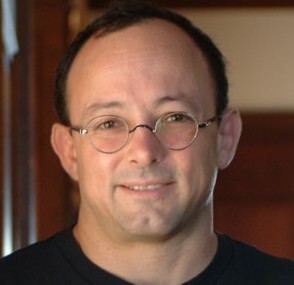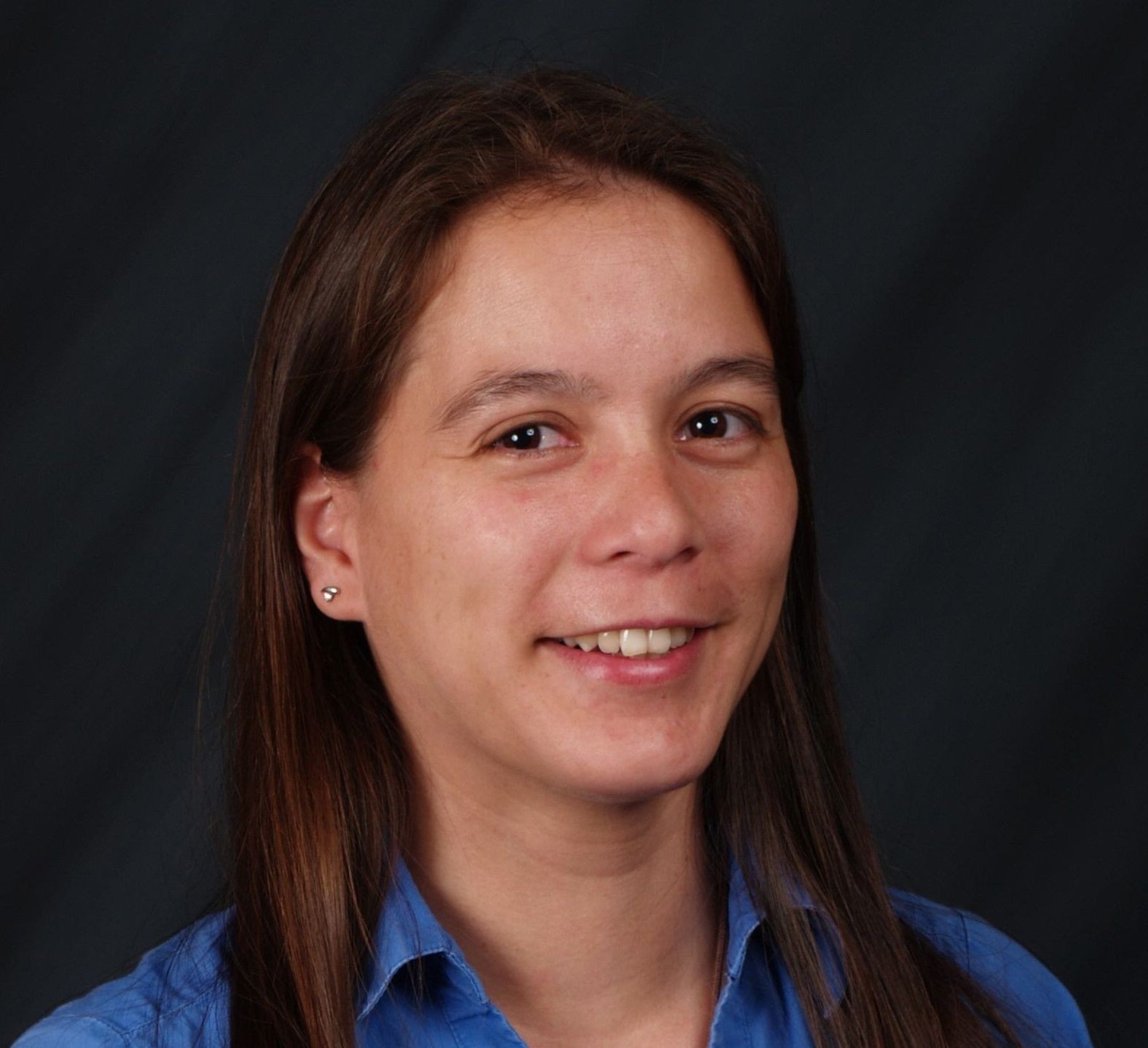
Distinguished Visiting Professor Talk Series: Constanze Liaw, Baylor University, April 16th @4pm in Olin 372

Title: Finding Cyclic Vectors

Abstract:  In perturbation theory, the cyclicity (i.e. completeness of the forward orbit for some vector) of an operator is often a natural assumption

in the hypothesis of many results. We discuss two sets of results. (a) We consider rank one perturbations and some applications concerning the

locations where functions of the Payley-Wiener class are allowed to have zeros. (b) We study so-called Anderson-type Hamiltonians (a

generalization of random Schroedinger operators) and state that under mild conditions, every non-zero vector is cyclic almost surely. This result is

related to the long-standing problem of Anderson localization.
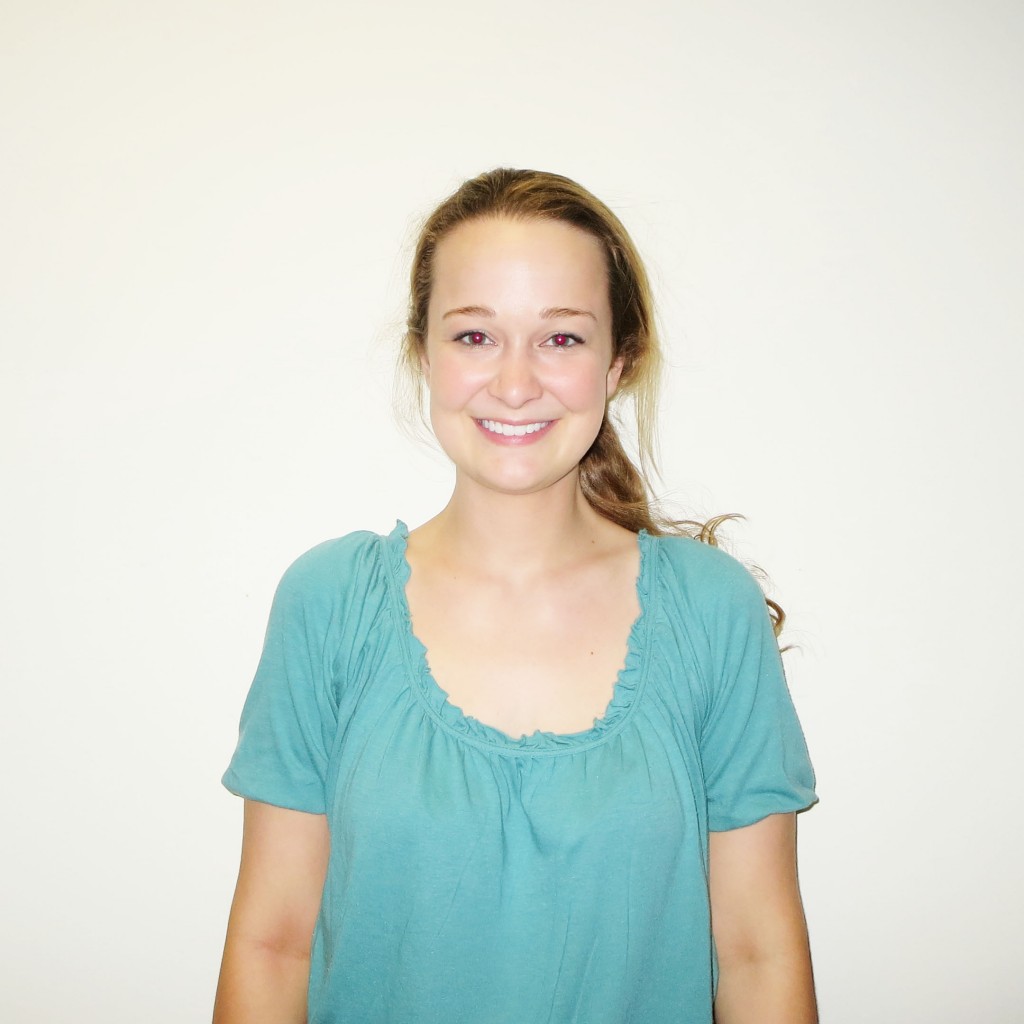
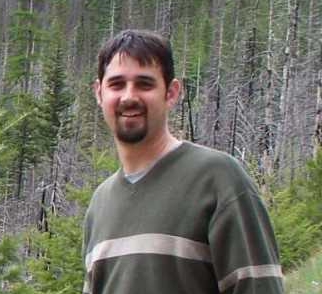
Student Talk Series: Kevin Wilson ’03, National Security Agency, April 9th in Olin 268 @ noon

Title: How a Mathematician Defeated the Enigma (and a pitch for doing math at NSA).

Abstract: 

Have you ever wondered how the German Enigma cryptographic device was defeated in World War II? Come see how a mathematician helped shorten the war by two years, and learn some math and history along the way. You will also have the opportunity to learn about mathematical summer internships and careers at NSA.

The Bucknell Pre-calculus Requirement

College-level mathematics is exciting and empowering, and the Mathematics Department wants your experience to begin in the best way possible!  We are providing and requiring a 6-week online preparation course—the ALEKS Prep. for Calculus—for all students who will take MATH 201.  Results from previous years show that working through this online course will get you started on the path to success in college calculus.

The Prep. for Calculus course will be available starting July 19. The deadline for completion for Fall Calculus enrollment is Aug. 29; we recommend you start by Aug 1. Students with a Spring Calculus enrollment may choose to complete this requirement over the summer or over winter break.

To get started, read the Prep. for Calculus Information sheet then visit the Bucknell ALEKS Prep. for Calculus Moodle page.

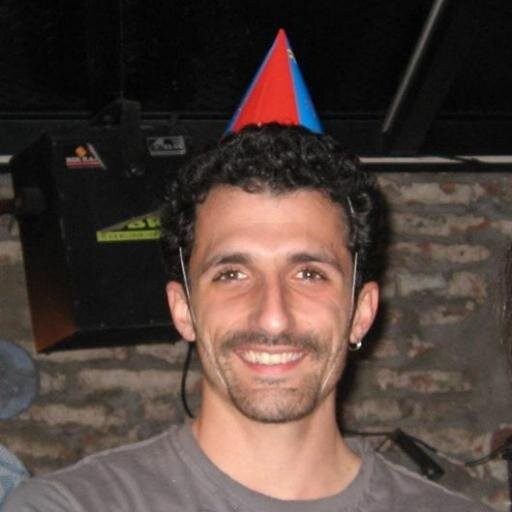
Student Talk Series: Patrick McDonald, New College of Florida, March 26th in Olin 268 @ noon

i-LdqJSGDTitle: Sticks and Stones

Abstract: In addition to their value as pure entertainment, games provide a rich environment in which to prototype ideas meant for application in a variety of fields: mathematics, computer science, and biology to name a few. In this talk I will introduce two games, one involving sticks and one involving stones, both of which are easy to play. Despite their simplicity, the games are remarkably useful: I will use them as an introduction to some important ideas involving the theory of algorithms. In particular, I will introduce the notion of dynamic programming, a general purpose tool commonly used to solve problems involving (biological) sequence alignment. The talk requires no background and is meant for a general student audience.

Student Talk Series: Sam Gross, Bloomsburg University, February 26th in Olin 268 @ noon

ssg
Title: 49598666989151226098104244512918

Abstract: This seemingly random number answers a question investigated by A. Cohn circa 1909, and makes a connection between prime numbers and irreducible polynomials (although the number is obviously not prime itself!). Time permitting, we will discuss other potential connections between prime numbers and polynomials.

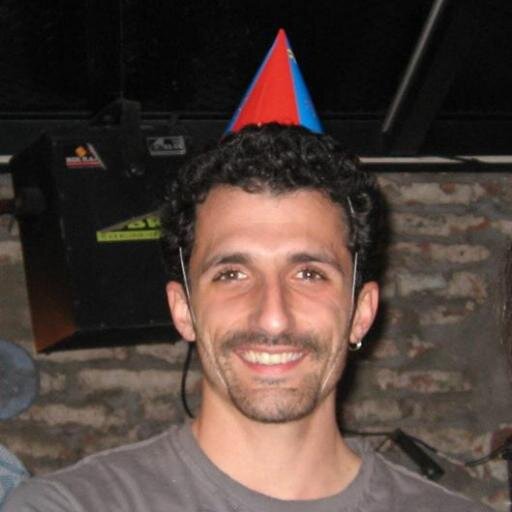
Distinguished Visiting Professor Talk Series: Nicolas Sirolli, Universidad de Buenos Aires, Febuary 19th @4pm in Olin 372

Z3s7Ej6G

Title: A Cohomological Interpretation of the Class Group

Abstract: The celebrated Class Number Formula, which dates from the nineteenth
century, relates the residue of the Dedekind Zeta function of a number
field to the order of its class group, among its other main invariants.

According to the Birch and Swinnerton-Dyer conjecture, one of the
Millenium Problems, there should be a notably similar formula relating the
main arithmetic invariants of an elliptic curve to a certain derivative of
its L-function. One of these is the (conjecturally finite) order of its
Tate-Shafarevich group, which arises from considering the cohomology of
the Galois group acting on the points of the curve.

In this talk we will compare both formulas term by term, focusing on
giving a cohomological interpretation of the class group, which allows us
to match it with the Tate-Shafarevich group.

Distinguished Visiting Professor Talk Series: Nicolas Sirolli, Universidad de Buenos Aires, Febuary 11th @4pm in Olin 372

Z3s7Ej6GTitle: From Congruent Numbers to Modular Forms

Abstract: A positive integer is called a congruent number if it is the area of a
right triangle with rational sides. The problem of giving a criterion for
deciding if a number is congruent has been open for hundreds of years. The
best answer known was given by Tunnell in 1983, using many deep results
from modern Number Theory. His work will give a completely satisfactory
answer, once the Birch and Swinnerton-Dyer conjecture gets proved.

In this talk we will introduce, in a way as friendly as possible, the main
ingredients needed to understand Tunnell’s result: elliptic curves,
modular forms, and some deep theorems concerning them.