All are welcome, math majors & others alike,
MAA GAME NIGHT
Invited guest: Liz McMahon(Lafayette College)
Thursday – October 15 – 4:00 PM
OLIN 383 (Mathematics student lounge).
“snacks will be provided”
All are welcome, math majors & others alike,
MAA GAME NIGHT
Invited guest: Liz McMahon(Lafayette College)
Thursday – October 15 – 4:00 PM
OLIN 383 (Mathematics student lounge).
“snacks will be provided”
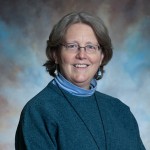
Title: Mathematics in the Game of SET
Abstract: The card game SET is played with a special deck of 81 cards. There is quite a lot of mathematics that can be explored using the game. We’ll look at questions in combinatorics, probability, linear algebra, and especially geometry. The deck is an excellent model for a finite affine geometry and provides an entry to surprisingly beautiful structure theorems for that geometry. If you’d like some practice before the talk, go to www.setgame.com for the rules and a Daily Puzzle
There will be Snacks including FIBONACCI LEMONADE and fractal Cookies.
In addition, there will be fun math games too!!
Professors and all students are invited (no matter if you are a math major or not)
Title: What did you do last summer?
Abstract: There are many exciting summer opportunities for students in the mathematical sciences! These range from internships in financial companies to research experiences at other universities to leadership development programs. In this week’s colloquium, a panel of your peers will tell you their experiences. What did they enjoy about their experiences? When did they apply? There will also be ample time for questions and answers. These varied opportunities, as well as being terrific fun, are also immensely valuable as you begin to think about your careers after Bucknell.
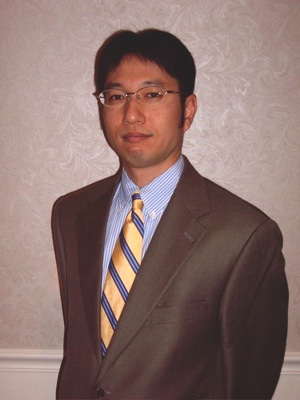
Title: Computing canonical forms of graphs
Abstract: Determining the computational complexity of the problem of finding canonical representatives of graphs is a long-standing unresolved question. This question is of fundamental interest in the theory of computing because of its close relationship with graph-isomorphism testing.
While the problem may be difficult in general, group-theoretic methods have enabled polynomial-time solutions for important classes of graphs, including graphs of bounded valence. In practice, however, variants of backtrack search to find lexicographic leaders have long been accepted as quite effective; for example, the system nauty is the leader in this category.
In this talk, I will discuss theoretical limitations of the lexicographic-leader approach to finding canonical forms. It turns out that this approach leads to NP-complete problems, even for very restricted classes of graphs for which there are simple polynomial-time solutions by group-theoretic methods.
Title: Tying different knots: problems with isomorphism in algebra
Abstract: In 1905 Max Dehn proved if you tie a knot by “over-under” you never end up with the same knot as when you tie it “under-over”. His proof — still the only proof — hinged on a very delicate and typically difficult problem of computing isomorphisms in algebra. By the 1950’s Adian and Rabin had proved the approach in general is undecidable — no computer can do it.
Yet, the uses for isomorphism are too profound to give up after undecidability. The decades that followed saw the founders of computational algebra – Cannon, Neubuser, and Sims – make substantial inroads on the problem. Theoretical Computer Scientists Miller, Lipton-Zalcstein, and Tarjan framed the problem in the emerging complexity zoo with the curious realization that group isomorphism is in one form easier than graph isomorphism and in another form harder.
Today isomorphism in algebra is experiencing a renaissance. Long-standing “hard cases” are crumbling with the discovery of new linear perspectives. Old practical algorithms are being combined with new data structures to result in exponential improvements. And the approaches grow by the month. The vanguard of this exciting new wave are researchers at Aachen, Auckland, Bucknell, Chicago, Colorado State, London, Santa Fe, and Sydney.
We will report on what we know, what we want to know, and give the reasons for all the recent attention. The talk will not assume a technical proficiency in mathematics or computation.
If you like the concept of applying mathematics in a business setting, actuarial science may be the perfect career path for you. To learn more, please join Cigna on Tuesday, September 22 at 5 PM in Olin 266 for an actuarial case study to see a preview of what healthcare actuaries do on a daily basis. Snacks will be provided and you can enter to win a gift card to the bookstore just by attending!
Internship, externship and full-time opportunities in Cigna’s Actuarial Executive Development Program will also be discussed. Please visit our website http://www.cigna.com/careers/aedp or contact Allyssa Ward (Bucknell 2012) at allyssa.wardATcigna.com to learn more.
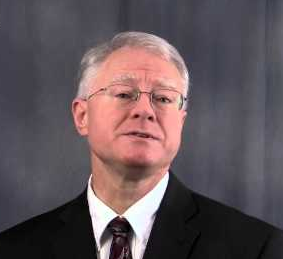
Title: The Use of Markov State Models in Reliability, Availability, and Maintainability (RAM) Analysis
Abstract: Three of the most important attributes of a system are its availability, reliability, and maintainability. A large portion of a typical system’s life cycle cost is driven by its reliability and maintainability. Reliability, Availability, and Maintainability (RAM) analyses are performed as a part of the development of almost all large-scale systems. Conceptually, there is a simple algebraic relationship between these three parameters that may be derived from a simple Markov state model. For complex systems, the models can become quite challenging. This seminar will provide 1) a discussion of why availability, reliability, and maintainability are important characteristics of a system; 2) definitions for each characteristic and their associated metrics; 3) an example of a simple system and how a simple Markov state model may be developed and used to derive the algebraic expression for the relationship between the three metrics; 4) an example of how the expression may be used to perform trade studies and sensitivity studies; and 5) a discussion of the simple analytical framework may be extended to address more complex systems.
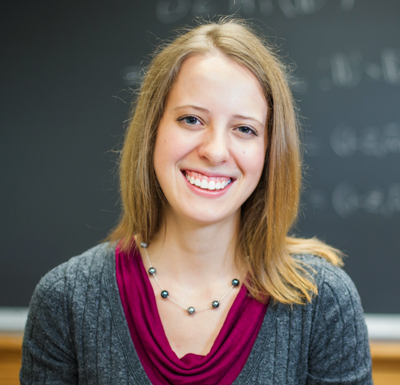
Title: Geometry, Meet Origami
Abstract: In this talk, we will go back in time to the ancient Greeks (or at least your high school geometry class) and take a good look at what we can draw with a compass and straight-edge. The answer is “Not Much!,” at least when compared to what a little paper folding will get us. Come prepared to trisect some angles, double some cubes, and scoff at the circle squarers.