Research opportunities

Bucknell Program for Undergraduate Research: see campus www.bucknell.edu/x1713.xml proposals due in early February

Research Experiences for Undergraduates (REUs): see www.ams.org/programs/students/undergrad/emp-reu deadlines February – March

Lawrence Berkeley National Laboratory: see http://cs.lbl.gov/careers/summer-student-program/rising-seniors

MIT Lincoln Laboratory: see www.ll.mit.edu/college/summerprogram.html rising seniors; must be U.S. citizen

National Security Agency: Director’s Summer Program, Mathematics Summer Employment Program; must be U.S. citizen; applications accepted September 7 – October 15 of each year; see http://www.nsa.gov/careers/opportunities_4_u/students/undergraduate/

Summer Undergraduate Research Fellowship (SURF) at National Institute of Standards and Technology (NIST): see www.nist.gov/surfgaithersburg/ deadline February 15.

National Renewable Energy Laboratory’s Research Participant Program: must be U.S. citizen or permanent resident; rising juniors and above; see www.nrel.gov/rpp/student_internships.html

U.S. Department of Energy Science Undergraduate Laboratory Internships (SULI); applications due January 10, 2012; see science.energy.gov/wdts/suli

Oak Ridge National Laboratory: see http://www.orau.org/ornl/undergraduates/default.htm

Sandia National Laboratory: see www.sandia.gov/careers/students_postdocs/

Dordt College in Sioux City, Iowa summer research program in statistical genetics and biostatistics; undergraduate students with prior coursework in statistics are invited to apply; application deadline; January 31, 2012; see http://www.dordt.edu/academics/programs/math/statgen/


 

Statistics and Biostatistics Opportunities:

Summer Institute for Training in Biostatistics (http://www.nhlbi.nih.gov/research/training/summer-institute-biostatistics-t15)

Mayo Clinic: http://www.mayoclinic.org/jobs/internships.html

Census bureau: http://www.census.gov/hrd/www/jobs/stu_temp.html

U.S. Government: http://www.usajobs.gov

Dordt College in Sioux City, Iowa: summer research program in statistical genetics and biostatistics; undergraduate students with prior coursework in statistics are invited to apply; application deadline; January 31, 2012; see http://www.dordt.edu/academics/programs/math/statgen/
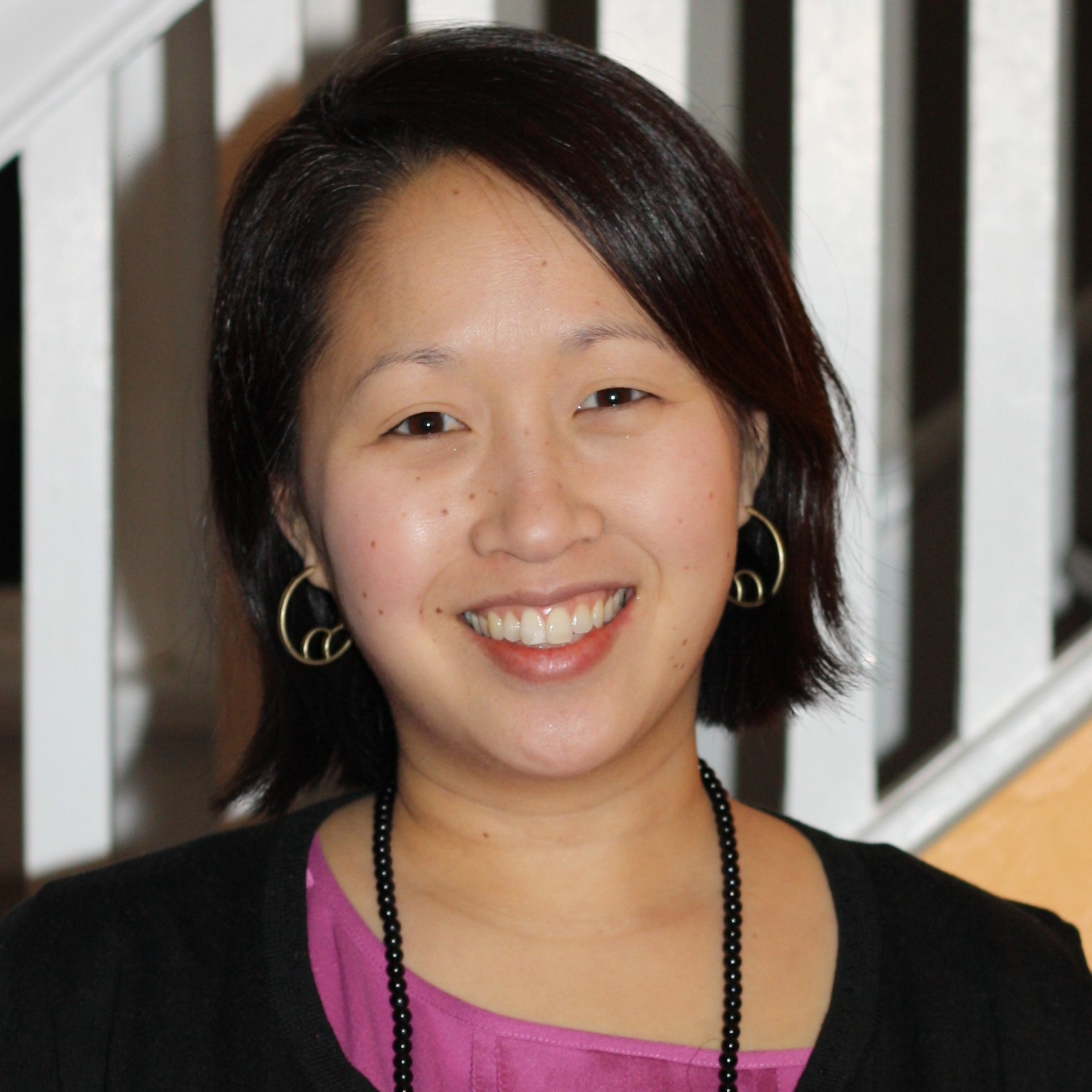
Student Talk Series: Erik Bollt, Clarkson University, December 4th, Olin 268 @ noon

bollt-at-work


Title:  Diseases, Fame and Merit – Various Outbreaks on Social Networks


Abstract: Dynamical Systems, Chaos theory and Complex Systems theory has some useful mathematical tools to bring to bear on problems that are very familiar to our own lives.  Furthermore, social media has some really relevant large scaled data that also lends toward a modern discussion of what happens when people socially contact.

Distinguished Visiting Professor Talk Series: Sergi Elizalde, Dartmouth College, November 24th @4pm in Olin 372

Title: Consecutive patterns in permutations


Abstract: An occurrence of a consecutive pattern sigma in a permutation pi
is a subsequence of adjacent entries of pi in the same relative
order as the entries of sigma. For example, occurrences of the
consecutive pattern 21 are descents, and alternating permutations
are those that avoid the consecutive patterns 123 and 321. The
systematic study of consecutive patterns in permutations started over
a decade ago.  More recently, consecutive patterns have become
relevant in the study of one-dimensional dynamical systems, and they
are useful in creating tests to distinguish random from deterministic
time series.

We show that the number of permutations avoiding the consecutive
pattern 12…m —that is, containing no m adjacent entries in
increasing order— is asymptotically larger than the number of
permutations avoiding any other consecutive pattern of length m. At
the other end of the spectrum, the number of permutations avoiding
12… (m-2)m(m-1) is asymptotically smaller than for any other
consecutive pattern.

Student Talk Series: Sergi Elizalde, Dartmouth College, November 20th, Olin 268 @ noon

Title: Lattice paths between two boundaries

Abstract: Dyck paths are lattice paths with steps N=(0,1) and E=(0,1) starting
at (0,0), ending at (n,n), and never going below the diagonal y=x.
Among the many interesting facts known about Dyck paths, one is that
the parameters ‘number of E steps at the end’ and ‘number of returns
to the diagonal’ have a symmetric joint distribution, meaning that to
each Dyck path we can bijectively associate another one where these
parameters are interchanged.

I will show that this symmetry property applies not only to Dyck
paths, but more generally to lattice paths with N and E steps that lie
between any two fixed boundaries. Finally, I will discuss how these
lattice paths are related to other objects in combinatorics, such as
matroids, semistandard Young tableaux and k-triangulations.

This is joint work with Martin Rubey.

Distinguished Visiting Professor Talk Series: Paola Sztajn, North Carolina State University, November 4, @ 4pm in Olin 372

Title: Learning from systematic descriptions of mathematics professional development

Abstract:  In this talk I present emerging results from a systematic
review of publications on mathematics professional development. The
research team reviewed over 170 papers published between 1992 and 2010
to address the following research questions: What do we know about the
design and conduct of mathematics PD being studied by researchers and
how are these PD characterized in research reports? The conceptual
framework included six elements: theory, context, goals, content,
format, and activities.

Problem of the Week Instructions and This Week’s Problem

Try the Math Department Problem of the Week!

New Problems every Tuesday at 1pm!

How it Works:

  1. Pick up a problem sheet in the Math Department on the third floor of Olin Science
  2. Do the problem!
  3. Turn in your solution in the Math Dept. Office in Olin 380 before 5pm the following Monday.
  4. Every correct solution over the course of the semester gives you a chance to win a $50 Amazon Gift Card.
  5. Keep doing the Problem of the Week! Each correct solution adds your name to the drawing at the end of the semester!

2 correct solutions = 2 tickets in the drawing!


Problem of the Week #4:


POTW 4