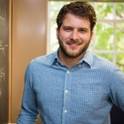
Student Talk Series: Karl Voss, 9/1 @ noon in Olin 268

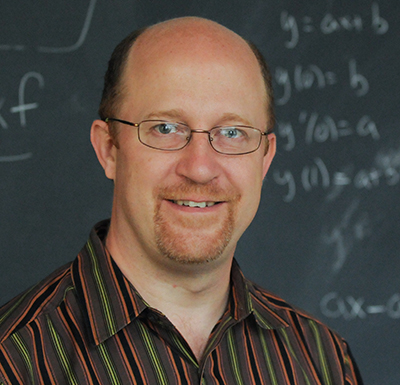
VossKarl_main


Title:  Being fair in a world of limited resources

Abstract:  Fair division is a problem that all of us encounter regularly.  Every time you and another person or several people have to divide something – pizza, money, space, Neapolitan ice cream, band width, candy, etc. – you are working on a fair-division problem.  How can several people share a limited resource and make sure that no person feels the resulting allocation is unfair?   Before we can answer this question, we need to figure out what exactly is means to be ‘fair’.  The mathematical development of this subject is fairly recent and the results touch issues in economics and game theory. We will do lots of examples.

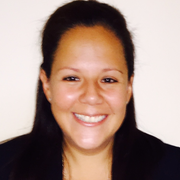
Student Talk Series: Alia Stanciu, April 21st @ noon in Olin 268

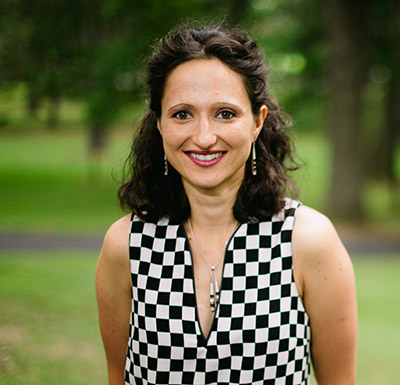
StanciuAlia-MAIN

Title:  From airlines to healthcare: scheduling services with high variability

Abstract:  What do the airline and healthcare industries have in common when it comes to managing their capacity? What makes scheduling surgeries so much more difficult than an airline’s management of its seat inventory? How can hospitals improve their surgical scheduling system? While most optimization models suffer from the curse of dimensionality, simulation-based optimization is often a better choice when dealing with demand that is highly variable. Drawing from revenue management techniques developed by the airline industry, I will show how simulation modeling can help hospitals to more efficiently schedule surgical procedures, in order to better address and balance over- and under-utilization of their resources.

DVP Talk: Amanda Folsom, 4/19 @ 4

folsom-small2

Title:  Mock and quantum modular forms

Abstract:  Mock modular forms were first formally defined in the literature by Zagier in 2007, though their roots trace back to the mock theta functions, curious power series described by Ramanujan in his last letter to Hardy in 1920. As the overarching theory of harmonic Maass forms has progressed over the last 15 years, we have seen applications of mock modular forms in number theory, combinatorics, representation theory, and more. Zagier also defined quantum modular forms in 2010, which like mock modular forms feign modularity in some way, but unlike mock modular forms are only defined on sets of rational numbers. In this talk, we will give an introduction to and brief history of these subjects. We will also discuss an application in joint work with Ken Ono (Emory) and Rob Rhoades (CCR Princeton), in which we revisit Ramanujan’s last letter and prove one of his remaining claims as a special case of a more general result.

Student Talk Series: Ravi Ramakrishna, April 7th @ 12 noon in Olin 266

Ravi_FINAL

Title: “Die ganzen Zahlen hat der liebe Gott gemacht, alles andere ist Menschenwerk.”     – L. Kronecker.  Translation: “God made the integers. All else is the work of Man.”

Abstract:  We were taught about the number line and its properties in middle school. Only in college do we learn that the number line is created by taking the rationals and “filling in the holes”. (It took mathematicians 200+ years to understand all this, so the 8 or so years it’s taking you is fast.) In this talk we’ll explore other ways of “filling in the Holes” and why these other number systems are both natural and powerful things.

Student Talk Series: Matt Mizuhara ’12, March 24th @ 12 noon in Olin 268

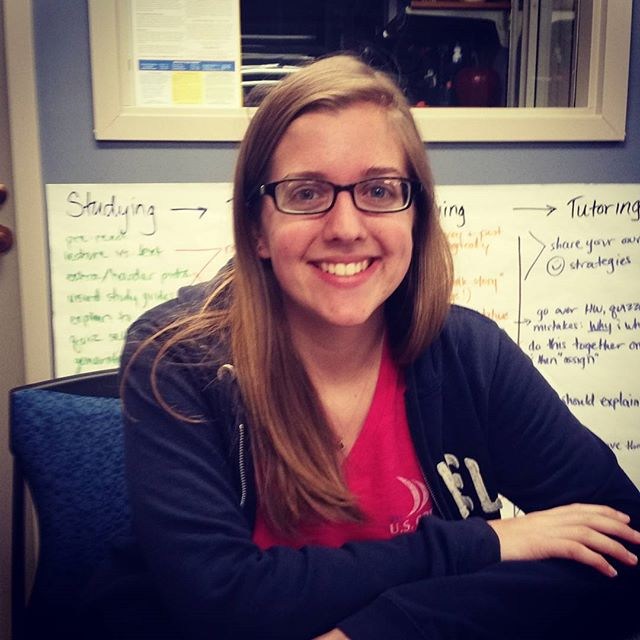
matt

Title: Mathematical biology under the microscope:  A study of cell motility

Abstract: Although physics and chemistry have long relied on mathematics as a descriptive and exploratory tool, biological systems were historically seen as too complex to be understood theoretically. However, advances in mathematics and computational capabilities now allow for the quantification of biological problems in a field called mathematical biology.
In this talk I will introduce a modern topic of mathematical biology: crawling cell motility. Cell motion plays a central role in wound healing and the immune response, e.g., to fight foreign bodies. We will present a partial differential equation model for cell motion proposed by Ziebert et al. (2011). The subsequent analytical and numerical studies give rise to surprising mathematical results as well as novel insights for biologists, including applications to directed cell motility and sorting. This talk will not require any prerequisite knowledge of partial differential equations or biology, though a calculus background will be helpful.

Student Talk Series: Lara Dick, February 25th @ 12 noon in Olin 268

DickLara400

Title:  There’s Nothing Common About It

Abstract:  Training yourself to think like a child is often counterintuitive and surprisingly difficult.  My research focuses on helping preservice teachers analyze and learn from children’s mathematical thinking.  For this talk, we will focus on different types of story problems as described in the Common Core State Standards for Mathematics and discuss how children change their solution approaches depending on the situation presented in the problem.  We will watch videos of children solving different story problems and will consider various samples of written student work.  Audience participation will be encouraged.

Student Talk Series: Greg Adams, February 11th @ 12 noon in Olin 268

Adams_G285

Title:  Monkeying around in South Africa

Abstract:  As part of my sabbatical last year, I spent 5 weeks in South Africa at the Unizulu Science Centre in Richards Bay.  One of the highlights of my stay were the many encounters with vervet monkeys, both in the flesh and abstractly in mathematical problems.  They insist on playing a role in this talk.

The science center serves the some 700 rural schools in the province of Kwazulu-Natal.  The level of mathematics achievement by the students at the rural public schools in South Africa is among the lowest in the world.  The science center was charged by the Department of Education to conduct teacher training in geometry for the school teachers in the province.

During my talk, I will discuss my past and future role in the initiatives of the science center and will talk about some of my experiences

Student Talk Series: Mark Meyer, January 28th @ 12 noon in Olin 268

MeyerMark400

Title:  I’m all about that Bayes, ’bout that Bayes.

Abstract:  A September 2014 New York Times article titled “The Odds, Continually Updated” discusses the growing popularity of Bayesian statistics both within and outside of the statistical community. This expansion is due in part to the growth of computing power over the last decade and a half. So what is Bayesian statistics? The title of the article, and indeed the article itself, suggest that Bayesian statistics uses, even requires, prior information to inform the analysis. But this is only a small aspect of the Bayesian approach. We can use Bayesian statistics to analyze any data and, as we shall see, it can even provide more informative solutions than the Frequentist, or classical, approach to many problems. This talk will discuss the two philosophies of statistics: Bayesian and Frequentist. In doing so, we will cover some history behind the Bayesian paradigm, introduce the general approach to Bayesian statistics, and discuss several real examples, in each case comparing the Bayesian and Frequentist approaches to each other.

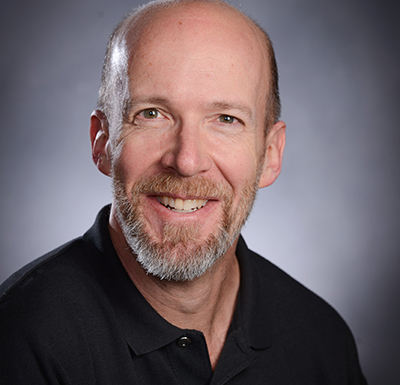
DVP Talk: Sam Ventura, 12/7 @ 4 pm in Olin 264

profputstalentsonice_large-min

Title:  Classification and Clustering for Record Linkage in Large Datasets

Abstract: Record linkage, or the process of linking records corresponding to unique entities within and/or across data sources, is an increasingly important problem in today’s data-rich world.  Due to issues like typographical errors, name variation, and repetition of common names, linking records of unique entities within and across large data sources can be a difficult task, in terms of both accuracy and computational feasibility.  We frame record linkage as a clustering problem, where the objects to be clustered are the records in the data source(s), and the clusters are the unique entities to which the records correspond.  We use the following three-step approach for record linkage:  First, records are partitioned into blocks of loosely similar records to reduce the comparison space and ensure computational feasibility.  We propose a sequential blocking approach that iterates through a nested set of decreasingly strict blocking criteria to reduce the comparison space more efficiently.  Second, we adopt an ensemble supervised learning approach to estimate the probability that a pair of records matches.  We propose a new adaptive prediction approach for classifier ensembles (specifically, random forests) that extracts and incorporates summary statistic information from the distribution of estimated probabilities.  Third, after transforming our estimated pairwise probabilities of matching to pairwise dissimilarities, we use hierarchical clustering to link matching records.  We apply these approaches to two labeled record linkage datasets:  a set of labeled inventors from the United States Patent and Trademark Office database and a compilation of lists of death records from the Syrian Civil War conflict.